About WeddingTraditions.org
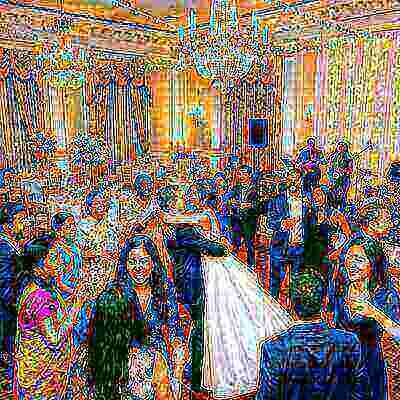
The gap
Every wedding borrows from the dead.
Your grandmother's veil. Your grandfather's toast. The rice, the rings, the something blue. None of it started with you. All of it means something.
But try to find out what. Try to trace a single custom back to its source and across its borders. You will find fragments scattered across academic papers, travel blogs, half-remembered family stories, and government archives in languages you do not read.
That is the gap this site exists to fill.
What we are
A reference work. Seven hundred and seventy-three pages documenting the wedding customs of more than two hundred countries, across twelve faiths, in twenty-two languages. Free to read, free to share.
How we work
The content here draws from ethnographic fieldwork, cultural institutions, published academic research, and community contributors with lived experience of the traditions they describe. We treat a rice-throwing custom in South Carolina with the same seriousness as a tea ceremony in Fujian. Every tradition belongs to someone. We try to handle them accordingly.
The site is available in twenty-two languages, not because translation is simple, but because a Peruvian wedding deserves to be read about in Spanish, and a Japanese wedding in Japanese. The work is ongoing. It will probably always be ongoing.
What we are not
We are not wedding planners. We do not sell invitations or centerpieces or registry links. There is nothing here to buy. We are a library. A quiet, well-lit room where the wedding customs of the world sit on the same shelf, each one given space, each one given weight.
A note on completeness
Two hundred countries is not every country. Twelve faiths is not every faith. We know what is missing, and we are still writing. If your tradition is not yet represented here, or if we have told its story incompletely, we would like to hear from you. The work gets better when more voices shape it.
The thing underneath
The traditions cataloged here are wildly different. A Maasai father blesses his daughter with the words "May God give you children." A Korean couple shares chestnuts and dates. An Irish bride carries a horseshoe for luck.
Yet the thing underneath every single one of them is the same. Two people stand before their community and say: this is real, this is permanent, this matters.
That is the story we document. Not one culture's version of it. All of them.