Belgian Wedding Traditions Complete Guide for Modern Couples
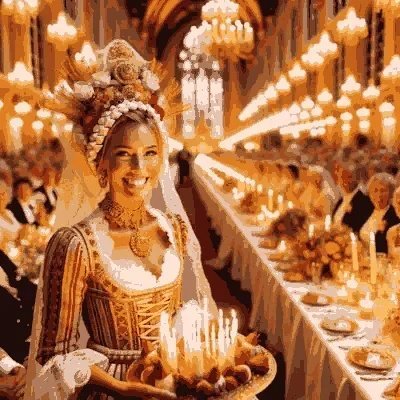
Overview of Belgian Wedding Process & Timeline
Belgian weddings follow this traditional sequence:
Similar traditions can be found in official Belgian government marriage requirements.
- 6-12 months before: Engagement announcement and family gatherings
- 3-6 months before: Civil ceremony paperwork and venue bookings
- 1-2 months before: faire-partfair-PAR (formal wedding invitations) sent
- Wedding day morning: Civil ceremony at town hall (mandatory)
- Wedding day afternoon: Optional religious ceremony
- Early evening: Le Vin d’Honneur reception (1-2 hours)
- Evening: Multi-course dinner reception (4-6 hours)
- Midnight: Traditional midnight soup service
- Early morning: Celebration concludes (typically 2-4 AM)
Pre-Wedding Traditions and Ceremonies
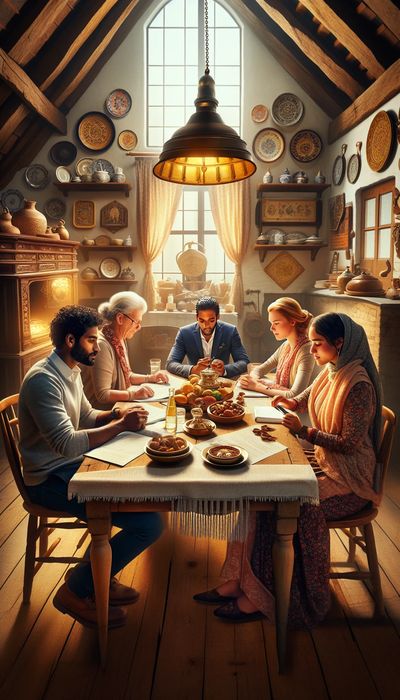
What Are Belgian Engagement Customs (Verloving/Fiançailles)?
The scent of fresh flowers fills the drawing room as families gather for what Flemish speakers call verloving and Walloons know as fiançailles. These intimate engagement announcements bring together those who matter most, usually 20 to 50 relatives and close friends, to witness a couple’s commitment before the wider celebration begins.
What sets Belgian engagements apart? Both partners exchange significant gifts. While the bride-to-be typically receives a diamond ring (often selected from Antwerp’s legendary diamond quarter), she presents her fiancé with something equally meaningful, perhaps a luxury watch or family heirloom. These gatherings unfold differently across regions: in Flanders, traditional Flemish pastries accompany toasts with local beers, while Wallonian families prefer champagne and French-inspired canapés.
Key engagement tradition components:
- Family approval: Traditional request for bride’s father’s permission
- Mutual gift exchange: Both partners exchange valuable items
- Private family gathering: 20-50 guests for formal announcement
- Timeline: Typically held 6-12 months before wedding
- Cost: Varies based on ring selection and celebration scale
The timing matters too. Most couples announce their engagement six to twelve months before the wedding, giving families time to blend traditions and plan the elaborate celebrations ahead. In Brussels, where multiple cultures intersect, these gatherings often switch between languages mid-conversation, setting the multilingual tone for the wedding itself.
Belgian Wedding Invitations (Les Faire-part)
Eight to twelve weeks before the big day, elaborately designed invitations land in mailboxes across Belgium. Known as les faire-partfair-PAR, these aren’t just wedding invitations, they’re formal announcements that follow protocols dating back to medieval times. The parents’ names appear first, signaling that families, not just individuals, are joining together.
Every detail matters in these invitations. In regions where both French and Dutch are spoken, the text appears in both languages. The multiple ceremony times, civil and religious, must be clearly stated, along with separate RSVP cards for different portions of the celebration. Even in our digital age, most Belgian couples invest in quality paper and traditional printing methods, understanding that the invitation sets expectations for the celebration to follow.
Traditional faire-part requirements:
- Parent names listed first: Shows family-hosted celebration
- Bilingual text: French and Dutch in mixed-language regions
- Multiple ceremony times: Civil and religious details
- Formal language: Traditional wording and titles
- RSVP cards: Separate response cards for different events
Wedding Attire and Belgian Lace Traditions
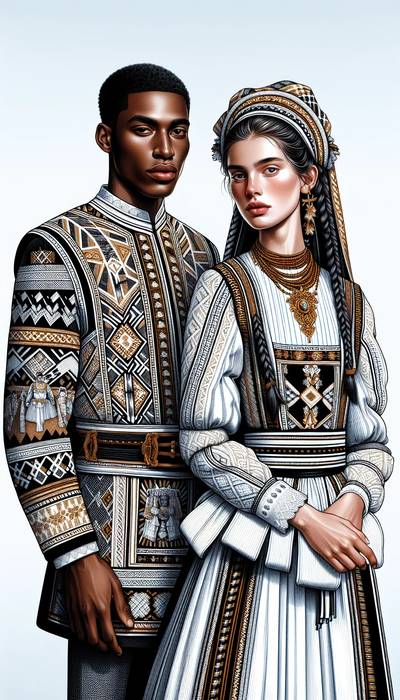
What Is Belgian Bridal Lace?
In a quiet workshop in Bruges, nimble fingers work ivory thread into patterns passed down through generations. Belgian lace, whether from Brussels, Bruges, or Mechelen, has adorned wedding dresses since the 16th century, each piece telling its own story through intricate floral motifs and delicate needlework.
Modern brides face a beautiful dilemma: splurge on handmade lace that can cost more per meter than some entire wedding dresses, or choose machine-made alternatives that capture the essence without the price tag? Many find middle ground by incorporating family heirloom pieces, a grandmother’s veil edge or a mother’s handkerchief, into their ensemble. The result honors tradition while creating something uniquely personal.
Types of Belgian wedding lace:
- Brussels lace: Delicate floral patterns, highly prized
- Bruges lace: Intricate scrollwork designs
- Mechelen lace: Floral motifs with meshwork
- Antique family lace: Heirloom pieces passed through generations
Belgian lace remains a popular choice for bridal attire, whether delicately embellishing a veil, forming elegant sleeves, or creating an elaborate train that trails behind brides down ancient church aisles.
Belgian Wedding Ring Traditions
Simple gold bands might seem unremarkable until you notice the inscriptions inside, names intertwined with dates, creating permanent reminders of promises made. Belgian wedding ring traditions follow ancient Roman beliefs about the vena amoris, that mystical vein connecting the fourth finger directly to the heart.
The ritual unfolds during the civil ceremony, when couples slide these bands onto each other’s left hands while municipal officials and witnesses look on. Many couples choose their rings from Antwerp’s renowned jewelers, adding another layer of Belgian heritage to their union. The trend toward simplicity in wedding bands contrasts beautifully with the often elaborate engagement rings, creating a balanced symbol of commitment.
Ring tradition specifications:
- Material: 18-karat gold standard
- Engraving: Names and date inside band
- Diamond engagement rings: Often from Antwerp
- Left hand placement: Universal across all Belgian regions
- Exchange timing: During civil ceremony vows
Civil Ceremony (Burgerlijk Huwelijk/Mariage Civil)
What Is a Belgian Civil Wedding Ceremony?
Every Belgian marriage begins the same way: at the town hall, or gemeentehuis in Dutch, maison communale in French. The morning sun streams through tall windows as couples and their closest family members gather for the civil ceremony, the only legally binding part of Belgian weddings.
The mayor or appointed official presides over these 20 to 30-minute ceremonies with practiced efficiency, yet each one feels personal. Legal articles about marriage rights echo through chambers that have witnessed countless unions. When the couple exchanges simple affirmations and signs the register alongside their witnesses, they receive something uniquely Belgian: the Livret de Famille, an official book that will document their family’s growth through the years.
Civil ceremony requirements:
- Location: gemeentehuiskheh-MAYN-teh-hoys (Municipal town hall/maison communalemay-ZOHN koh-mew-NAHL)
- Officiant: Mayor, alderman, or designated official
- Witnesses: 2-4 required witnesses who sign register
- Documentation: Birth certificates, residency proof, single status
- Timing: Usually morning (9 AM - 12 PM)
- Guests: Typically 10-50 close family and witnesses
Afterwards, champagne corks pop in the town hall’s reception area as the wedding party toasts the newly legal union. This moment of celebration provides a brief pause before the day’s festivities continue, whether that means heading to church for a religious ceremony or directly to the reception venue.
Religious Wedding Ceremonies
Belgian Catholic Wedding Traditions
For couples who choose religious ceremonies, the afternoon brings a different kind of ritual. Catholic churches, still a common choice, fill with the sounds of traditional Flemish hymns or French liturgical music as priests guide couples through nuptial masses that can last up to 90 minutes.
One particularly Belgian element involves the blessing of thirteen coins, which the couple exchanges as a symbol of their shared prosperity. The bride’s bouquet, carefully carried throughout the ceremony, finds its final resting place at the statue of Mary, a gesture of gratitude and hope for the marriage ahead.
Catholic ceremony elements:
- Full nuptial mass: Including communion (60-90 minutes)
- Coin blessing tradition: 13 coins exchanged symbolizing prosperity
- Marian devotions: Special prayers to Virgin Mary
- Belgian hymns: Traditional Flemish or Walloon religious songs
- Floral offerings: Bride’s bouquet placed at Mary statue
Regional Catholic variations bring unique flavors: Flemish regions might retain more traditional Latin elements, while Wallonian services flow entirely in French with special honors to local saints. Brussels churches often conduct multilingual services, seamlessly accommodating the capital’s diverse congregations.
Jumping the Broom (Bezem Springen/Sauter le Balai)
A couple, hands clasped tight, takes a running leap over a flower-decorated broom as their guests cheer. This folk tradition, known as bezem springen in Dutch, symbolizes sweeping away past troubles and leaping into married life together. While not universal among modern couples, those who choose it create unforgettable moments.
Success, meaning neither person touches the broom, supposedly guarantees good fortune. The decorated broom then finds a place of honor in the couple’s new home, a daily reminder of their leap of faith. Modern couples personalize their brooms with family colors or wedding themes, turning a simple household item into a cherished keepsake.
Broom jumping components:
- Broom preparation: Decorated with ribbons and flowers
- Timing: End of ceremony before recessional
- Technique: Couple holds hands and jumps together
- Success indicator: Not touching broom means good fortune
- Keepsake tradition: Broom displayed in couple’s home
Wedding Reception and Celebration Customs
What Is Le Vin d’Honneur?
As afternoon shadows lengthen, the real party begins with Le Vin d’Honneur, that uniquely Belgian solution to the guest list dilemma. How do you celebrate with your entire community while keeping the dinner intimate? You invite everyone for cocktails first.
For one to two hours, terraces and reception halls buzz with conversation as guests mingle over champagne, local beers, and bite-sized versions of Belgian classics. The receiving line stretches long as the couple greets each attendee personally, a marathon of cheek kisses, congratulations, and envelope-passing that somehow never feels rushed.
Vin d’Honneur specifications:
- Duration: 60-120 minutes
- Guest count: Broader than dinner guests
- Beverages: Champagne, wines, Belgian beers, soft drinks
- Food: Light appetizers, canapés, Belgian chocolates
- Venue: Often outdoor terraces or reception halls
This cocktail hour serves another purpose: it allows distant relatives, work colleagues, and acquaintances to share in the celebration without committing to the lengthy dinner ahead. As the sun begins to set, these guests gracefully depart, leaving a smaller group to continue the festivities deep into the night.
Belgian Wedding Feast Traditions
Belgian wedding dinners unfold like theatrical productions, each course building anticipation for the next. Over four to six hours, guests journey through five to seven courses that showcase Belgium’s gastronomic heritage. In Flanders, waterzooi, that creamy chicken or fish stew, might appear alongside North Sea sole. Wallonian celebrations lean toward game dishes, perhaps wild boar from the Ardennes forests, paired with carefully selected wines.
Traditional menu structure:
- Appetizers: Seafood, pâtés, seasonal vegetables
- Soup course: Seasonal Belgian soups
- Fish course: North Sea fish preparations
- Meat course: Game, beef, or poultry
- Cheese course: Belgian artisanal selections
- Dessert buffet: Multiple Belgian specialties
- Coffee service: With pralines and digestifs
The meal’s pacing allows for toasts between courses, spontaneous singing, and the kind of leisurely conversation that only happens when time stretches luxuriously ahead. By the time the cheese course arrives, featuring selections from local artisans, initial formality has melted away, replaced by the warm glow of shared celebration.
Belgian Wedding Desserts and Chocolate Traditions
Forget everything you know about wedding cakes. Belgian wedding desserts arrive as elaborate productions featuring towers of cream puffs held together with caramelized sugar, tables laden with fruit tarts showcasing seasonal bounty, and, always, chocolate in every conceivable form.
The pièce montée, that architectural marvel of profiteroles, requires careful engineering and even more careful cutting. Meanwhile, chocolate fountains flow with Belgian dark, milk, and white varieties while guests help themselves to pralines crafted by local chocolatiers. Some couples opt for waffle stations where fresh Brussels or Liège waffles emerge hot from the iron, ready for personalized toppings.
Traditional dessert options:
- Pièce Montée: Profiterole pyramid with caramel
- Belgian chocolate buffet: Multiple varieties of pralines
- Fruit tarts: Seasonal Belgian fruits
- Speculoos wedding cake: Spiced biscuit layers
- Waffle station: Fresh Brussels or Liège waffles
Each guest departs with a small box of chocolates, usually five pralines nestled in boxes that coordinate with the wedding colors. These sweet favors ensure the celebration’s flavors linger long after the music stops.
Middernachtsoep/Soupe de Minuit
Just when energy starts to flag, usually around midnight, kitchen doors swing open to reveal steaming tureens of soup. This midnight soup tradition: middernachtsoepMID-der-nakht-soop in Dutch, soupe de minuitsoop duh mee-NWEE in French, works like magic to revive dancing feet and conversation.
The soup variety depends on the region: hearty tomato soup dominates in Flanders, while Wallonian celebrations often feature French onion soup with its cap of melted cheese. Some modern couples have expanded the late-night menu to include stations serving Belgian frites with an array of sauces, made-to-order waffles, or selections of local cheeses and charcuterie.
Popular midnight soup varieties:
- Tomato soup: Common in Flanders
- Onion soup: Wallonian favorite
- Pea soup: Traditional Flemish option
- Beef consommé: Brussels preference
This practical tradition, born from centuries of experience with long celebrations, ensures guests have the stamina to dance until dawn, which many do, especially at traditional Flemish weddings where the party might continue until 3 or 4 in the morning.
Symbolic Elements and Belgian Wedding Superstitions
What Is Le Livret de Famille?
That small book pressed into the couple’s hands after their civil ceremony, the Livret de Famille, represents more than just paperwork. This official family record, established in the 19th century, will follow them through life, recording their children’s births and serving as proof of family relationships for everything from school registrations to passport applications.
Many couples don’t fully appreciate this document’s significance until years later, when they add their first child’s birth record or need it for administrative purposes. It’s quintessentially Belgian: practical, official, and designed to last generations.
Family book details:
- Issuance: Immediately after civil ceremony
- Contents: Marriage certificate, space for births
- Legal uses: School registration, passport applications
- Updates: Added for each child’s birth
- Replacement: Available if lost
Belgian Wedding Superstitions and Beliefs
Rain begins to fall just as the bride steps from her car, and her grandmother smiles knowingly. “Rain brings fertility,” she whispers, echoing a traditional belief held by many Belgian families. These wedding superstitions, rooted in medieval times, still influence modern celebrations in subtle ways.
Finding a spider on the wedding dress? That’s considered exceptional luck for future prosperity. Dropping the rings during the ceremony? Best to practice that exchange beforehand, as fumbled rings supposedly predict marital discord. And while May might be beautiful in Belgium, many couples prefer to marry in other months, following the traditional saying, “Marry in May, rue the day.”
Lucky wedding elements:
- Rain on wedding day: Brings fertility and abundance
- Spider on dress: Ensures financial prosperity
- Sunny weather: Blessing for happiness
- Right foot first: Entering church for good fortune
- Even number of flowers: In bouquets for harmony
Even flower arrangements follow superstitious rules, with bouquets containing even numbers of blooms to ensure harmony. These beliefs might seem quaint, but they connect modern couples to centuries of predecessors who stood where they stand, hoping for happiness.
Regional Wedding Variations
Flemish Wedding Traditions
In Flanders, wedding celebrations pulse with the rhythm of folk music and the clink of beer glasses. These northern festivities typically draw larger crowds who come ready for marathon celebrations lasting 12 to 14 hours. The beer selection alone tells a story, showcasing Belgium’s brewing heritage from Trappist ales to local craft favorites.
What truly distinguishes Flemish weddings is their interactive nature. Traditional games punctuate the evening, from musical competitions to elaborate pranks played on the newlyweds. The soundtrack blends contemporary hits with folk songs everyone knows by heart, creating moments when the entire reception hall erupts in unified singing.
Distinctive Flemish elements:
- Beer traditions: Multiple Belgian beer varieties served
- Folk music: Traditional Flemish wedding songs and dances
- Bruidskroon: Historical bridal crown tradition (occasionally revived)
- Game traditions: Interactive celebration games throughout evening
- Food specialties: Vlaamse stoverijVLAHM-seh stoh-veh-RYE (beef stewed in beer), waterzooiVAH-ter-zoy (creamy chicken or fish stew)
Food arrives hearty and abundant: Vlaamse stoverij alongside waterzooi, with portions that ensure no guest leaves hungry. Even the gift-giving follows practical patterns, with cash tucked into decorated envelopes being the preferred choice.
Walloon Wedding Customs
Travel south to Wallonia, and wedding celebrations take on a more formal French flair. Here, wine takes precedence over beer, with carefully chosen pairings accompanying each dinner course. The famous thirteen coins ceremony happens more frequently in Walloon weddings, adding symbolic weight to the religious proceedings.
Guest lists tend smaller but more formal, with attendees who appreciate extended cocktail hours and seated dinners that unfold with choreographed precision. The cuisine leans sophisticated: foie gras, game preparations, and sauces that would make French chefs proud. Even the music selection reflects this formality, with traditional waltzes and French classics dominating the dance floor.
Notable Walloon traditions:
- 13 coins ceremony: Groom gives coins, bride returns one
- Wine emphasis: Multiple wine pairings throughout dinner
- Formal protocols: Extended cocktail hours and seated dinners
- French cuisine influence: Foie gras, game dishes
- Language: Primarily French ceremonies and toasts
Brussels Wedding Traditions
In the capital, wedding traditions become delightfully complex. A ceremony might seamlessly switch between French, Dutch, and English, sometimes within the same sentence. Historic venues, from restored guild halls to modern museums, provide backdrops for celebrations that honor multiple heritage streams simultaneously.
Brussels weddings embody cosmopolitan pragmatism. International guests frequently attend, requiring thoughtful logistics like shuttle services between venues and hotel room blocks. The cuisine walks a tightrope between Belgian classics and global influences, ensuring both the Flemish uncle and the Japanese colleague find something familiar on their plates.
Brussels wedding characteristics:
- Multilingual ceremonies: French, Dutch, and often English
- Venue selection: Historic buildings, museums
- Guest diversity: International attendees common
- Cuisine: Belgian classics with global influences
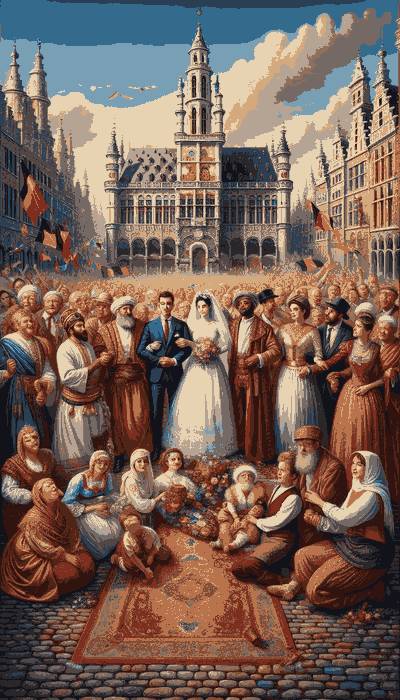
- Grand Place tradition: Post-ceremony walks for city hall weddings
One enduring Brussels tradition involves post-ceremony walks through the Grand Place for couples married at the city hall. These impromptu parades, complete with flower petals and tourist photographs, connect private celebrations to the public life of this international city.
Modern Adaptations and Current Trends
2025 Belgian Wedding Trends
Today’s Belgian couples navigate between honoring tradition and expressing individuality. While certain elements remain non-negotiable, the civil ceremony, some form of extended celebration, chocolate in the dessert course, others adapt to contemporary values.
Sustainability drives many decisions, with couples prioritizing local suppliers and seasonal menus. Guest lists have evolved from previous generations’ standards, with smaller, more intimate celebrations becoming increasingly popular. Yet even micro-weddings of 20 to 50 guests maintain essential Belgian elements: the two-ceremony structure, the emphasis on culinary excellence, and those midnight moments when soup appears to revive the celebration.
Current popularity of traditions:
- Still universal: Civil ceremonies, Le Vin d’Honneur, chocolate favors
- Very common: Belgian desserts, late-night food, witness system
- Regional specific: Language choices, food selections, music
- Evolving: Religious ceremonies adapting to modern preferences
- Reviving: Broom jumping, historical venue choices
Digital integration happens thoughtfully. While many couples now offer livestreaming for distant relatives, the paper faire-partfair-PAR still arrives by post. Virtual elements supplement rather than replace in-person traditions, maintaining the human connections at Belgian weddings’ heart.
Cost Considerations for Belgian Weddings
Belgian couples allocate wedding budgets with clear priorities: food and beverage typically represents the largest expense, recognizing that guests will remember the meal long after flowers fade. Venues command another significant portion, while photography captures lasting memories.
Budget categories to consider:
- Civil ceremony: Administrative fees
- Religious ceremony: Church fees and requirements
- Reception venue: Rental costs vary by location
- Catering: Per-guest pricing varies widely
- Beverages: Belgian beer and wine selections
- Photography/video: Professional documentation
- Music/entertainment: Live or DJ options
- Flowers/decoration: Seasonal arrangements
- Wedding attire: Including Belgian lace options
- Invitations: Traditional faire-part printing
Regional variations persist in costs as in customs. Wallonian celebrations may run higher than Flemish equivalents, while Brussels commands premium prices that reflect its capital status. Yet across all regions, couples increasingly choose meaningful over merely expensive, investing in authentic touches rather than imported luxury.
The range of Belgian wedding costs varies considerably based on choices made, but within that range lies enormous variety. A couple might splurge on exceptional chocolate favors while choosing a simple venue, or invest in live traditional music while keeping flowers minimal. These choices reflect not just budgets but values, what matters most when two families become one.
A Celebration Like No Other
As dawn breaks over Belgium and the last wedding guests finally head home, empty champagne bottles and full hearts tell the story of celebrations that honor both past and future. Belgian weddings succeed not through any single tradition but through their accumulation, civil ceremonies that ensure legal protection, religious or folk rituals that connect to heritage, elaborate meals that bring communities together, and yes, even midnight soup that keeps the party going.
These marathons of joy, stretching from morning civil ceremonies through dawn farewells, create memories layered like Belgian lace, intricate, beautiful, and strong enough to last generations. Whether in Flemish, French, or the international language of celebration, Belgian weddings remind us that some moments deserve not just hours but entire days of recognition.
In a world of quick ceremonies and casual receptions, Belgium maintains its commitment to celebration as an art form. Here, weddings remain what they’ve always been: a chance for families to gather, traditions to continue, and love to be witnessed by all who matter. And perhaps that’s the greatest Belgian wedding tradition of all, the understanding that such moments, like fine chocolate and perfect lace, cannot be rushed.
Frequently Unanswered Questions
What is the midnight soup tradition at Belgian weddings?
MiddernachtsoepMID-der-nakht-soop (midnight soup) is a traditional hot soup served around midnight during Belgian wedding receptions, offering warmth and sustenance as celebrations continue into early morning.
Are civil ceremonies required in Belgium?
Yes, civil ceremonies at the town hall are mandatory in Belgium and must occur before any religious ceremony. They require 2-4 witnesses and official documentation.
What is Le Vin d’Honneur?
Le Vin d’Honneur is a 60-120 minute cocktail reception following the ceremony, featuring Belgian beverages and canapés for a broader guest list than the dinner.
How much does a typical Belgian wedding cost?
Belgian wedding costs vary considerably based on guest count, venue choice, and selected traditions. Regional differences also affect pricing.
What is special about Belgian wedding lace?
Belgian wedding lace, particularly from Brussels, Bruges, and Mechelen, is world-renowned for its quality and intricate craftsmanship, with handmade pieces highly prized.
What is the Livret de Famille?
The Livret de Famillelee-VREH duh fah-MEE is an official family record book issued after the civil ceremony, documenting marriage and future family events.
How long do Belgian wedding celebrations last?
Belgian weddings typically last from morning until early hours (2-4 AM), including civil ceremony, optional religious ceremony, and reception.
What are traditional Belgian wedding desserts?
Traditional desserts include Pièce Montéepee-ESS mohn-TAY (profiterole pyramid), chocolate buffets, fruit tarts, and waffle stations, showcasing Belgium’s famous confectionery.
When should Belgian wedding invitations be sent?
Faire-partfair-PAR (formal wedding invitations) should be sent 1-2 months before the wedding, featuring bilingual text and multiple ceremony times.
What are regional differences in Belgian weddings?
Flemish weddings focus on beer and interactive games, while Walloon ceremonies emphasize wine and formal protocols. Brussels weddings are often multilingual.
Frequently Asked Questions
What is the midnight soup tradition at Belgian weddings?
Midnight soup (Middernachtsoep) is a traditional hot soup served around midnight during Belgian wedding receptions, offering warmth and sustenance as celebrations continue into early morning.
Are civil ceremonies required in Belgium?
Yes, civil ceremonies at the town hall are mandatory in Belgium and must occur before any religious ceremony. They require 2-4 witnesses and official documentation.
What is Le Vin d'Honneur?
Le Vin d'Honneur is a 60-120 minute cocktail reception following the ceremony, featuring Belgian beverages and canapés for 100-300 guests.
How much does a typical Belgian wedding cost?
Belgian weddings typically cost between €15,000-€40,000, with variations depending on region, guest count, and chosen traditions.
What is special about Belgian wedding lace?
Belgian wedding lace, particularly from Brussels, Bruges, and Mechelen, is world-renowned for its quality and can cost €600-€3,000 per meter.
What is the Livret de Famille?
The Livret de Famille is an official family record book issued after the civil ceremony, documenting marriage and future family events.
How long do Belgian wedding celebrations last?
Belgian weddings typically last from morning until early hours (2-4 AM), including civil ceremony, religious ceremony, and reception.
What are traditional Belgian wedding desserts?
Traditional desserts include Pièce Montée, chocolate buffets, fruit tarts, and waffle stations, showcasing Belgium's famous confectionery.
When should Belgian wedding invitations be sent?
Formal wedding invitations (faire-part) should be sent 1-2 months before the wedding, featuring bilingual text and multiple ceremony times.
What are regional differences in Belgian weddings?
Flemish weddings focus on beer and interactive games, while Walloon ceremonies emphasize wine and formal protocols. Brussels weddings are often multilingual.