Fiji Wedding Traditions Complete Guide for Modern Couples
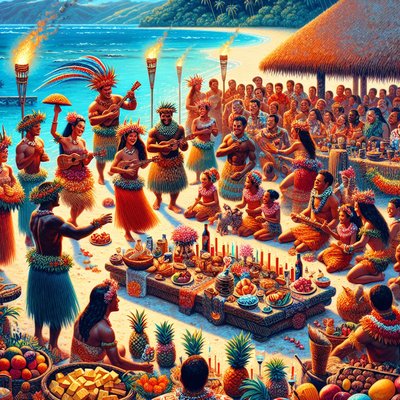
What Are Traditional Fijian Wedding Celebrations?
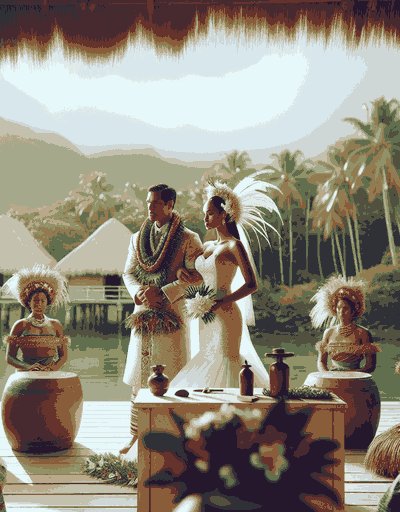
The complete Fijian wedding process includes:
- Pre-wedding ceremonies (1-3 days): Ai lakovi engagement, tevutevu mat ceremony, tabua presentations
- Official wedding day: Sevusevu kava ceremony, religious service, warrior escort, salusalusah-loo-SAH-loo exchange
- Reception traditions: Meke performances, lovo feast, veiyabakivay-yahm-BAH-kee money dance
- Post-wedding rituals: Matanigasau farewell ceremony, tree planting
- Total duration: 3-7 days of celebrations
- Average attendance: 100-500 guests (village weddings often include entire communities)
- Cost range: FJ$10,000-60,000 (USD $5,000-30,000)
Pre-Wedding Traditions and Ceremonies
Ai Lakovi (Engagement Traditions)
Ai lakovi (ah-ee lah-koh-vee) is the formal Fijian engagement process requiring ceremonial gift exchanges between families, typically occurring 3-12 months before the wedding and costing FJ$500-2,000 (USD $250-1,000).
This centuries-old practice involves three key components:
- Duguci ceremony: Formal marriage proposal with tabua presentation
- Family negotiations: Discussion of wedding arrangements and contributions
- Gift exchanges: Traditional items including yaqona, mats, and modern gifts
The majority of iTaukei Fijian couples maintain these engagement protocols, while many Indo-Fijian families incorporate similar customs. Modern couples often blend traditional elements with Western-style engagement parties.
Tabua Presentation (Whale’s Tooth Ceremony)
Tabua (tahm-boo-ah) is a polished sperm whale tooth representing the highest form of respect in Fijian culture, essential for marriage proposals and valued at FJ$300-3,000 (USD $150-1,500) depending on size and quality.
The tabua presentation process includes:
- Procurement: Sourced through traditional channels or specialized dealers
- Preparation: Polishing and braiding with magimagi (coconut fiber cord)
- Presentation protocol: Specific words and gestures during offering
- Acceptance ritual: Formal acknowledgment by bride’s family
Traditional practice indicates that refusing a tabua proposal brings dishonor to both families. Contemporary Fijian law restricts whale tooth trade, making inherited tabua particularly valuable. Similar to engagement rings in Western culture, the tabua symbolizes serious commitment and family approval.
Tevutevu Ceremony (Mat Spreading Ritual)
Tevutevu (teh-voo teh-voo) is the traditional mat-spreading ceremony held 1-2 nights before the wedding, involving 20-50 family members and costing FJ$1,000-3,000 (USD $500-1,500) for gifts and feast preparations.
Essential elements include:
- Traditional mats: Hand-woven pandanus mats (FJ$50-500 each)
- Tapa cloth: Masi (bark cloth) pieces (FJ$100-1,000 per piece)
- Modern bedding: Blankets, sheets, pillows (FJ$500-1,500 total)
- Veicurumi songs: Traditional women’s songs specific to each region
Regional variations of tevutevu:
- Central Viti Levu: Emphasis on fine mat weaving, 10-20 mats exchanged
- Coastal regions: Include dried fish and seafood in gift exchanges
- Northern islands: Feature distinctive tapa patterns and designs
Bulubulu Ceremony (Reconciliation Ritual)
Bulubulu (boo-loo boo-loo) is the formal reconciliation ceremony performed after elopement, costing FJ$2,000-5,000 (USD $1,000-2,500) and involving presentation of yaqona, tabua, and feast preparation.
This ritual addresses the cultural breach of eloping without proper ceremonies. Key components:
- Matanigasau: Formal apology speech by husband’s spokesman
- Yaqona sevusevu: Large kava presentation (10-20 kg of dried kava root)
- Compensation gifts: Livestock, cash, or modern equivalents
- Feast preparation: Food for 50-200 attendees
Until bulubulu is performed, traditional protocol restricts the wife from visiting her birth village. Many eloped couples perform this ceremony within 2 years of marriage to restore family harmony.
Official Wedding Day Ceremonies
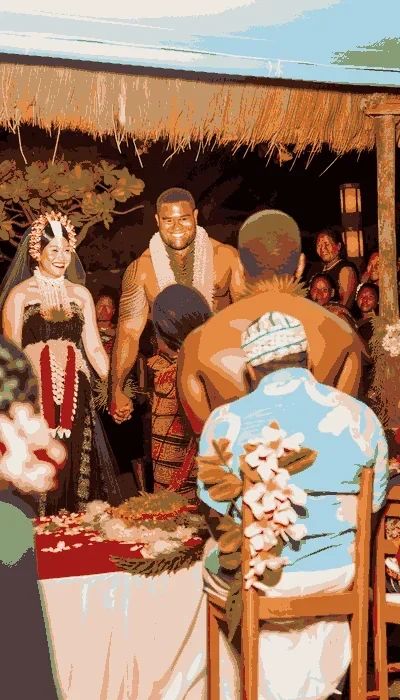
Sevusevu (Kava Ceremony)
Sevusevu (seh-voo seh-voo) is the mandatory kava ceremony marking official wedding commencement, lasting 30-60 minutes and involving ceremonial preparation and consumption of yaqona (kava) root drink.
The ceremony follows strict protocols:
- Tanoa setup: Traditional kava bowl positioned facing chief or eldest
- Mixing process: 3-5 minutes of ritualized preparation
- Serving order: Chief/eldest first, then by social hierarchy
- Clapping sequence: Three claps before drinking, one after
Kava ceremony costs:
- Yaqona root: FJ$50-200 per kilogram (2-5 kg typically used)
- Ceremonial items: Tanoa bowl, biloBEE-loh cups (FJ$200-500 set)
- Ceremonial leader: FJ$100-300 honorarium
Resort wedding coordinators note that most destination weddings include modified sevusevu ceremonies lasting 15-20 minutes, while traditional village weddings maintain full protocols with 50-200 participants.
Traditional Wedding Attire
Traditional Fijian wedding attire varies by ethnic background, with iTaukei wearing masi (tapa) clothing costing FJ$500-3,000 (USD $250-1,500) and Indo-Fijians choosing saris or lehengas ranging FJ$1,000-5,000 (USD $500-2,500).
iTaukei traditional dress:
- Masi wedding dress: Hand-painted bark cloth with geometric patterns
- Sulu vakataga: Men’s formal wraparound garment with decorative borders
- Salusalu lei: Fresh flower garlands (FJ$50-150 each)
- Traditional accessories: Shell jewelry, feather ornaments
Indo-Fijian wedding attire:
- Bridal lehenga: Embroidered ensemble in red/gold (FJ$1,500-5,000)
- Groom’s sherwani: Formal coat with churidarchoo-ree-DAHR (FJ$800-2,500)
- Jewelry sets: Gold pieces averaging FJ$2,000-10,000
- Mehndi: Henna application service (FJ$100-500)
Modern fusion approaches blend elements, with many couples incorporating both Western and traditional attire throughout celebrations.
Bili Bili (Warrior Escort)
Bili bili (bee-lee bee-lee) is the dramatic warrior escort tradition where 4-8 traditionally dressed warriors carry the bride on a flower-decorated platform, costing FJ$500-1,500 (USD $250-750) for resort ceremonies.
Visual elements include:
- Warriors’ attire: Grass skirts, face paint, ceremonial weapons
- Bridal platform: Bamboo throne decorated with tropical flowers
- Processional route: 50-100 meter entrance to ceremony site
- Chanting: Traditional warrior calls and songs
This tradition, dating back to chiefly weddings, creates spectacular photo opportunities. Resort packages often include bili biliBEE-lee BEE-lee as premium add-on, while village weddings recruit young men from the community.
Salusalu Exchange (Flower Lei Ceremony)
Salusalu (sah-loo sah-loo) exchange involves couples placing flower leis on each other, with garlands made from frangipani, hibiscus, and orchids costing FJ$50-200 (USD $25-100) per lei.
Lei-making specifications:
- Flower selection: 50-100 blooms per lei
- Creation time: 1-2 hours per garland
- Fragrant varieties: Frangipani, gardenia, jasmine preferred
- Preservation: Refrigerated storage extends life to 2-3 days
The exchange symbolizes mutual respect and the beauty of joined lives. Professional lei makers charge FJ$30-80 per hour, with wedding parties often organizing lei-making gatherings as pre-wedding activities. This tradition shares similarities with Hawaiian and other Pacific Island wedding customs.
Reception Traditions and Celebrations
Meke Performance (Traditional Dance)
Meke (meh-keh) is traditional Fijian storytelling through dance and song, with professional performance groups charging FJ$500-2,000 (USD $250-1,000) for 20-30 minute wedding performances.
Performance components:
- Performers: 8-20 dancers and musicians
- Instruments: LaliLAH-lee drums, bamboo pipes, hardwood clappers
- Dance types: War dances (cibiCHIM-bee), celebration dances (seaseaseh-ah-SEH-ah), love stories
- Costumes: Traditional masi cloth, grass skirts, face paint
Regional meke variations:
- Viti Levu: Emphasis on warrior traditions and historical narratives
- Vanua Levu: Incorporation of Indo-Fijian influences
- Lau Islands: Distinctive Polynesian-influenced movements
Modern wedding meke often includes interactive segments where guests join simplified dance movements.
Lovo Feast (Earth Oven Banquet)
Lovo (loh-voh) is the traditional earth oven cooking method for wedding feasts, serving 100-500 guests at FJ$25-50 (USD $12-25) per person, with preparation taking 4-6 hours.
Lovo menu typically includes:
- Proteins: Whole pig (FJ$300-500), chicken, fish, beef
- Root vegetables: DaloDAH-loh/taro, cassava, sweet potato, breadfruit
- Palusami: Taro leaves with coconut cream (FJ$5-10 per serving)
- Modern additions: Lamb, prawns, vegetarian options
Preparation process:
- Pit digging:
1.5m x 2m hole, 3-4 hours before cooking 2. Stone heating: Volcanic rocks heated with coconut husks 3. Food wrapping: Banana leaf parcels for each item 4. Cooking time: 2-3 hours underground 5. Ceremonial unveiling: Community gathering for pit opening
Resort lovo experiences maintain authentic techniques while meeting health standards, with dedicated lovo pits and trained staff. Similar earth oven traditions appear in New Zealand (hangi) and other Pacific cultures.
Veiyabaki (Money Dance)
Veiyabaki (vay-yahm-bah-kee) is the traditional money dance where guests pin currency to couple’s clothing, typically collecting FJ$1,000-5,000 (USD $500-2,500) during 30-45 minute reception segment.
Money dance protocols:
- Announcement: MC explains tradition to unfamiliar guests
- Music selection: Mix of traditional and contemporary songs
- Pinning method: Safety pins provided, bills folded lengthwise
- Collection helpers: 2-4 assistants manage pinned money
Modern adaptations include:
- Money trees: Decorative branches for hanging envelopes
- Digital transfers: QR codes for electronic gifts
- Charity options: Some couples donate portion to local causes
The tradition represents community support, with collected funds helping establish newlyweds’ household. Similar money dance customs exist in Filipino and Polish wedding traditions.
Additional Ceremonial Traditions
Tovolea Ceremony (Elder Blessings)
Tovolea (toh-voh-leh-ah) is the blessing ceremony where family elders place hands on couple’s heads, offering prayers for prosperity and fertility, typically involving 4-10 elders from both families.
Blessing components:
- Elder selection: Grandparents, aunts, uncles, respected community members
- Prayer duration: 2-5 minutes per elder
- Traditional phrases: Blessings in Fijian language for health, children, prosperity
- Gift presentation: Elders often give heirloom items or cash
This intimate ceremony usually occurs during quieter reception moment, creating emotional highlight for families. Urban weddings might include video messages from overseas elders unable to attend.
Bilo Ceremony (Coconut Shell Unity Ritual)
Bilo (bee-loh) ceremony involves couple sharing yaqona from polished coconut shell, with ceremonial biloBEE-loh sets costing FJ$50-300 (USD $25-150) and becoming treasured family heirlooms.
Ceremonial elements:
- Bilo preparation: Coconut shell polished with sandpaper and oil
- Cord binding: Magimagi rope connects two bilo temporarily
- Sharing sequence: Three sips each, alternating
- Final gesture: Breaking apart bound bilo symbolizes individual strength within unity
Resort ceremonies often provide souvenir bilo sets for couples, while family bilo may be generations old with carved decorations and stand.
Matanigasau (Farewell Ceremony)
Matanigasau (mah-tah-nee-ngah-sow) is the formal farewell ritual concluding wedding festivities, involving 15-30 minutes of speeches, gift presentations, and ceremonial yaqona sharing with immediate families.
Farewell components:
- Gratitude speeches: Couple thanks both families formally
- Final tabua exchange: Symbolic gifts between families
- Departure blessings: Elders offer traveling mercies
- Traditional songs: Isa Lei or regional farewell songs
This ceremony provides closure, acknowledging the bride’s transition between families. Modern practice includes thanking wedding party and recognizing those who traveled far to attend.
Regional Variations Across Fiji
iTaukei Wedding Variations
iTaukei wedding traditions represent customs of indigenous Fijians comprising approximately 57% of the population, with ceremonies varying significantly between Fiji’s 14 provinces and 330 islands.
Provincial distinctions:
- Ba Province: Known for elaborate meke performances, 30-40 dancers typical
- Tailevu Province: Emphasis on chiefly protocols, extended kava ceremonies
- Kadavu Island: Unique yaqona strains used, specific preparation methods
- Lau Islands: Polynesian influences, distinctive mat patterns
Cost variations by region:
- Urban areas (Suva/Nadi): FJ$15,000-40,000 average
- Rural villages: FJ$5,000-15,000 with community contributions
- Island ceremonies: Additional FJ$3,000-8,000 for transportation
Indo-Fijian Wedding Traditions
Indo-Fijian weddings blend South Asian customs with Fijian elements, representing approximately 37% of the population with traditions varying by ancestral Indian state origins.
Common ceremonies include:
- Tilak ceremony: Groom’s forehead marking (FJ$500-1,500)
- Haldi ceremony: Turmeric paste application (FJ$300-800)
- Baraat procession: Groom’s arrival with music (FJ$1,000-3,000)
- Seven vows (Saat Phere): Hindu marriage rituals around fire
Fusion elements in modern Indo-Fijian weddings:
- Sevusevu inclusion: Many families incorporate kava ceremony
- Lovo + Indian catering: Mixed cuisine offerings
- Bilingual ceremonies: Hindi, English, and Fijian elements
Modern Adaptations and Costs (2025)
Destination Wedding Packages
Fijian destination wedding packages at major resorts range FJ$5,000-50,000 (USD $2,500-25,000), with thousands of international couples choosing Fiji annually for tropical ceremonies.
Popular resort packages include:
- Basic beach ceremony: FJ$5,000-10,000 (20-50 guests)
- Traditional Fijian experience: FJ$15,000-25,000 (includes warriors, meke, lovo)
- Luxury private island: FJ$30,000-50,000 (exclusive venue use)
Package components typically cover:
- Ceremony setup: Tropical flower arch, seating, sound system
- Traditional elements: Simplified sevusevu, warrior escort option
- Photography: 2-4 hours coverage, drone footage
- Reception: Beachfront setup, local band, partial catering
Sustainable Wedding Trends
Eco-conscious Fijian weddings incorporate environmental elements, with growing numbers of couples choosing sustainable options adding FJ$500-2,000 (USD $250-1,000) to budgets.
Sustainable adaptations include:
- Coral planting ceremonies: FJ$50-100 per guest donation
- Local flower sourcing: Reducing imported blooms significantly
- Banana leaf plates: Replacing single-use items
- Carbon offset programs: International guest travel compensation
Technology Integration
Digital elements in Fijian weddings accommodate international guests, with live-streaming services costing FJ$500-1,500 (USD $250-750) and reaching 50-200 remote viewers on average.
Tech additions include:
- Streaming setups: Multiple cameras for ceremony coverage
- Translation services: Real-time interpretation for multilingual guests
- Digital gift registries: QR codes replacing traditional gift tables
- Virtual reality recordings: 360-degree ceremony capture (FJ$2,000-5,000)
Planning Timeline and Budgets
Traditional Wedding Timeline
Complete Fijian wedding planning typically spans 6-12 months:
12 months before:
- Family meetings to discuss arrangements
- Venue selection (church, village, resort)
- Initial budget planning (FJ$10,000-60,000 range)
6 months before:
- Ai lakovi (engagement) ceremonies
- Guest list finalization (100-500 typical)
- Vendor bookings (meke groups, lovo specialists)
3 months before:
- Attire fittings and masi orders
- Accommodation arrangements for off-island guests
- Traditional gift preparations
1 month before:
- Tevutevu ceremony planning
- Food preparations begin
- Final ceremonial confirmations
1 week before:
- Pre-wedding ceremonies commence
- Lovo pit preparation
- Lei making gatherings
Budget Breakdown
Average traditional Fijian wedding costs (150 guests):
- Ceremonies: FJ$2,000-5,000 (all traditional protocols)
- Venue: FJ$1,000-10,000 (village hall to resort)
- Catering: FJ$3,750-7,500 (FJ$25-50 per person)
- Traditional elements: FJ$2,000-5,000 (meke, warriors, ceremonies)
- Attire: FJ$1,500-8,000 (traditional and modern outfits)
- Photography/Video: FJ$2,000-5,000
- Entertainment: FJ$1,000-3,000 (band, DJ, performers)
- Decorations: FJ$1,000-3,000 (flowers, setup)
- Miscellaneous: FJ$1,750-4,500 (transport, favors, contingency)
Total range: FJ$15,000-50,000 (USD $7,500-25,000)
Cultural Etiquette for Guests
Attending Fijian Weddings
Guest etiquette at Fijian weddings requires understanding cultural protocols, with appropriate gifts ranging FJ$50-500 (USD $25-250) and modest dress covering shoulders and knees.
Essential guest guidelines:
- Sevusevu participation: Accept kava when offered, clap appropriately
- Gift giving: Cash preferred, presented in envelope with card
- Photography: Ask permission before photographing ceremonies
- Footwear: Remove shoes when entering homes or ceremonial spaces
Cultural sensitivities:
- Head touching: Avoid touching anyone’s head (sacred in Fijian culture)
- Pointing: Use open hand rather than finger pointing
- Loud behavior: Maintain respectful volume during ceremonies
- Seating: Wait to be directed, respect hierarchical arrangements
Modern Fusion Trends 2025
International Influences
Fijian weddings in 2025 increasingly blend global trends with traditional elements, creating unique multicultural celebrations averaging FJ$20,000-40,000 (USD $10,000-20,000).
Popular fusion elements:
- Western ceremony + Fijian reception: Church service followed by traditional feast
- Cocktail hour sevusevu: Modified kava ceremony during reception
- Food stations: Lovo alongside international cuisines
- Bilingual ceremonies: English with Fijian blessings
Methodist and other Christian influences remain strong in Fiji, with many couples incorporating church services alongside traditional customs.
Social Media Integration
Social media-friendly Fijian weddings incorporate photogenic traditional elements, with couples investing additional FJ$1,000-3,000 (USD $500-1,500) in visual enhancements.
Instagram-worthy moments:
- Warrior escort entrance: Dramatic processional videos
- Sunset ceremonies: Golden hour beach timing
- Flower installations: Tropical blooms creating backdrop walls
- Drone coverage: Aerial shots of island venues
Hashtag strategies blend English and Fijian: #BulaBride #FijiLove #IslandWedding with family names.
Comparison Tables
Traditional vs Modern Fijian Wedding Elements
| Element | Traditional Practice | Modern Adaptation |
|---|---|---|
| Duration | 5-7 days of ceremonies | 1-3 days typical |
| Guest Count | Entire village (200-500) | Selective list (100-200) |
| Venue | Village hall or outdoor | Resort or hotel |
| Sevusevu | Full ceremony (45-60 min) | Abbreviated (15-20 min) |
| Attire | Only traditional masi/sulu | Multiple outfit changes |
| Food Service | Communal lovo feast | Buffet with lovo option |
| Entertainment | Traditional meke only | Meke plus DJ/band |
| Cost | FJ$5,000-15,000 | FJ$20,000-50,000 |
Regional Wedding Cost Variations
| Location | Average Total Cost | Guest Count | Key Differences |
|---|---|---|---|
| Suva (Capital) | FJ$25,000-40,000 | 150-250 | Hotel venues, professional vendors |
| Nadi (Tourist Hub) | FJ$30,000-50,000 | 100-200 | Resort ceremonies, international guests |
| Rural Villages | FJ$8,000-15,000 | 200-500 | Community contributions, traditional focus |
| Outer Islands | FJ$10,000-20,000 | 100-300 | Transportation costs, local customs |
| Private Islands | FJ$40,000-100,000 | 50-150 | Exclusive venues, luxury services |
Frequently Asked Questions
How much does a traditional Fijian wedding cost?
Traditional Fijian weddings cost between FJ$10,000-60,000 (USD $5,000-30,000) depending on location, guest count, and included traditions. Village weddings average FJ$8,000-15,000 with community contributions, while resort ceremonies range FJ$20,000-50,000. Key expenses include ceremonial items (tabua, yaqona), traditional performers, lovo feast catering, and venue costs.
What is the significance of kava in Fijian weddings?
Kava (yaqona) ceremonies are mandatory in traditional Fijian weddings, serving as the official commencement ritual. The sevusevu ceremony involves preparing and sharing the mildly narcotic drink from the pepper plant root, symbolizing respect, unity, and seeking ancestral blessings. Proper protocol includes specific clapping sequences and hierarchical serving order.
How long do Fijian wedding celebrations last?
Traditional Fijian weddings span 3-7 days, including pre-wedding ceremonies (tevutevu, engagement rituals), the wedding day itself, and post-wedding celebrations. Modern weddings typically condense to 1-3 days, though some families maintain week-long festivities. Village weddings often extend longer with entire communities participating.
Can non-Fijians incorporate traditional elements?
Yes, non-Fijians frequently incorporate traditional elements, especially at resort weddings. Popular additions include simplified sevusevu ceremonies, warrior escorts, meke performances, and lovo feasts. Resort wedding packages offer culturally respectful versions of these traditions, with costs ranging FJ$500-5,000 for various traditional elements.
What should guests wear to a Fijian wedding?
Guests should dress modestly with shoulders and knees covered, respecting both Fijian and often Christian values. Women wear dresses or skirts (suluSOO-loo), while men wear dress shirts with formal sulu or trousers. Bright, tropical colors are welcome. Remove shoes when entering homes or sacred spaces. Avoid wearing white or black.
What are appropriate wedding gifts in Fiji?
Cash gifts are preferred at Fijian weddings, typically FJ$50-500 (USD $25-250) depending on relationship closeness. Present money in enveveiyabakivay-yahm-BAH-keeing the veiyabaki (money dance) or in gift boxes at reception. Traditional gifts include tapa cloth, woven mats, or household items. Wrapped presents are also acceptable.
Is alcohol served at Fijian weddings?
Alcohol service varies by family preference and religious background. Methodist and other Christian weddings often exclude alcohol, while Hindu and secular celebrations may include it. Kava serves as the traditional ceremonial drink regardless of alcohol presence. Resort weddings typically offer full bar service unless specifically requested otherwise.
What’s the difference between iTaukei and Indo-Fijian weddings?
iTaukei (indigenous Fijian) weddings emphasize traditional ceremonies like sevusevu, meke performances, and lovo feasts, typically lasting multiple days. Indo-Fijian weddings incorporate Hindu or MuslimmehndiMEHN-deetibaraatbuh-RAHTth mehndi, baraat processions, and Indian cuisine, sometimes blending with Fijian elements. Both value extended family participation and multi-day celebrations.
When is the best time of year for a Fijian wedding?
May through October offers Fiji’s dry season with temperatures 18-26C (65-79F), ideal for outdoor ceremonies. November through April brings higher humidity and cyclone risk but fewer tourists and lower venue prices. School holidays (December-January, April, July) see higher local wedding demand and prices.
How do we plan a Fijian wedding from overseas?
Planning from overseas requires 6-12 months preparation. Start by choosing between resort packages (FJ$5,000-50,000) offering coordination services or hiring local wedding planners (FJ$2,000-5,000 fees). Video consultations, digital contracts, and advance venue visits help. Consider legal requirements: visitors can marry in Fiji with proper documentation including birth certificates and single status affidavits. For more information, consult the Fiji Government Births, Deaths and Marriages Registry for official marriage requirements.
Frequently Asked Questions
How much does a traditional Fijian wedding actually cost?
The answer might surprise you, traditional Fijian weddings cost between FJ$10,000-60,000 ($5,000-$30,000 USD), but here's the twist: village weddings often cost less than resort ceremonies despite feeding triple the guests. How? Community magic. In villages, families contribute labor, food, and supplies, bringing a FJ$30,000 wedding down to FJ$8,000-15,000 in actual cash spent. Your cousin provides the lovo(earth oven) expertise, aunties weave mats as gifts, and the village hall comes free with elder approval. Resort weddings flip the script, you're paying FJ$20,000-50,000 for convenience, but missing the controlled chaos of 200 relatives arguing over lovo pit placement. Pro tip: Even "simple" beach ceremonies with warriors and meke(traditional dance) run FJ$15,000 minimum once you add traditional elements that make it authentically Fijian.
What is a 'vakamau' in Fijian culture?
A 'vakamau' is the traditional Fijian wedding ceremony that represents the sacred union of families and communities, often lasting several days or weeks.
What exactly is kava and do I have to drink it?
Great question that every first-time guest asks! Kava (yaqona in Fijian) is a mildly narcotic drink made from crushed pepper plant roots mixed with water, tasting like muddy water met a peppercorn at a bad party. The sevusevu(kava ceremony) isn't just a drink, it's THE ritual that officially opens any Fijian gathering. Yes, you should drink it when offered (refusing is like declining communion at a Catholic wedding). The effects? A slight numbing of lips and tongue, mild relaxation, and membership in an ancient tradition. Don't worry about getting "drunk", wedding kava is usually mixed lighter than everyday drinking kava. The real challenge isn't the effects but the taste. Smile, clap three times before drinking, once after, and know that your grimace becomes part of family lore.
What is the significance of the tabua in Fijian weddings?
The tabua (whale's tooth) is a precious ceremonial gift presented by the groom's family during the 'dulumi' to request permission for marriage.
Why do Fijian weddings last so many days?
Think of Fijian weddings as Netflix series rather than movies, each day serves a purpose in the marriage story. Traditional celebrations span 3-7 days because you're not just joining two people but merging entire family networks. Day one might be tevutevu(mat ceremony) where families size each other up through gift quality. Day two brings religious ceremonies. Day three features the reception with lovo feasts. Days four through seven? Extended family events, farewell ceremonies, and recovery from the previous days. Modern couples often compress to 1-3 days, but even "simplified" versions include pre-wedding rituals, the ceremony, reception, and farewell traditions. The extended timeline also accommodates relatives traveling from other islands, when your aunt boats in from Kadavu, you don't rush her back after one meal.
What traditional attire do Fijian brides wear?
Fijian brides typically wear a masi dress or skirt, adorned with shells and natural fibers, complemented by a salusalu (flower garland).
Can non-Fijians have a traditional Fijian wedding?
Absolutely! Non-Fijians frequently incorporate traditional elements, especially at resort weddings where cultural fusion is the norm. Popular additions include simplified sevusevu ceremonies (15 minutes versus traditional 45), bili bili(warrior escort) entrances for dramatic effect (FJ$500-1,500), meke performances during receptions (FJ$500-2,000), and lovo feasts that wow international guests. The key is respecting traditions while adapting them appropriately. Resort coordinators excel at creating culturally respectful versions, warriors still chant authentically, but they'll explain meanings in English. About 70% of destination weddings include at least three traditional elements. Most Fijians appreciate interest in their culture when done respectfully. Skip the tabua(whale tooth) exchange unless you have Fijian family, but absolutely include the flower salusalu(lei) ceremony.
What is the 'yaqona' ceremony?
The yaqona (kava) ceremony is a crucial unity ritual during Fijian weddings, symbolizing respect and community blessing.
What should wedding guests wear to respect traditions?
Dress codes at Fijian weddings balance tradition, modesty, and tropical reality. Women should wear dresses or sulus(sarongs) covering shoulders and knees, think elegant resort wear, not beach casual. Bright tropical colors celebrate the setting, but avoid white (bride's color) or black (funeral associations). Men wear dress shirts with formal sulus or lightweight trousers, ties melt in humidity, so skip them unless specified. For Indo-Fijian weddings, embrace color! Women often wear saris or lehengas (rentable in Suva for FJ$100-300), while men sport kurtas or formal shirts.
Key rules: Remove shoes when entering homes or ceremonial spaces (bring nice socks), dress modestly for religious portions, and pack a shawl for air-conditioned venues. That stunning sundress with spaghetti straps? Save it for the honeymoon. Pro tip: Bring two outfits, formal for ceremony, comfortable for hours of dancing.
How long do traditional Fijian weddings last?
Traditional Fijian weddings can span several days or weeks, involving extensive community participation and celebrations.
What are appropriate wedding gifts in Fijian culture?
Cash reigns supreme at Fijian weddings, typically FJ$50-500 ($25-$250 USD) depending on your relationship and wallet depth. Present money in a nice envelope during the veiyabaki(money dance) or in decorated gift boxes at the reception. Traditional gifts include tapa cloth (masi), woven mats, or household items, but modern couples prefer money to establish their homes. For Indo-Fijian weddings, gold jewelry or cash in odd number amounts (FJ$51, $101) brings luck.
Avoid clocks (symbolizing death), knives (cutting relationships), or handkerchiefs (tears). If you're international guests, quality items from your homeland make thoughtful presents, just ensure they're practical, not dust collectors. Register gifts exist but feel impersonal in communal cultures. When in doubt, crisp bills in a beautiful envelope with a heartfelt card never offend.
What is 'solesolevaki' in Fijian weddings?
Solesolevaki refers to the communal effort where the entire village helps with wedding preparations and celebrations.
Is alcohol served at Fijian weddings?
The alcohol question divides Fijian weddings more than lovo versus buffet debates. Many iTaukei families, particularly Methodist ones, exclude alcohol entirely, kava provides the social lubricant. Hindu weddings might include alcohol, while Muslim celebrations definitely don't. Secular and resort weddings typically offer full bar service. The key? Read the room (or invitation). If the wedding's at a church hall with prominent kava bowls, it's probably dry. Resort venues usually clarify alcohol policies upfront.
Even at weddings with bars, kava takes precedence culturally. You'll insult no one by sticking to juice and kava. However, arriving intoxicated to any portion commits serious cultural sins. Some modern couples compromise, no alcohol during ceremonies and formal dinners, but open bar for late-night dancing. When alcohol is served, Fiji Bitter and rum dominate, though international wines appear at upscale events.
What is served at a Fijian wedding feast?
The traditional feast (magiti) includes lovo-cooked foods (underground oven), seafood, and local delicacies.
What's the deal with whale teeth at weddings?
The tabua(whale tooth) isn't just valuable, it's Fijian culture's crown jewel, the ultimate symbol of respect. These polished sperm whale teeth, worth FJ$300-3,000 ($150-$1,500 USD), serve as engagement rings, ceremony openers, and apology offerings rolled into one sacred object. Traditionally, grooms' families present tabua during marriage proposals. Refusing one equals refusing the proposal, no pressure!
Modern laws restrict whale tooth trade, making inherited tabua precious family heirlooms. At weddings, tabua presentations mark major moments: opening ceremonies, uniting families, blessing couples. The presentation involves specific protocols, trained speakers, formal language, careful handling. Non-Fijians shouldn't attempt buying or presenting tabua unless guided by Fijian family. Think of them as Fijian culture's version of Excalibur, powerful, ancient, and definitely not found on Amazon.