French Wedding Traditions
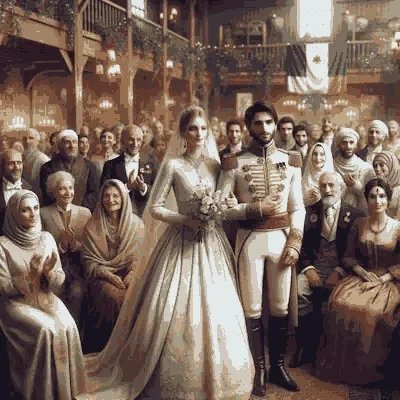
Overview of French Wedding Process & Timeline
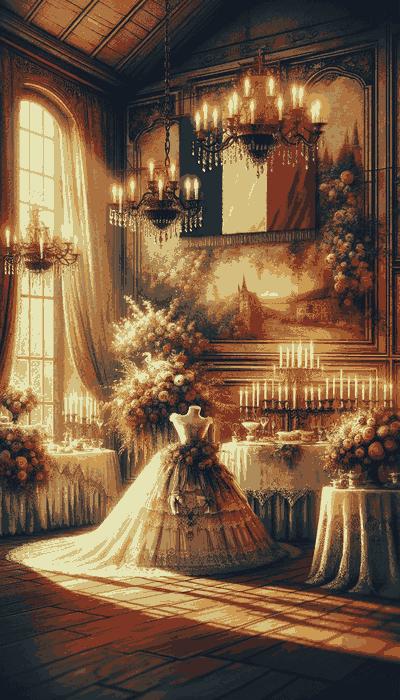
The path to a French wedding unfolds like a carefully composed symphony, each movement building toward the crescendo of celebration day:
12-18 months before: The journey begins with fiancailles (fyan-sigh), when families gather privately to bless the engagement before the world knows
6-12 months before: Paperwork filed at the local Mairiemeh-REE sets the legal wheels in motion
3-6 months before: Elegant faire-part arrive in mailboxes, traditionally sent by both sets of parents
1-2 days before: Friends orchestrate the enterrement de vie de jeune fille/garcon - literally “burying” single life
Wedding day: Civil ceremony (required by law), religious ceremony (honoring faith), Vin d’Honneur (welcoming the community), and dinner reception (intimate celebration)
Post-midnight: As exhausted children sleep in corners, die-hard revelers sustain themselves with onion soup while dancing until dawn breaks
Pre-Wedding Traditions and Ceremonies
Fiancailles (Engagement Traditions)
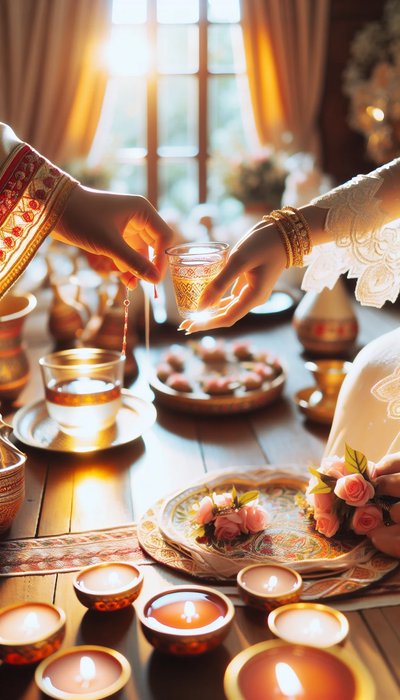
In the hushed anticipation of a family gathering, French couples announce their engagement through fiancailles, a medieval tradition that values family blessing above public spectacle. For 2-4 weeks, only immediate family shares this precious secret, creating bonds of intimacy before the wider celebration begins.
The ritual unfolds in distinctive stages. First comes the private approach - traditionally, the groom seeks the father’s blessing, though modern couples often approach both sets of parents together. Then, 20-30 close family members gather for a formal announcement dinner, an investment of EUR 500-1,500 ($550-$1,650) in family unity.
Gift exchange carries deep symbolism: the groom presents an engagement ring (EUR 2,000-5,000/$2,200-$5,500), while the bride reciprocates with a watch (EUR 1,000-3,000/$1,100-$3,300), representing time given to each other.
Regional flavors color these gatherings differently. In sun-drenched Provence, local rose flows while lavender centerpieces perfume the air. Brittany’s Celtic heritage emerges through traditional music accompanying toasts. Alsatian families might blend French champagne with German beer, honoring their borderland culture.
The family gathering tradition remains popular among French couples, though urban couples often skip the secrecy period. The mutual gift exchange endures, embodying egalite - that essential French value of equality in relationships.
Les Faire-part (Wedding Announcements)
Three months before the wedding, mailboxes across France fill with les faire-part - formal announcements that cost EUR 300-800 ($330-$880) for 100-150 pieces. These aren’t mere invitations; they’re declarations of family alliance, traditionally worded as if both sets of parents are hosting their children’s union.
The classic format reads like poetry: “Monsieur et Madame [Name] ont l’honneur de vous faire part du mariage de leur fille…” Each line carefully placed, every word weighted with tradition. Two ceremony times appear - first the civil, then the religious or symbolic - acknowledging France’s unique dual-ceremony requirement.
Regional personality shines through design choices. Parisian announcements might feature family crests and cost EUR 5-10 per piece in formal script. Provencal designs incorporate watercolor lavender or olive branches. In Brittany, Celtic knots frame bilingual French-Breton text, while Alsatian faire-partfair-PAR blend Germanic fonts with French wording.
Modern couples navigate tradition thoughtfully - many maintain the parent-hosted format while others self-announce. Digital elements supplement but rarely replace physical cards. Premium cardstock and letterpress printing remain de rigueur for traditional families who view these announcements as keepsakes for generations.
Pre-Wedding Celebrations
Forget Vegas-style debauchery - the French enterrement de vie de jeune fille/garcon (ahn-tair-mohn duh vee duh zhun fee/gar-sohn) literally “buries” single life through meaningful experiences with closest friends. These celebrations prioritize connection over excess, typically lasting one memorable day rather than entire weekends.
Groups of 8-15 friends invest EUR 100-300 ($110-$330) per person in experiences that reflect regional culture. In Burgundy, friends might tour centuries-old wine caves, learning to distinguish terroir while toasting the bride or groom. Along the Cote d’Azur, yacht rentals and beach clubs offer Mediterranean glamour at EUR 200-500 ($220-$550) per person. Parisians often combine dinner at a special restaurant with cabaret shows, while Brittany’s musical heritage means traditional fest-noz dancing by the sea.
Between both families, formal dinners 1-3 months before the wedding weave new relationships. These meals - EUR 50-150 ($55-$165) per person at quality restaurants - bring together 10-20 people from each side. Parents who’ve never met discover common ground over regional specialties, while siblings size each other up between courses. These dinners prove essential for creating the family fusion that French weddings celebrate.
Official Wedding Ceremonies
Mariage Civil (Civil Ceremony)
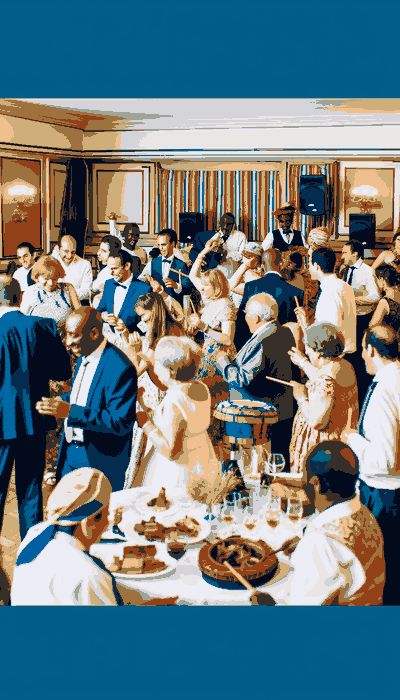
Every French marriage begins in the same place: the town hall. Since Napoleon’s 1804 Civil Code, the mariage civil stands as the only legally recognized union, a 15-30 minute ceremony that costs nothing to EUR 500 ($0-$550) depending on municipality. No religious ceremony holds legal weight without this republican ritual.
Inside the Mairiemeh-REE’s ceremonial hall, the mayor or deputy - wearing the blue, white, and red sash of the Republic - presides over a deeply symbolic act. Birth certificates, medical certificates, and proof of residence lie ready. Two to four temoins (tay-mwan), the witnesses who’ll sign official registers, stand beside the couple as Articles 212-215 of the Civil Code ring out: the mutual duties of marriage under French law.
History echoes through these halls. Before 1792, only Catholic marriages counted, leaving Protestants, Jews, and non-believers in legal limbo. The Revolution changed everything, making France among the first nations to establish truly secular marriage. Today’s civil ceremonies continue this democratic tradition.
Urban ceremonies in Paris average an efficient 20 minutes with 30 intimate guests, while village marriages might extend to 45 minutes with half the community attending. Some couples separate their civil and religious ceremonies by days or even weeks, hosting an intimate legal ceremony before their grand celebration.
Livret de Famille (Family Record Book)
As the mayor’s signature dries on marriage documents, newlyweds receive France’s most distinctive administrative gift: the Livret de Famille. This slim booklet - just 15x10.5cm with 24 pages - becomes the official biography of their family unit, recording every milestone from this moment forward.
The document holds almost sacred status in French society. Marriage details, witness names, and official stamps mark its first pages. Future entries will chronicle births, adoptions, and eventually, deaths. Any legal changes - divorces, remarriages, name modifications - require official updates. Lose it, and bureaucratic nightmares ensue.
While format remains standardized nationwide (with slight variations in Alsace-Moselle due to local laws), the meaning transcends paperwork. Grandmothers pull out yellowed livrets to show grandchildren their lineage. Parents present them when registering children for school. It’s autobiography written by the state, poetry in administrative prose.
Religious Ceremonies
After republican vows comes spiritual celebration. France’s religious landscape creates a rich tapestry, with couples choosing Catholic ceremonies, Protestant services, Muslim nikahnee-KAH, Jewish weddings, or non-religious symbolic ceremonies that speak to personal beliefs.
Catholic ceremonies remain the most traditional, lasting 45-90 minutes with full mass. Church donations range from EUR 200-1,000 ($220-$1,100), and pre-marriage counseling is required. In traditional regions, Latin mass persists, while local saints receive special invocations. The scent of incense mingles with flower arrangements as 100-300 guests witness sacred vows.
Protestant weddings concentrate in historical Huguenot strongholds. Alsace leads with significant Protestant ceremonies, while the Cevennes mountains of southern France maintain Reformed traditions dating to the Wars of Religion. These services, typically 30-45 minutes, emphasize scripture over ritual.
Jewish ceremonies thrive in major cities, with Paris offering 40+ synagogue options. Costs run EUR 1,000-5,000 ($1,100-$5,500) including kosher catering. The chuppahHOO-pah rises in synagogue courtyards, ketubahkeh-too-BAH texts are lovingly prepared, and the sound of breaking glass echoes ancient Jerusalem.
Muslim nikah ceremonies grow in urban areas, often featuring separate celebrations foMahrMAH-rn and women. Mahr negotiations specify dowry amounts, while families blend Maghrebi, Turkish, or West African traditions with French customs.
Interfaith ceremonies require delicate choreography. Specialized celebrants charging EUR 500-1,500 ($550-$1,650) help couples navigate between traditions, creating ceremonies that honor both faiths without betraying either.
La Cortege (The Wedding Procession)
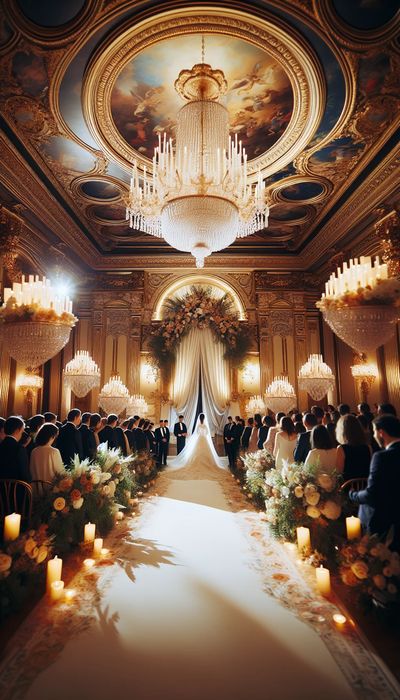
What strikes Americans most about French processionals? The groom walks his mother down the aisle. La Cortege (lah cor-tezh) flips Anglo-American expectations, emphasizing family unity over bridal spotlight. This medieval tradition transforms the processional into a community parade.
Musicians or celebrants lead the way, setting the rhythm for what follows. The groom appears next, his mother on his right arm - a son honoring the woman who raised him. Behind them, the bride enters with her father, but she’s not the sole focus. Instead, witnesses (temoins) follow, then family members by generation, and finally, remaining guests join the moving celebration.
A 1460 Bordeaux manuscript captures the medieval grandeur: entire villages following musicians to church, paths strewn with flowers, banners flying. Renaissance nobles added trumpeters and elaborate pageantry. Today’s processions maintain that community spirit, scaled to modern sensibilities.
Regional variations add local color. Norman accordionists charge EUR 300-500 ($330-$550) to lead processions with traditional tunes. Provencal children scatter lavender along the path. Breton bagpipers - EUR 400-600 ($440-$660) - fill the air with Celtic melodies. In rural Alsace, horse-drawn carriages costing EUR 800-1,200 ($880-$1,320) transport the wedding party through village streets.
Modern adaptations respect changing families. Same-sex couples might create parallel processions or walk together. Divorced parents find comfortable arrangements. Yet the tradition’s heart - families joining together - remains constant across interpretations.
Les Temoins (Witnesses) Wedding Party Structure
Where Americans see bridesmaids in matching dresses, the French see temoins - legal witnesses whose signatures validate the marriage. This isn’t about aesthetics or photos; it’s about choosing 2-4 people to legally vouch for your union. Their names appear forever in official records and the Livret de Famille.
The role carries weight beyond ceremony. Witnesses must be 18 or older, sign both civil and religious documents, and can be legally called upon to confirm the marriage’s validity. Usually best friends or siblings fill these positions, standing beside the couple during vows and perhaps coordinating reception surprises or speeches.
The contrast with American traditions is striking. No matching outfits requirement means witnesses wear what suits them. No gender requirements mean couples choose based on relationship, not symmetry. The financial difference is substantial too - French witnesses spend EUR 100-300 ($110-$330) on their own chosen attire versus $1,000+ for American bridesmaid expectations.
Language itself reveals cultural differences: French has no equivalent for “bridesmaid” or “groomsman.” The witness role is functional, not decorative. Yet some Parisian couples now add a “cortege d’honneur” (honor attendants) alongside legal witnesses, adapting American influences while maintaining French legal requirements. Traditional regions stick exclusively to the witness-only format, viewing additional attendants as unnecessary foreign import.
Traditional Ceremony Customs
Ribbon Cutting Ceremony
As church bells fade and newlyweds emerge into sunlight, village children await with ribbons stretched across their path. This centuries-old tradition - where the bride must cut through white satin barriers - costs just EUR 50-150 ($55-$165) but creates priceless moments. Each ribbon represents a potential marriage obstacle; cutting through demonstrates determination to overcome whatever lies ahead.
The ceremony unfolds simply: 4-8 local children hold ribbons or heart-shaped sheets across the couple’s path. Armed with decorative scissors, the bride slices through while the groom tosses coins totaling EUR 20-50 ($22-$55) to the young helpers. Laughter erupts as children scramble for coins and couples navigate the symbolic obstacles.
Regional traditions add unique touches. Norman couples might face multiple ribbons at intervals, turning their exit into an obstacle course. Breton ribbons feature Celtic symbols woven into the fabric. In Provence, laurel leaves scatter as ribbons fall, while Loire Valley couples might find flower petals replacing ribbons entirely.
Modern safety concerns bring pre-cut ribbons and biodegradable materials. Urban couples recreate the tradition at venue entrances when church exits aren’t possible. Destination weddings embrace ribbon-cutting as authentically French, delighting international guests. The tradition remains particularly popular at rural weddings, where village children still eagerly volunteer.
La Coupe de Mariage (The Wedding Cup)
In that breathless moment after “vous etes maintenant mari et femme,” newlyweds reach for la coupe de mariage - a two-handled silver cup that transforms their first drink as spouses into sacred ritual. These heirloom pieces, worth EUR 200-2,000 ($220-$2,200), pass through generations like liquid memory.
The cup itself tells stories through its patina and engravings. Sterling silver or pewter, always two-handled for sharing, typically holding 200-300ml of whatever defines the family: champagne from the family vineyard, burgundy from the groom’s birth year, Normandy cider from ancestral orchards, or Provencal rose with a sprig of home-grown thyme.
Medieval “loving cups” sealed more than marriages - they bound treaties and trade agreements. French nobility elevated these vessels to art, commissioning elaborate designs that announced family wealth. The oldest surviving examples, locked in chateau collections, date to the 15th century.
Today’s couples navigate between heritage and innovation. Those inheriting family cups restore generations of fingerprints into gleaming silver. Others commission contemporary designs (EUR 300-800/$330-$880) that will become tomorrow’s heirlooms. Some create signature cocktails for the moment, while others choose meaningful non-alcoholic options. The sharing gesture matters more than the contents - that first act of marriage performed together.
Reception Traditions and Celebrations
Le Vin d’Honneur (Wine of Honor Reception)
Between ceremony and dinner lies the most democratic of French wedding traditions: le Vin d’Honneur (luh van doh-nur). For 2-3 hours, doors open wide to welcome 150-300 guests - the butcher, the schoolteacher, distant cousins, old family friends - anyone touched by the couple’s lives but not included in the intimate dinner to follow. At EUR 15-40 ($17-$44) per guest, it’s affordable inclusivity.
The atmosphere buzzes with regional pride. In Champagne country, 3-5 varieties bubble in glasses while guests debate the merits of different houses (EUR 25-50/$28-$55 per guest). Bordeaux celebrations become impromptu wine education, with 4-6 vintages teaching terroir through tasting (EUR 20-35/$22-$39 per guest). Brittany’s cider and chouchen (honey mead) offer alternatives at EUR 15-25 ($17-$28) per guest, while Provence’s pastis bars and rose selection capture Mediterranean joie de vivre.
Food reflects locality too. Coastal regions might splurge on oyster bars with mignonette variations. Eastern France loads tables with charcuterie and regional cheeses. Southern spreads feature tapenade, glistening olives, and sun-dried vegetables, while northern regions offer savory tarts and terrines that would make any bistro proud.
Modern couples add cocktail bars (EUR 5-10/$6-$11 extra per guest) or trendy food trucks without losing tradition’s essence. Urban celebrations might compress to 90 minutes for logistics, but rural fetes stretch beyond three hours, with no one checking watches. This tradition of radical hospitality - inviting the entire community to celebrate - remains essential to French wedding culture.
Croquembouche Wedding Cake Tradition
Forget everything you know about wedding cakes. The French celebrate with croquembouche (krok-ahm-boosh), a gravity-defying tower of cream-filled pastry balls bound with caramel that can reach 100cm skyward. Medieval prosperity made edible, this architectural confection serves 100-300 guests at EUR 5-15 ($6-$17) per person.
The name translates to “crunch in mouth” - that satisfying crack when teeth meet caramelized sugar. Building one requires engineering precision: 3-4 profiteroles per guest minimum, filled with vanilla cream (or chocolate, praline, seasonal flavors for the adventurous), held together with hard-crack caramel that could double as cement. Spun sugar creates gossamer veils, while flowers and gold leaf add elegance.
Service becomes performance art. Some couples maintain tradition with ceremonial sword-cutting (yes, really), while others use special mallets to crack the caramel shell. Either way, the moment creates drama missing from simple cake-cutting.
Medieval guests once brought individual cakes, stacking them progressively higher. By the 17th century, professional patissiers unified these offerings into single towers. The tradition spread from royal courts to common celebrations, democratizing architectural dessert.
Regional France expresses identity through variations. Brittany might stack kouign-amann (butter cakes worth their weight in cholesterol) at EUR 8-12 ($9-$13) per person. Alsace arranges traditional kougelhopf cakes in tiers. Provence creates pyramids of calissons or navettes, Lyon displays marzipan Coussin de Lyon, while Basque Country fills their gateau towers with cherry preserves.
Modern alternatives gain ground without abandoning height drama: macaron towers in rainbow gradients (200-500 pieces at EUR 6-10/$7-$11 per person), eclair pyramids alternating chocolate and coffee, individual mille-feuille arranged architecturally. The traditional croquembouchekrok-ahm-BOOSH remains the most popular choice - because some classics can’t be improved.
Les Dragees (Sugared Almond Favors)
In small tulle pouches at each place setting, five sugar-coated almonds await - never four, never six, always five. Les Dragees (lay drah-zhay) carry weight beyond their EUR 2-8 ($2.20-$8.80) per guest cost. Each almond whispers a wish: fertility for children, happiness in marriage, health through the years, longevity together, and wealth however you define it.
The odd number matters - five cannot be divided equally, symbolizing the indivisible union. Traditional white or ivory coating matches most themes, though modern couples might choose pastels. Mediterranean almonds remain the gold standard, their slight bitterness beneath sweet coating representing marriage’s complex flavors.
Regional alternatives reflect local pride. Provencal couples might substitute calissons, those diamond-shaped almond confections that taste like sunshine. Brittany’s salted butter caramels (caramel au beurre sale) offer umami-sweet complexity. Norman celebrations feature chocolate-covered local specialties, while Nice provides candied fruits as colorful alternatives.
Contemporary packaging elevates presentation with personalized boxes (EUR 1-3/$1.10-$3.30 extra) or eco-friendly containers. Dietary restrictions inspire creative solutions - chocolate for nut allergies, donations to charity for favor-skeptics. Many couples stick with traditional white dragees, finding comfort in centuries of symbolism wrapped in tulle and ribbon.
Late-Night Traditions
At 2 AM, when feet ache and ties hang loose, when children sleep on piled coats and elderly aunts have long departed, the real party begins. Kitchen staff fire up stoves for soupe a l’oignon gratinee - French onion soup that arrives around 3 AM like cavalry rescuing exhausted dancers. This restorative tradition costs EUR 8-15 ($9-$17) per serving but saves the celebration from early endings.
The timeline reads like a marathon schedule: midnight brings coffee and wedding cake for those flagging early. Between 1-2 AM, the dance floor reaches peak energy while bartenders pour liberally. By 2-3 AM, kitchen prep begins, onions caramelizing slowly. The 3-4 AM soup service revives even the most exhausted revelers. Hardcore celebrants push through to 4-5 AM, rewarded at dawn with fresh breakfast pastries.
History credits 18th-century Les Halles market workers who sustained themselves with onion soup after grueling night shifts. Wedding parties adopted this working-class tradition, appreciating the soup’s legendary hangover-fighting properties. What started as practical sustenance became cherished ritual.
Regional variations respect local palates. Northern France sticks to classic onion soup crowned with melted gruyere. Normandy might serve seafood bisque, honoring coastal heritage. Alsace loads tables with choucroute, that sauerkraut-and-sausage feast that defines the region. Provence offers soupe au pistou, while southwestern France ladles out hearty garbure.
Modern adaptations include 2 AM food truck arrivals (EUR 10-20/$11-$22 per person) serving everything from authentic to international. Some couples offer comfort food stations - mac and cheese for Americans, ramen for fusion fans, doner for urban tastes. The truly ambitious provide full breakfast at 5 AM for sunrise survivors. All-night celebrations remain popular, with rural fetes more likely to greet the dawn than urban soirees.
Unique French Wedding Elements
La Voiture Balai (The Sweeper Car)
As wedding convoys snake between ceremony and reception venues, one decorated car brings up the rear - la voiture balai (lah vwah-tur bah-lay), literally “the broom car.” Festooned with clanging pans, streaming ribbons, and “Vive les Maries!” signs, this EUR 200-500 ($220-$550) tradition ensures no guest gets left behind.
The concept borrows from Tour de France cycling, where the voiture balai collects dropped riders. Wedding adoption began in the 1950s as car ownership spread beyond cities. Rural communities especially valued this safety net when navigating between village church and distant reception sites.
Vehicle choice speaks volumes about French automotive culture. The classic Citroen 2CV “Deux Chevaux” remains most traditional - that corrugated-metal people’s car that defined postwar France. Vintage alternatives include the boxy Renault 4L or dignified Peugeot 404. Modern quirky choices like the Citroen Mehari or cheerful Renault Twingo work too, while regions might showcase local automotive pride.
Beyond aesthetics, the sweeper serves seriously. A trusted friend or family member volunteers as driver, armed with maps, phone numbers, and first aid supplies. They collect stragglers, provide directions to confused out-of-towners, and horn-honk their way through villages announcing the wedding procession’s passage.
Contemporary practice adapts without abandoning. GPS sharing and WhatsApp groups supplement but don’t replace the physical sweeper car. Some couples hire vintage car services (EUR 300-800/$330-$880) complete with costumed drivers. Urban single-venue weddings might skip this tradition, but anywhere requiring guest transport between locations, the voiture balai rolls on.
Wine Mixing Ceremony
In wine-soaked France, what better symbolizes union than blending vintages? The Wine Mixing Ceremony sees wines from two different vineyards - typically representing each family’s region or preference - combined in crystal vessels. This EUR 50-200 ($55-$220) ritual appears especially where wine culture runs deep.
The ceremony unfolds during reception toasts. Two bottles appear - perhaps Bordeaux right bank meeting left bank, Burgundian pinot noir joining chardonnay, competing Champagne houses creating unique cuvee. Parents might pour, or the couple handles bottles themselves. The blended wine gets shared with the wedding party or parents, with remaining bottles kept as anniversary treasures.
Regional interpretations showcase terroir pride. Bordeaux families might blend grand crus from opposite Gironde banks, representing unity across the water. Burgundy plays with the poetry of red meeting white. Loire Valley contrasts styles - sweet with dry, light with powerful. The Rhone Valley bridges north and south, while international couples blend French tradition with foreign wines.
Symbolic variations run deep. Some choose identical grapes from different soils, showing how terroir shapes character. Birth-year vintages merge decades of history. Non-drinkers adapt with special grape juices, maintaining ritual without alcohol.
Modern enhancements might add sommelier commentary (EUR 200-400/$220-$440), custom labels for keepsake bottles, or specific food pairings throughout dinner. Ambitious couples work with local winemakers to create signature blends (EUR 500-1,500/$550-$1,650), bottling their unique cuvee as gifts or future anniversary wines.
Le Trousseau (Bridal Trousseau)
Long before registries and gift cards, French brides spent years preparing le trousseau (luh troo-so) - collections of linens, clothing, and household items for married life. Stored in ornate armoires de mariage and displayed before weddings, these EUR 1,000-5,000 ($1,100-$5,500) collections demonstrated family wealth and feminine skill.
Traditional contents read like domestic poetry: 6-12 sets of monogrammed bed linens, formal and everyday table settings, silk and lace lingerie, bath and kitchen towels in abundant supply, robes and sleepwear for propriety and comfort, all stored in cedar chests or carved armoires that become family heirlooms themselves.
Medieval and Renaissance brides spent years embroidering items, each stitch an investment in future domesticity. Community viewings allowed assessment of family status - threadcount mattered as much as dowry coins. The trousseau represented a bride’s contribution to household establishment, separate from monetary dowry.
Regional specialties elevate basic linens to art. Provence includes lavender sachets and boutis quilts (EUR 200-500/$220-$550 each) with intricate stitching. Brittany showcases Bigouden lace and regional embroidery patterns. Alsace features kelsch fabric in traditional designs, Normandy contributes handmade Alencon lace, while Lyon’s silk manufacturers provide lustrous additions.
Contemporary interpretation focuses quality over quantity. Modern brides might collect fewer items but choose sustainable, artisanal pieces supporting local craftspeople. Monogramming remains popular - that permanent mark of new identity. Registry integration means guests contribute specific trousseau items rather than cash. The trousseau revival sees brides creating modern versions, viewing trousseau preparation as mindful accumulation rather than old-fashioned obligation.
Modern Adaptations and Trends
Current French Wedding Overview
Today’s French weddings balance tradition with modern realities. Average guest counts have dropped from 200 in the 2000s to 120-150 today, while total costs range EUR 25,000-35,000 ($27,500-$38,500) for complete celebrations. Couples typically plan 12-18 months ahead, choosing between civil-only, civil plus religious, or civil plus symbolic ceremonies. Receptions still average 8-10 hours, with southern weddings typically hosting more guests than northern celebrations.
Budget breakdowns for typical 130-guest celebrations reveal priorities: venues claim EUR 3,000-8,000 ($3,300-$8,800) or about 25% of budget. Catering dominates at EUR 8,000-15,000 ($8,800-$16,500), representing roughly 40% of expenses. Photography and video capture EUR 2,000-4,000 ($2,200-$4,400) or about 10%, while attire matches at another 10%. Music and entertainment take about 8% at EUR 1,500-3,000 ($1,650-$3,300), with flowers and decor completing the picture at 7%.
Sustainable Wedding Practices
Environmental consciousness transforms traditions without abandoning them. Instead of imported dragees, couples offer local honey pots at EUR 3-6 ($3.30-$6.60) per guest. Rice and wheat give way to biodegradable dried flower confetti. Many couples now prioritize regional vendors, reducing transport emissions while supporting local economies.
Carbon footprint considerations drive decisions. Single venues cut transport emissions significantly. Wine sourced within 100km becomes increasingly standard. Potted flowers replace cut arrangements, later gifted to guests or replanted. Fabric napkin rentals eliminate paper waste, while LED lighting creates ambiance efficiently. Food waste finds new life through pre-arranged charity donations.
Vintage elements gain cachet - inherited jewelry, family christening gowns repurposed as ring pillows, grandmother’s veil restored. Digital components supplement but don’t replace physical traditions. E-invites might share logistics, but proper faire-partfair-PAR still arrive by post. The balance respects both tradition and planet.
Technology Integration
Digital enhancement serves tradition rather than replacing it. While many couples create wedding websites with bilingual options, physical faire-part remain essential. Live streaming brings distant relatives into ceremonies for EUR 500-1,500 ($550-$1,650), but nothing replaces physical presence.
Real-time photo sharing lets guests contribute to digital galleries, while collaborative playlists ensure everyone’s favorite dance song makes the cut. Digital guestbooks capture video messages alongside handwritten notes. Translation services help international guests follow ceremonies, but programs still arrive on paper.
The resistance to full digitalization reflects French values. Handwritten vows trump digital displays. Film photography experiences revival for artistic shots. Physical guest books remain prominently displayed. Technology serves as tool, not replacement for tangible tradition.
How much do French weddings typically cost?
The investment in a French wedding ranges significantly based on location and scale. Expect EUR 15,000-40,000 ($16,500-$44,000) nationally, with Paris celebrations reaching EUR 35,000-50,000 ($38,500-$55,000) while rural fetes might manage with EUR 15,000-25,000 ($16,500-$27,500). Per-guest costs run EUR 150-300 ($165-$330) including everything from afternoon Vin d’Honneur through dawn onion soup. Remember these multi-phase celebrations essentially combine cocktail party, formal dinner, and all-night dance party into one magnificent marathon.
What is the difference between American and French wedding traditions?
The differences run deeper than just swapping cake for croquembouchekrok-ahm-BOOSH. France legally requires civil ceremonies at town halls before any religious celebration - your church wedding alone won’t count legally. Instead of bridesmaids in matching dresses, French couples choose 2-4 temoins (witnesses) who sign legal documents. The processional surprises Americans: grooms walk with mothers, not standing at altars awaiting brides. And while American receptions might end by midnight, French fetes traditionally continue until dawn, complete with 3 AM onion soup service to revive flagging dancers. For more on American wedding customs, see our dedicated guide.
Do you have to get married at a town hall in France?
Absolutely, without exception. The civil ceremony at the Mairiemeh-REE isn’t optional - it’s the only legally recognized marriage in France. This republican tradition, dating to Napoleon’s Civil Code, means even the most elaborate cathedral ceremony holds no legal weight without those 15-30 minutes before the mayor. Usually immediate family attends this intimate legal ceremony, saving grand celebrations for religious or symbolic ceremonies that follow.
What do guests wear to French weddings?
French wedding attire whispers rather than shouts. Women choose elegant cocktail dresses or refined day wear, strictly avoiding white and overly flashy colors that might upstage the bride. Men wear dark suits - save the tuxedo unless specifically requested. Hats remain surprisingly common for women at formal daytime ceremonies. When invitations specify “tenue de soiree,” break out formal evening wear, but generally, understated elegance wins over ostentation.
What time do French weddings typically start and end?
Clear your calendar - French weddings commandeer entire days. Civil ceremonies often begin at 11 AM or 3 PM, with religious ceremonies following 1-2 hours later. Vin d’Honneur occupies 5-7 PM, dinner starts around 8 PM, dancing kicks off near 11 PM, and celebrations traditionally continue until 4-6 AM. Rural weddings especially maintain all-night traditions. Dawn breakfast for survivors isn’t uncommon.
What is given as wedding favors at French weddings?
Those small tulle pouches hold more than candy - they carry centuries of symbolism. Les Dragees, five sugar-coated almonds per guest, represent wishes for fertility, happiness, health, longevity, and wealth. The odd number matters, symbolizing indivisible union. At EUR 2-8 ($2.20-$8.80) per guest, they’re affordable tradition. Modern alternatives include local honey, artisanal chocolates, or charity donations in guests’ names, though traditional white dragees remain popular.
Are bachelor/bachelorette parties common in France?
The French “bury” single life differently than Americans. Enterrement de vie de jeune filleahn-tair-MOHN duh vee duh zhun FEE/garcon focus on meaningful experiences over wild excess. Expect day-long celebrations rather than weekend Vegas trips - wine tastings in Burgundy, spa days in Provence, or cultural experiences in Paris. Groups of 8-15 close friends spend EUR 100-300 ($110-$330) per person creating memories, not hangovers. The emphasis remains on honoring friendships that will support the marriage ahead.
What food is typically served at French weddings?
French wedding cuisine unfolds like a Michelin-starred marathon. Vin d’Honneur offers elegant appetizers, then dinner progresses through multiple courses: starter, fish, meat, cheese, and dessert. Regional pride shines - coastal weddings feature pristine seafood, hunting regions serve game, Perigord means truffles. Instead of tiered cake, croquembouche towers of cream puffs create sweet architecture. Around 3 AM, just when energy flags, onion soup arrives to restore stamina for continued celebration.
Can foreigners get married in France?
Yes, but prepare for bureaucracy. At least one partner must establish 40 days of consecutive residence in the specific commune where you’ll marry. Required documents include translated birth certificates, certificates of celibacy, residence proof, and valid passports. Start paperwork 2-3 months before your ceremony date - French administration doesn’t rush for romance. Some couples find destination wedding planners essential for navigating requirements.
What is the most important French wedding tradition?
Without question, the civil ceremony at the Mairie reigns supreme. This isn’t merely tradition - it’s legal requirement dating to 1804. No religious ceremony, however elaborate, creates legal marriage without this republican ritual. The mayor, wearing official tricolor sash, transforms couples into spouses under French law. This secular ceremony embodies France’s separation of church and state, ensuring equal marriage access regardless of religion. Skip the church if you must, but skip the Mairie and you’re not married in France.
Francophone Wedding Traditions
French wedding elegance has influenced celebrations throughout the Francophone world:
French Caribbean: The sophisticated soirees of Martinique and Guadeloupe blend Parisian chic with Caribbean flair. Saint Martin showcases this French-island fusion perfectly.
French Polynesia: French Polynesian weddings combine Tahitian flower crowns with French champagne toasts, while New Caledonia merges Melanesian customs with French civil ceremonies.
African Francophonie: Former French colonies maintain elegant traditions - Gabonese formal receptions, Malian civil requirements, and Nigerien French-inspired wedding cakes.
Island Territories: Even remote Reunion and Mayotte maintain French wedding law while celebrating with local music and cuisine.
Planning Tip: For couples considering a French wedding, the official French government portal Service-Public.fr provides complete documentation requirements for marriage in France, including specific forms for foreign nationals.
Frequently Asked Questions
What is the typical cost of a French wedding?
A typical French wedding costs between €25,000-€35,000, with variations based on location and guest count.
What is Vin d'Honneur?
Vin d'Honneur is a 2-3 hour welcome reception featuring champagne and canapés, costing €15-€40 per person.
Is a civil ceremony required in France?
Yes, a civil ceremony at the Mairie (town hall) is legally required before any religious or symbolic ceremony.
What is a Croquembouche?
A Croquembouche is the traditional French wedding cake - a tower of cream-filled pastry puffs costing €5-€15 per person.
How many witnesses are needed for a French wedding?
French weddings require 2-4 legal witnesses, who don't need to wear matching outfits.
What are Les Dragées?
Les Dragées are sugared almonds given as wedding favors, with 5 almonds per guest symbolizing different wishes.
What happens late at night at French weddings?
French weddings traditionally serve onion soup around 3 AM to revive tired dancers.
What is the Livret de Famille?
The Livret de Famille is an official family record book documenting marriages, births, and other milestones.
How does the French wedding procession work?
The groom walks with his mother, while the bride walks with her father, followed by witnesses and family.
What is La Voiture Balai?
La Voiture Balai (The Sweeper Car) is a decorated vehicle that collects stragglers during the wedding day.