Icelandic Wedding Traditions Complete Guide for Modern Couples
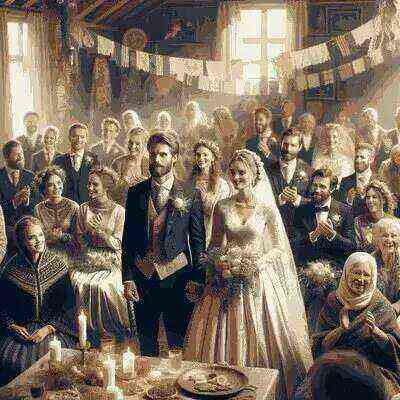
Key Components of Icelandic Weddings:
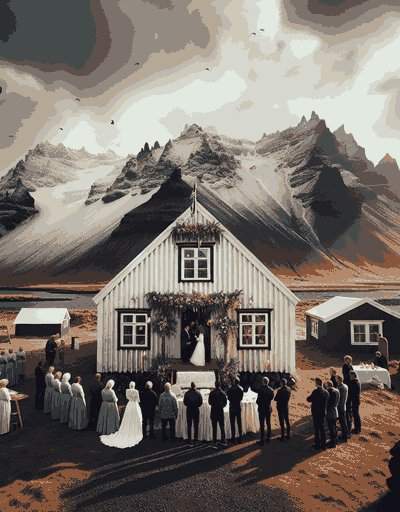
- Long engagement periods (traditionally 3-4 years, now 1-2 years)
- Civil ceremony requirement for legal recognition
- Outdoor ceremonies featuring glaciers, waterfalls, or black sand beaches
- Traditional wedding attire including thjodbuningur national costume or lopapeysa sweaters
- Multi-course feast with local cuisine
- Kransakaka tower cake and traditional desserts
- Cost range: $15,000-$50,000 USD (2-7 million ISK)
Pre-Wedding Traditions and Ceremonies
What Are Icelandic Engagement Customs?
Long engagements are a centuries-old Icelandic tradition where couples historically waited 3-4 years before marrying, allowing time to establish their livelihoods in Iceland’s challenging environment. This tradition developed from practical necessity when resources were scarce and travel difficult. Modern Icelandic couples typically have engagement periods of 12-24 months, still longer than the Western average of 6-12 months.
Key engagement traditions include:
- Formal family announcements before public sharing (most couples follow this practice)
- Exchange of simple bands rather than elaborate rings
- Joint savings accounts for wedding expenses
- Average engagement length: approximately 18 months
Traditional Betrothal Announcements
Betrothal announcements (trulofarauglysingar) are formal declarations of engagement that historically required three public announcements in different churches over consecutive Sundays. This practice, dating back to the 13th century, ensured community awareness and prevented bigamy in scattered rural communities.
Modern announcement practices:
- Family gatherings have largely replaced church announcements
- Social media announcements after family notification
- Traditional newspaper announcements in Morgunblaðið ($200-300 USD)
- Engagement parties for 30-50 close family and friends
Kudungavaka: The Traditional Pre-Wedding Celebration
Kudungavaka is Iceland’s traditional pre-wedding celebration meaning “emptying the barrels,” combining elements of bachelor and bachelorette parties held the night before the wedding. This centuries-old tradition involved both families gathering to finish stored alcohol before the wedding feast, ensuring fresh supplies for the celebration.
Traditional Kudungavaka elements:
- Joint celebration with both families (20-40 participants)
- Storytelling about the couple’s courtship
- Traditional songs and toasts
- Cost: $500-1,500 USD per event
Modern adaptations:
- Many couples now have separate bachelor/bachelorette parties
- Some maintain traditional joint celebrations
- Popular activities: spa visits, glacier tours, Northern Lights hunting
Regional Variations in Pre-Wedding Customs
Eastern Iceland traditions:
- Brudkaupskvedja - wedding poems written by family
- Horse riding processions to ceremony location
- Traditional wool gifts for the couple
- Average pre-wedding celebration cost: $800-1,200 USD
Western Fjords customs:
- Sea-themed celebrations with boat processions
- Sjomannagjof - sailor’s gifts of practical items
- Community fish feast before wedding
- Pre-celebration costs: $600-1,000 USD
Reykjavik modern practices:
- International-style bachelor/bachelorette parties
- Weekend trips to Europe (popular among younger couples)
- Average cost: $1,500-3,000 USD per person
- Duration: 2-3 days
Wedding Ceremonies in Iceland
What Is an Icelandic Wedding Ceremony?
Icelandic wedding ceremonies are legally binding unions that must include a civil component performed by authorized officials, combined with optional religious or cultural elements. These ceremonies typically last 30-60 minutes and can take place in churches, outdoors, or at registered venues. The average ceremony involves 50-150 guests and costs $2,000-5,000 USD including venue and officiant fees.
Ceremony components:
- Legal declaration by authorized officiant (required)
- Exchange of vows (often personalized by couples)
- Ring exchange using simple bands
- Unity rituals (candle lighting, handfasting, or horn drinking)
- Guest participation through songs or readings
Civil Ceremony Requirements and Process
Civil ceremonies in Iceland require specific documentation and can be performed by district commissioners (syslumenn), ordained ministers, or registered celebrants from recognized religious organizations. The process takes 3-8 weeks for residents and 4-12 weeks for international couples. For official requirements, consult the Registers Iceland (Thjodskra Islands) government portal.
Required documentation:
- Certificate of marital status (less than 6 months old)
- Valid passports for both parties
- Divorce decree if previously married
- Application fee: $150-200 USD
- Ceremony fee: $300-500 USD
For international couples:
- Documents must be apostilled or legalized
- Professional translation to Icelandic required ($100-300 USD)
- Two witnesses over 18 years old needed
- Similar to Las Vegas requirements but with longer processing time
Lutheran Church Weddings
Lutheran ceremonies represent a significant portion of Icelandic weddings, reflecting the country’s state church tradition established during the 1550 Reformation. These ceremonies follow traditional Protestant liturgy with Icelandic cultural elements and typically occur in historic churches dating from the 12th-20th centuries. This tradition shares roots with Norwegian wedding customs, though each Nordic country has developed distinctive practices.
Lutheran ceremony elements:
- Processional hymn: “Fagurt er i fjordum”
- Biblical readings in Icelandic and English
- Traditional blessing: “Gud blessi ykkur”
- Ceremony duration: 45-60 minutes
- Church rental: $500-1,500 USD
- Organist fee: $200-400 USD
Popular Lutheran wedding churches:
- Hallgrimskirkja, Reykjavik (200 guests, $2,000 USD)
- Domkirkjan Cathedral (150 guests, $1,500 USD)
- Rural timber churches (50-80 guests, $500-800 USD)
Asatru (Norse Pagan) Wedding Ceremonies
Asatru ceremonies are outdoor weddings based on pre-Christian Norse traditions, legally recognized since 1973 by the Asatruarfelagid organization. These ceremonies must be conducted under open sky except during severe weather, connecting couples to ancient Viking customs and natural forces.
Essential Asatru elements:
- Sacred space blessing using Thor’s hammer symbol
- Oath ring (eidhringur) made of copper ($200-500 USD)
- Horn drinking ritual with mead or ale ($50-150 USD)
- Invocation of Norse deities (Frigg for marriage, Freyja for love)
- Handfasting with colored cords
- Duration: 30-45 minutes
- Officiant fee: $400-800 USD
Popular Asatru locations:
- Thingvellir National Park (UNESCO site, $500 permit)
- Snaefellsnes Peninsula cliffs ($300 permit)
- Private land with mountain views (free-$200)
- Cave ceremonies in bad weather ($400-600)
Outdoor Wedding Venues and Logistics
Outdoor weddings in Iceland utilize the country’s dramatic landscapes, with many couples choosing natural settings over traditional venues. These ceremonies require special permits, weather contingency plans, and typically occur May-September during the midnight sun period.
Top outdoor wedding locations:
- Seljalandsfoss Waterfall: 60m cascade, $400 permit, 50 guests max
- Reynisfjara Black Sand Beach: Basalt columns backdrop, $350 permit
- Skogafoss Waterfall: 25m wide curtain, $450 permit, 80 guests
- Glacier lagoons: Jokulsarlon area, $600-1,000 permit
- Highland locations: F-road access required, $500-1,500 logistics
Outdoor ceremony costs:
- Location permit: $300-1,000 USD
- Transportation for guests: $1,000-3,000 USD
- Weather insurance: $500-1,500 USD
- Professional setup: $2,000-5,000 USD
- Total outdoor package: $5,000-15,000 USD
Traditional Icelandic Wedding Attire
What Is Traditional Icelandic Wedding Dress?
Traditional Icelandic wedding attire includes the thjodbuningur national costume for formal occasions and the modern incorporation of lopapeysa wool sweaters. The traditional bridal costume features a black wool skirt with colorful embroidered apron, white blouse, and elaborate headdress with gold or silver filigree, costing $2,000-5,000 USD to rent or $5,000-15,000 USD to purchase.
Traditional costume components:
- Upphlutur: Fitted black bodice with silver chains
- Peysufot: Black skirt with decorated hem
- Skautbuningur: Tall curved headdress
- Silver belt with dangling ornaments ($500-2,000 USD)
- Embroidered apron in regional patterns
Modern Wedding Attire Adaptations
Modern Icelandic brides predominantly choose international-style white gowns while incorporating traditional elements as accessories or for specific ceremony portions. The average wedding dress budget is $1,500-4,000 USD, with some brides adding Icelandic touches.
Popular traditional incorporations:
- Custom lopapeysa for photos or reception ($200-400 USD)
- Viking-inspired braided hairstyles ($150-300 styling)
- Bridal crown with local flowers ($100-250 USD)
- Traditional jewelry passed through families
- Wool shawls for outdoor ceremonies ($150-400 USD)
Groom’s attire options:
- Traditional thjodbuningur: $1,500-3,000 USD rental
- Modern suit with lopapeysa accent: $800-1,500 USD
- Standard formal wear: $500-1,500 USD
Regional Costume Variations
Northern Iceland styles (Akureyri region):
- Distinctive red embroidery on black base
- Fur-trimmed capes for winter weddings
- Silver disc brooches specific to region
- Rental cost: $2,500-3,500 USD
Westfjords traditional dress:
- Sea-inspired blue and green embroidery
- Sealskin accessories (historically, now faux)
- Whalebone corset stays (now plastic)
- Limited availability: 2-3 month advance booking required
East Iceland variations:
- Reindeer horn buttons and clasps
- Mountain flower embroidery patterns
- Influences from Scottish settlers, similar to patterns seen in Scottish wedding traditions
- Cost: $2,000-3,000 USD rental
Wedding Reception and Feast Traditions
Traditional Icelandic Wedding Foods
Icelandic wedding feasts combine traditional dishes with modern cuisine, typically featuring locally-sourced ingredients like lamb, seafood, and root vegetables. The traditional feast (veisla) lasts 4-6 hours with multiple courses and costs $100-250 USD per guest.
Traditional menu components:
- Hangikjot: Smoked lamb ($30-40/kg)
- Plokkfiskur: Fish and potato stew
- Graflax: Cured salmon with dill sauce
- Rugbraud: Dark rye bread
- Local cheese selection ($50-80/kg)
- Berry desserts with skyr
Modern feast adaptations:
- Many weddings include international options
- Vegetarian/vegan menus available at most venues
- Average courses: 3-5
- Cocktail hour additions: $20-40 per person
- Total catering cost: $8,000-20,000 USD for 100 guests
Kransakaka: The Traditional Wedding Cake
Kransakaka is a traditional Nordic wedding cake consisting of 15-20 concentric almond paste rings stacked to form a tower, decorated with white icing and Icelandic flags. This 18th-century Danish tradition costs $300-800 USD depending on size and serves 50-150 guests.
Kransakaka traditions:
- First break: Couple breaks top ring together
- Ring counting: Attached rings predict number of children
- Guest participation: Each breaks a piece while making wishes
- Speech requirement: Must break cake before giving toast
- Typical sizes: 18 rings (50 guests) to 25 rings (150 guests)
Recipe components:
- 50% ground almonds
- 30% powdered sugar
- 20% egg whites
- Firm, chewy texture
- 2-3 day preparation time
Wedding Cake Alternatives and Desserts
Hjonabandssaela or “marriage bliss cake” is a traditional alternative featuring oat crust with rhubarb jam, historically given as a “bed gift” between newlyweds. Modern couples often serve both traditional and international desserts.
Popular dessert options:
- Hjonabandssaela: $5-8 per serving
- Kleinur: Twisted donuts ($3-5 per guest)
- Vinarterta: Layer cake ($10-15 per serving)
- International wedding cake: $500-2,000 USD
- Dessert table: $15-30 per person
Modern trends:
- Many couples choose Kransakaka only
- Some combine traditional and modern cakes
- Dessert buffets growing in popularity
- Alternative options include cheese wheels and donut walls
Traditional Drinking Customs and Toasts
Icelandic wedding toasts (brudkaupsraedu) follow specific protocols with ceremonial drinking from shared vessels. The traditional “skal” toast involves maintaining eye contact while drinking and costs factor into overall bar expenses of $3,000-8,000 USD for open bar service.
Traditional drinking elements:
- Bridal cup (brudarbikar): Shared silver cup ($200-500)
- Drinking horn for Asatru ceremonies ($100-300)
- Brennivin: “Black Death” schnapps for toasts
- Local craft beers: $8-12 per bottle
- Imported wines: Limited selection, $40-100 per bottle
Toast traditions:
- Parents speak first (both sides)
- Best man and maid of honor follow
- Open microphone after formal speeches
- Average speech length: 3-5 minutes
- Musical interludes between speeches common
Post-Wedding Traditions and Customs
Morning Gift Exchange (Morgungjof)
Morgungjof is the traditional “morning gift” exchanged between newlyweds the morning after their wedding, evolving from Viking-era customs where grooms presented valuable gifts to establish their bride’s financial security. Many modern couples exchange meaningful gifts ranging from $200-2,000 USD.
Traditional morning gifts:
- Jewelry: Family heirlooms or new pieces ($500-5,000)
- Property deeds: Historically common, now symbolic
- Livestock: Sheep or horses on rural farms
- Money: Establishing bride’s independence
Modern adaptations:
- Experience gifts: Northern Lights tours, hot spring visits
- Personalized items: Photo albums, love letters
- Practical gifts: Household items for new home
- Adventure equipment: Hiking gear, camping supplies
Historical Wedding Night Customs
Bridal bed blessings were formal ceremonies where priests blessed newlyweds in their marriage bed while the couple shared ceremonial drinks, a practice lasting into the early 20th century.
Historical practices (pre-1950s):
- Priest’s blessing in couple’s bedroom
- Symbolic bedding ceremony with guests
- Gift presentations from wedding party
Current practices:
- Private suite preparations ($500-1,500 per night)
- Rose petals and champagne setup ($200-400)
- Morning-after brunch for close family ($30-50 per person)
- Honeymoon departures within 24-48 hours
Community Celebration Traditions
Extended wedding celebrations in Iceland historically lasted 3-7 days, with entire communities participating in feasts, games, and storytelling. Modern receptions typically span 6-8 hours with after-parties extending into early morning.
Traditional multi-day elements:
- Day 1: Arrival and preparation feasts
- Day 2: Main ceremony and feast
- Day 3-7: Community celebrations, games, storytelling
- Guest accommodation: Farmstead housing
- Food provisions: Community contributions
Modern celebration timeline:
- 2:00 PM: Ceremony (30-60 minutes)
- 3:00 PM: Cocktail hour and photos
- 5:00 PM: Dinner service begins
- 7:00 PM: Speeches and toasts
- 8:00 PM: Cake cutting
- 9:00 PM: Dancing begins
- 2:00 AM: Average end time
- After-party: Many guests continue
Modern Adaptations and 2025 Wedding Trends
Sustainable Wedding Practices in Iceland
Eco-conscious weddings in Iceland emphasize minimal environmental impact, with many couples incorporating sustainability measures. These practices can reduce costs by 15-25% while honoring Iceland’s environmental values.
Sustainable elements:
- Local flower choices: Arctic poppy, lupine ($50-150 vs $300-500 imported)
- Seasonal menus: Local ingredients can save significantly on catering
- Digital invitations: Save $300-800 on paper goods
- Reusable decor: Rental options $500-1,500
- Carbon offset programs: $200-500 for guest travel
Iceland as a Destination Wedding Location
Destination weddings in Iceland attract thousands of international couples annually, offering dramatic natural backdrops unlike the themed chapels of Las Vegas. These weddings average $25,000-60,000 USD for 20-50 guests, including travel and accommodation.
Destination wedding packages include:
- Legal paperwork assistance: $500-1,000
- Venue and permits: $2,000-5,000
- Photography in 3-5 locations: $3,000-8,000
- Guest transportation: $2,000-4,000
- 3-night accommodation: $5,000-15,000
- Reception and catering: $5,000-12,000
Popular destination combinations:
- Golden Circle ceremony locations (most popular)
- South Coast black beach weddings
- Westfjords remote celebrations
- Highland adventure weddings
Technology and Modern Elements
Digital integration enhances traditional Icelandic weddings while maintaining cultural authenticity. Unlike Las Vegas’s digital chapel experiences, Iceland focuses on documenting natural beauty and genuine moments.
Modern technological additions:
- Drone photography: $500-1,500 for aerial shots
- Live streaming for distant relatives: $300-800 setup
- Northern Lights alerts for winter weddings
- Digital guestbooks: QR code systems ($100-300)
- Social media coordinators: $500-1,000
Current trending elements:
- Midnight sun ceremonies (May-July): increasing in popularity
- Northern Lights receptions (Sept-March): popular for winter weddings
- Geothermal spa parties: $100-200 per guest
- Glacier ceremony permits: Limited availability
- Volcanic site weddings: New regulations pending
Regional Wedding Variations Across Iceland
Reykjavik and Capital Region Customs
Reykjavik weddings represent the majority of Icelandic marriages, blending international influences with traditional elements. Urban couples spend an average of $35,000-55,000 USD, significantly more than rural weddings.
Capital region characteristics:
- Venue options: 50+ hotels, 30+ unique spaces
- International catering: Most offer fusion menus
- Guest count: Average 100-150 people
- Transportation: Minimal (walking distance venues)
- Cultural blend: Many incorporate non-Icelandic traditions
Popular Reykjavik venues:
- Harpa Concert Hall: $5,000-10,000, 200-750 guests
- Nordic House: $2,000-4,000, 100-200 guests
- City Cathedral: $1,500-2,500, 150 guests
- Museum venues: $3,000-6,000, 50-150 guests
Rural and Regional Distinctions
Rural Icelandic weddings maintain stronger traditional elements, with communities contributing to celebrations. These weddings cost $15,000-30,000 USD and involve 50-100 guests, with most being locals.
Westfjords traditions:
- Boat processions to ceremony sites
- Community halls as primary venues ($500-1,000)
- Shared cooking by local families
- Folk dancing with accordion music
- Seafood-heavy menus
Eastern Iceland customs:
- Farm venues using family land
- Horse processions for wedding party
- Storytelling evenings pre-wedding
- Reindeer on winter menus
- Scottish-influenced music and dance
Northern Iceland practices:
- Church boats across fjords
- Midnight sun ceremonies prevalent
- Geothermal cooking demonstrations
- Whale watching for wedding guests
- Traditional costumes worn more frequently than nationally
Wedding Costs and Budget Considerations
Average Icelandic Wedding Expenses
Total wedding costs in Iceland range from $15,000-55,000 USD (2-7.5 million ISK), with the average couple spending approximately $32,000 USD. These costs reflect Iceland’s high living standards and limited vendor options compared to major wedding destinations.
Cost breakdown for 100 guests:
- Venue and ceremony: $2,000-5,000 USD (15%)
- Catering and bar: $10,000-20,000 USD (40%)
- Photography/videography: $3,000-7,000 USD (15%)
- Attire and beauty: $2,000-4,000 USD (10%)
- Flowers and decor: $1,500-3,500 USD (8%)
- Music/entertainment: $1,500-3,000 USD (7%)
- Miscellaneous: $1,000-2,500 USD (5%)
Traditional vs Modern Cost Comparisons
Traditional elements often cost less than modern alternatives, making them popular for budget-conscious couples. Choosing traditional options can reduce overall costs by 20-30%.
| Traditional Option | Cost (USD) | Modern Alternative | Cost (USD) |
|---|---|---|---|
| Kransakaka cake | $300-800 | Tiered fondant cake | $800-2,000 |
| Church ceremony | $500-1,500 | Hotel venue | $2,000-5,000 |
| Local flowers | $500-1,000 | Imported blooms | $2,000-4,000 |
| Traditional music | $500-1,000 | DJ/full band | $1,500-3,500 |
| Lopapeysa attire | $200-400 | Designer accessories | $500-2,000 |
Money-Saving Traditional Approaches
Budget-friendly traditions help couples reduce costs while maintaining authentic Icelandic elements. These approaches can save $5,000-15,000 USD compared to fully modernized weddings.
Cost-saving strategies:
- Summer outdoor ceremonies: Save $2,000-4,000 on venues
- Potluck elements: Traditional in rural areas, saves significantly on catering
- Family property venues: Free-$500 vs $2,000-5,000
- DIY Kleinur dessert table: $200 vs $1,000 dessert bar
- Borrowed traditional costumes: Save $2,000-5,000
- Local vendor networks: Generally less expensive than Reykjavik prices
Frequently Asked Questions
How long do Icelandic wedding celebrations typically last?
Modern Icelandic weddings typically span 6-8 hours from ceremony to reception end, with many celebrations including after-parties that extend to 2-3 AM. Traditional Viking-era weddings lasted 3-7 days, but contemporary couples rarely celebrate beyond a single day. Destination weddings often include 2-3 days of activities for guests, including welcome dinners and day-after brunches.
What is the legal process for foreigners getting married in Iceland?
International couples must submit documents 4-12 weeks before their wedding date, including apostilled certificates of marital status (less than 6 months old), valid passports, and any divorce decrees. The process costs $450-750 USD including application fees ($150-200), ceremony fees ($300-500), and document translation ($100-300). Unlike Las Vegas’s same-day marriages, Iceland requires advance planning but offers legally recognized unions valid worldwide.
Do Icelandic couples typically have engagement rings?
Icelandic engagement traditions favor simple bands over elaborate diamond rings, with most couples choosing modest rings under $1,000 USD. This reflects practical Nordic values and the tradition of saving money for establishing a household. Both partners often wear engagement bands, which then serve as wedding rings. The average spent on engagement rings in Iceland is $500-1,500 USD, compared to $5,000-7,000 USD in the United States.
What role does religion play in modern Icelandic weddings?
Religious ceremonies account for approximately half of Icelandic weddings, with most being Lutheran and a smaller percentage following Asatru (Norse pagan) traditions. The remaining couples choose civil ceremonies with no religious elements. Even religious ceremonies in Iceland tend to be less formal than in other countries, with personalized vows and contemporary music common. Couples can legally marry through any recognized religious organization or through civil authorities.
Are Icelandic weddings expensive compared to other countries?
Icelandic weddings cost an average of $32,000 USD for 100 guests, making them moderately expensive by international standards. This is comparable to weddings in other Nordic countries like Sweden and Finland, but less than major US cities (average $35,000-45,000) and more than Las Vegas weddings ($5,000-15,000). The high cost reflects Iceland’s general price levels, limited vendor competition, and importation needs for many wedding supplies.
What is the best time of year for an Icelandic wedding?
Summer months (May-September) are most popular for Icelandic weddings, accounting for the majority of ceremonies. June-July offers midnight sun for outdoor ceremonies, while September provides potential Northern Lights. Winter weddings represent a smaller portion of marriages, offering dramatic landscapes and lower venue costs but requiring weather contingencies. May and September offer the best balance of weather, daylight, and pricing.
How do Icelandic wedding gifts and registries work?
Traditional gift-giving in Iceland focuses on practical household items and monetary contributions rather than elaborate registries. Many couples create modest registries at Icelandic department stores, while others prefer monetary gifts (average $100-300 USD per guest). The traditional “morning gift” exchange between spouses remains popular. Group gifts for major items are common, organized by the wedding party.
What are typical Icelandic wedding favors?
Wedding favors in Iceland often reflect local culture and natural resources. Popular options include miniature bottles of Brennivin ($5-8 each), packages of Icelandic sea salt ($3-5), local chocolate ($4-7), or small lopapeysa ornaments ($8-12). Many couples skip favors entirely, instead donating to Icelandic charities. Personalized items featuring Icelandic phrases or runes are increasingly popular among destination wedding couples.
How important are Icelandic language elements in weddings?
Icelandic language features prominently in most weddings, even those conducted primarily in English. Key moments like vows, blessings, and toasts often include Icelandic phrases. Common wedding phrases include “Eg elska thig” meaning “I love you” and “Til hamingju” meaning “congratulations.” International couples often incorporate 2-3 Icelandic elements to honor the location, while local couples may conduct entire ceremonies in Icelandic with English translations for international guests.
What happens if weather disrupts an outdoor Icelandic wedding?
Weather contingencies are essential for Icelandic weddings, with nearly all outdoor ceremonies having indoor backup plans. Venue permits typically include alternate locations, and vendors are experienced with quick transitions. Common solutions include transparent tents ($2,000-5,000), moving ceremonies indoors while maintaining outdoor photos, or embracing weather as part of the experience. Weather insurance ($500-1,500) covers additional costs from major changes. The Icelandic saying “Thetta reddast” meaning “it will all work out” reflects the cultural attitude toward weather challenges.
Frequently Asked Questions
What is the traditional Icelandic wedding dress called?
The traditional Icelandic wedding dress is called þjóðbúningur, with the most formal version being the skautbúningur, complete with a distinctive faldbúningur headdress.
When is the most popular time to get married in Iceland?
Summer months during the midnight sun (June-August) are most popular, though winter weddings with northern lights are gaining popularity.
What is bónorð in Icelandic wedding tradition?
Bónorð is the formal marriage proposal tradition where the groom traditionally asks the bride's family for permission to marry.
What drinks are traditionally served at Icelandic weddings?
Brennivín, Iceland's traditional spirit, is served for toasts, along with local beers and wines.
How long is a typical Icelandic wedding celebration?
Traditional Icelandic weddings often last an entire day, from ceremony through late-night dancing and festivities.
What is festargjöf?
Festargjöf refers to the traditional exchange of engagement gifts between couples, symbolizing their commitment.
Are outdoor weddings common in Iceland?
Yes, outdoor weddings are popular, especially in summer, with couples choosing dramatic locations like glaciers or waterfalls.
What food is served at traditional Icelandic weddings?
Traditional menus include hangikjöt (smoked lamb), fresh fish, traditional soups, and the kransakaka wedding cake.
How do Icelandic couples wear their engagement rings?
Engagement rings are worn on the right hand until the wedding ceremony, when they're moved to the left hand.
What is pandurbúningur?
Pandurbúningur is the community tradition of collectively preparing for the wedding, including food, decorations, and arrangements.