Japanese Wedding Traditions: Sacred Sake and Ancient Ceremony
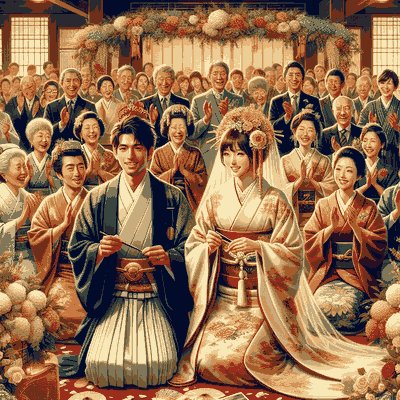
Complete Japanese Wedding Process Overview
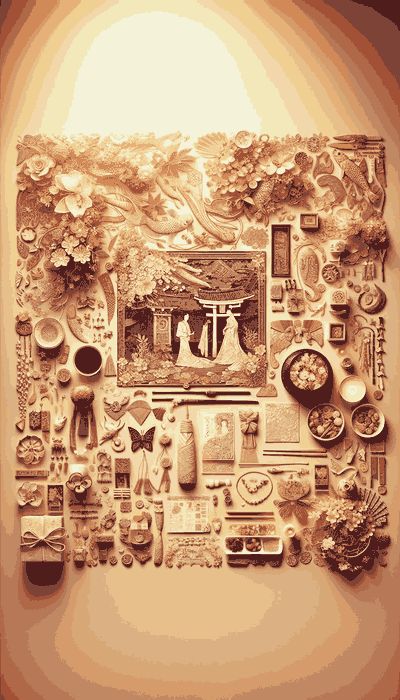
- 6-12 months before: Yuinoyoo-ee-noh engagement ceremony with gift exchange
- 3-6 months before: Select auspicious wedding date (Taian days preferred)
- 1-3 months before: Choose wedding venue and ceremony style
- Wedding day morning: Bride dressing in traditional attire (2-3 hours)
- Ceremony: Shinto, Buddhist, or Christian-style (30-60 minutes)
- Reception: Formal banquet with 2-3 costume changes (2-3 hours)
- Post-wedding: Sato gaeri visit to bride’s family (within 1 week)
Pre-Wedding Traditions and Ceremonies
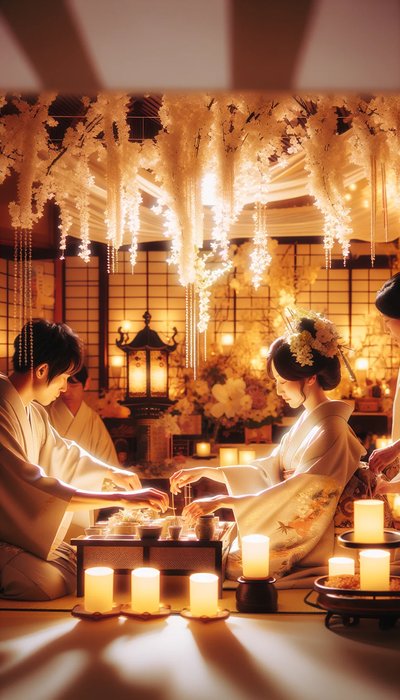
What is Yuino (Engagement Ceremony)?
Yuino is a formal Japanese engagement ceremony dating back to the Muromachi period (1336-1573) where both families exchange symbolic gifts and formalize the couple’s intention to marry. This ceremony typically occurs 6-12 months before the wedding, involves 10-20 family members, and includes the exchange of 5-9 traditional gifts worth Y100,000-500,000 ($650-3,250 USD).
Traditional yuinoyoo-ee-noh gifts include:
- Konbu (seaweed) - symbolizing fertility and prosperity
- Surume (dried cuttlefish) - representing lasting marriage
- Hemp thread - signifying growing old together
- Shiraga (white hair ornament) - representing longevity
- Ceremonial fan - symbolizing expanding happiness
- Cash envelope (goshugigoh-shoo-gee) - containing Y300,000-1,000,000
- Sake - for ceremonial toasting
- Engagement ring - modern Western addition
Modern yuino practices have evolved significantly, with many contemporary couples simplifying the ceremony to a restaurant dinner between families. Urban couples in Tokyo and Osaka frequently opt for abbreviated ceremonies lasting 2-3 hours, while rural families maintain fuller traditional formats.
Choosing Lucky Wedding Dates (Rokuyo Calendar)
The rokuyo calendar system determines auspicious and inauspicious days for Japanese weddings based on a six-day cycle originating from Chinese astrology. Taian days (most auspicious) command premium venue prices of 20-30% higher than regular days, while Butsumetsu days (least auspicious) are traditionally avoided, offering discounts of up to 50%.
The six-day rokuyoroh-koo-yoh cycle includes:
- Taian - “Great Peace” - Most auspicious (weddings cost Y500,000+ more)
- Tomobiki - “Friend Pulling” - Good for celebrations
- Senbu - “Early Loss” - Afternoon ceremonies preferred
- Shakko - “Red Mouth” - Noon hour only considered safe
- Sensho - “Early Victory” - Morning ceremonies preferred
- Butsumetsu - “Buddha’s Death” - Avoided (30-50% venue discounts)
According to Japanese wedding planners, many couples still consider rokuyo when planning their ceremony, with Taian Saturdays booking 12-18 months in advance at popular venues. Modern couples balance traditional calendar considerations with practical factors like guest availability and venue costs.
Pre-Wedding Family Meetings and Preparations
Traditional family meetings establish formal connections between families 3-6 months before the wedding. These gatherings, involving 10-15 immediate family members, cost Y50,000-150,000 ($325-975 USD) for venue and meals.
Key pre-wedding family events include:
- Formal introduction meeting (ryouke kao-awase) - 3-6 months before
- Wedding planning discussions - Monthly meetings
- Betrothal gift presentations - 2-3 months before
- Final preparation gathering - 1 month before
Regional variations in family involvement:
- Kyoto families maintain stricter traditional protocols with 3-5 formal meetings
- Tokyo families often combine meetings with engagement parties
- Okinawan families include extended relatives (30-50 people)
- Northern regions incorporate seasonal considerations for gatherings
Wedding Attire and Traditional Clothing
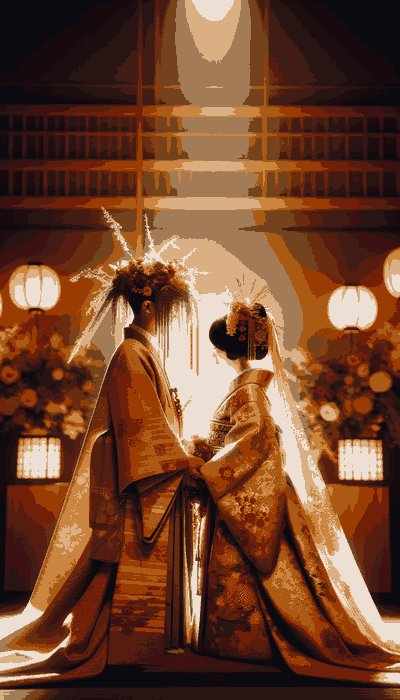
What is Shiromuku (White Wedding Kimono)?
Shiromuku is a pure white silk wedding kimono ensemble worn by Japanese brides for Shinto ceremonies, originating in the Edo period (1603-1868) among samurai families. This elaborate outfit, costing Y300,000-1,000,000 ($1,950-6,500 USD) to rent or Y1-5 million ($6,500-32,500 USD) to purchase, includes multiple layers and ceremonial accessories weighing 10-15 kilograms total.
Complete shiromukushee-roh-moo-koo ensemble components:
- Uchikake - Outer white silk kimono with embroidered patterns
- Kakeshita - Under-kimono layer
- Wataboshi or Tsunokakushi - White hood or ornamental headpiece
- Hakoseko - Small decorative purse
- Kaiken - Ceremonial dagger in decorative case
- Sensu - Folding fan
- White tabi socks and zori sandals
Symbolic meanings embedded in shiromuku:
- White color represents purity and readiness to adopt husband’s familyTsunokakushitsoo-noh-kah-koo-shee
- Tsunokakushi “hides horns of jealousy” symbolizing gentle disposition
- Crane and pine motifs embroidered for longevity
- Total ensemble takes 2-3 hours to properly dress with professional assistance
Modern shiromuku usage remains popular for ceremonies or photo sessions, with most brides choosing rental over purchase. Contemporary adaptations include lighter-weight fabrics and simplified accessories while maintaining traditional appearance. For those interested in how other Asian cultures approach wedding attire, Korean wedding traditions offer fascinating parallels with their own ceremonial dress customs.
Groom’s Traditional Wedding Attire
Montsuki hakama is the formal men’s wedding kimono consisting of a black silk kimono with familyhakamahah-kah-mahs, pleated hhaorihah-oh-ree pants, and haori jacket. This ensemble costs Y50,000-200,000 ($325-1,300 USD) to rent or Y300,000-800,000 ($1,950-5,200 USD) to purchase.
Traditional groom’s attire includes:
- Montsuki - Black kimono with 5 family crests
- Hakama - Formal pleated divided skirt
- Haori - Hip-length formal jacket
- Haori-himo - Decorative jacket ties
- Tabi - White split-toe socks
- Setta - Traditional sandals
- Sensu - Ceremonial folding fan
Costume Changes During Reception (Oironaoshi)
Oironaoshi is the Japanese wedding tradition of multiple costume changes during the reception, originating from Heian period (794-1185) nobility. Modern receptions feature 2-4 outfit changes costing Y200,000-800,000 ($1,300-5,200 USD) total for rentals.
Typical costume change sequence:
- Shiromuku (white kimono) - Ceremony entrance
- Iro-uchikake (colored kimono) - Reception entrance (often red or gold)
- Western white gown - Main reception portion
- Evening dress or modern outfit - Final reception segment
Time requirements for costume changes:
- Each change takes 20-30 minutes with professional dressers
- Special changing rooms provided at venues
- Background music or entertainment covers transition periods
- Professional hair and makeup adjustments included
Regional costume variations:
- Kyoto bridesKyo-yuzenkyoh-yoo-zehnaborate Kyo-yuzen dyed kimono worth Y500,000+
- Okinawan brides incobingatabeen-gah-tah colorful bingata textiles
- Tokyo brides often include designer Western gowns
- Northern regions feature more subdued color palettes
Wedding Ceremony Traditions
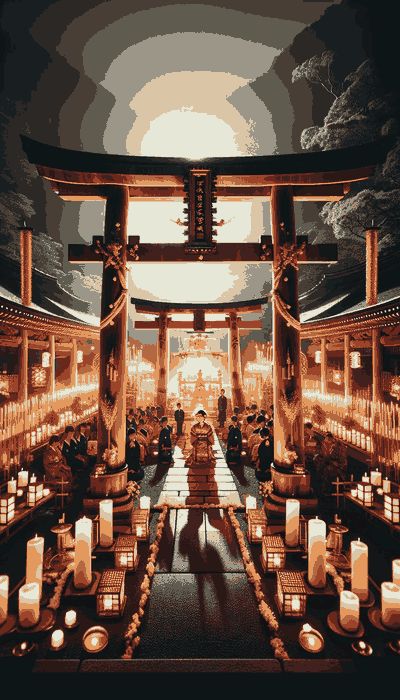
What is a Shinto Wedding Ceremony (Shinzen Shiki)?
Shinzen shiki is a traditional Shinto wedding ceremony performed at shrines by Shinto priests, involving ritual purification, sake exchange, and prayers to kamikah-mee (Shinto deities). These intimate ceremonies last 30-45 minutes, include 20-40 close family members, and cost Y50,000-150,000 ($325-975 USD) for shrine fees. According to Japan’s Agency for Cultural Affairs, Shinto wedding ceremonies represent an important element of Japan’s living cultural heritage.
Complete Shinto ceremony structure:
- Harai - Purification ritual with sacred branch (5 minutes)
- Norito - Priest’s prayer announcement to kami (5 minutes)
- San-san-kudo - Three-times-three sake exchange (10 minutes)
- Seishi sojo - Reading of marriage vows (5 minutes)
- Tamagushi - Offering evergreen branch at altar (5 minutes)
- Ring exchange - Modern addition (2 minutes)
- Oyako-katame - Sake sharing with parents (5 minutes)
- Final blessing - Priest’s closing prayer (3 minutes)
Sacred elements in Shinto ceremonies:
- Sake blessed by priests creates spiritual bond
- Sacred shrine space represents divine presencesakakisah-kah-kee>Evergreen sakaki branch symbolizes eternal life gagakugah-gah-koo raditional gagaku court music accompanies rituals
Shinto wedding ceremonies remain a meaningful choice for couples seeking traditional Japanese spirituality. Famous shrines like Tokyo’s Meiji Jingu host multiple ceremonies daily during peak wedding season. Modern adaptations include photography permissions and bilingual ceremonies for international couples.
Buddhist Wedding Ceremony (Butsuzen Shiki)
Butsuzen shiki is a Buddhist wedding ceremony conducted at temples by Buddhist monks, featuring sutra chanting, incense offerings, and vows before Buddha. These ceremonies last 45-60 minutes, accommodate 30-50 guests, and cost Y80,000-200,000 ($520-1,300 USD). Couples interested in Buddhist wedding traditions may also find value in exploring Thai wedding traditions, which feature significant Buddhist influences.
Buddhist ceremony elements:
- Temple bell ringing - Announces ceremony start
- Incense offering - Couple purifies intentions
- Sutra chanting - Monks recite sacred texts
- Juzu exchange - Buddhist prayer beads given
- Sake ceremonysan-san-kudosahn-sahn-koo-dohr to san-san-kudo
- Dharma talk - Monk’s marriage guidance
Regional Buddhist variations:
- Kyoto temples offer elaborate ceremonies with multiple monks
- Zen temples emphasize meditation elements
- Jodo temples include Pure Land prayers
- Different sects vary ceremonial chanting styles
San-San-Kudo (Three-Times-Three Sake Exchange)
San-san-kudo is the ceremonial sake-sharing ritual central to Japanese weddings wheretaketah-kehde and groom take three sips each from three different-sized cups for nine total sips. This ancient ritual, formalized during the Muromachi period (1336-1573), symbolizes the union of two families and takes 10-15 minutes to complete.
Traditional san-san-kudo procedure:
- Three lacquered cups (small, medium, large) are presented
- mikomee-kohShrine maiden (miko) pours sacred sake
- Groom takes three sips from first cup
- Bride takes three sips from same cup
- Process repeats with remaining two cups
- Parents may participate in final cup
Symbolic meanings of nine sips:
- Three couples united: bride-groom, bride-groom’s family, groom-bride’s family
- Three human flaws overcome: hatred, passion, ignorance
- Nine represents completion and fulfillment in Japanese numerology
Modern san-san-kudo practices maintain traditional structure in the vast majority of Japanese ceremonies, whether Shinto, Buddhist, or secular. Contemporary variations include non-alcoholic options for health reasons while preserving the ritual’s binding significance equivalent to Western vow exchanges.
Wedding Reception Traditions
Japanese Wedding Banquet (Kekkon Hiroen)
Kekkon hiroen is the formal wedding reception following the ceremony, featuring elaborate multi-course meals, speeches, and entertainment. Modern receptions last 2-3 hours, host 80-200 guests, and cost Y2-4 million ($13,000-26,000 USD) at hotels or specialized wedding venues.
Standard reception timeline:
- Guest arrival and cocktail hour (30 minutes)
- Couple’s entrance with special lighting/music (5 minutes)
- Opening speeches from matchmaker or elder (10 minutes)
- Kampai toast led by honored guest (5 minutes)
- First course service begins (ongoing)
- Cake cutting ceremony - Western addition (10 minutes)
- First costume change - bride changes to colored kimono (20 minutes)
- Entertainment - speeches, videos, performances (30 minutes)
- Second costume change - Western gown (20 minutes)
- Candle service - couple visits each table (20 minutes)
- Final costume change - evening dress (15 minutes)
- Closing speeches and gift presentation (15 minutes)
Reception meal components:
- French-Japanese fusion has become increasingly popular
- Traditional kaiseki multi-course (costs Y15,000-30,000 per guest)
- Western course menu (costs Y10,000-20,000 per guest)
- Chinese banquet style (costs Y8,000-15,000 per guest)
Speeches and Performance Traditions
Formal speeches follow strict hierarchical order at Japanese wedding receptions, with 5-8 speakers presenting 3-5 minute addresses. Professional speech coaching services cost Y30,000-50,000 ($195-325 USD) for nervous speakers.
Traditional speaking order:
- Nakodo (matchmaker) or senior colleague - opening remarks
- Company superior - represents workplace connections
- Former teacher or mentor - character testimony
- Bride’s colleague - professional acknowledgment
- Groom’s colleague - friendship perspective
- Close friends - personal anecdotes
- Couple’s thank you - closing gratitude
Entertainment performances between speeches:
- Colleague group songs - rehearsed performances
- Video presentations - childhood photos to present
- Musical performances - piano, traditional instruments
- Comedy skits - prepared by friend groups
- Surprise flash mobs - increasingly popular
Gift Giving and Return Gifts (Goshugi and Hikidemono)
Goshugi are monetary wedding gifts presented in decorative envelopes with specific amounts based on relationship proximity. Standard amounts range from Y30,000 ($195) for colleagues to Y100,000 ($650) for close relatives, always in new bills and odd number denominations.
Goshugigoh-shoo-gee amount guidelines:
- Colleagues/acquaintances: Y30,000
- Friends: Y30,000-50,000
- Close friends: Y50,000
- Relatives: Y50,000-100,000
- Immediate family: Y100,000+
- Couples attending together: Joint amount in one envelope
Hikidemono are return gifts given to all wedding guests, valued at 30-50% of received goshugi. These gifts cost couples Y3,000-15,000 ($20-100) per guest and include:
- Catalog gifts - allowing guest selection (increasingly popular choice)
- Regional specialties - local foods or crafts
- Branded items - towels, dishware, accessories
- Confectionery sets - traditional sweets
- Practical household items - modern preference
Regional gift variations:
- Kyoto: Traditional crafts and specialty sweets
- Tokyo: Luxury brand items and gourmet foods
- Okinawa: Local textiles and tropical specialties
- Hokkaido: Regional sake and seafood products
Symbolic Elements and Cultural Customs
Traditional Japanese Wedding Symbols
Lucky wedding symbols appear throughout Japanese weddings in decorations, gifts, and attire, each carrying specific meanings rooted in folklore and religious traditions. These symbols cost Y50,000-200,000 ($325-1,300 USD) for complete decoration packages.
Primary wedding symbols and meanings:
- Crane - Lives 1,000 years in folklore, symbolizing longevity
- Turtle - Lives 10,000 years in folklore
- Pine - Evergreen representing unchanging love
- Bamboo - Flexibility and strength in marriage
- Plum blossoms - Beauty despite adversity
- Shochikubai - Pine-bamboo-plum trinity
Mizuhiki decorative cords on gift envelopes:
- Awabi-musubi - Complex knot that cannot be untied (for weddings)
- Cho-musubi - Butterfly knot for repeated celebrations
- Gold and silver colors for wedding occasions
- Red and white for general celebrations
- Specific knot patterns cost Y500-5,000 per envelope
Folding 1,000 Cranes (Senbazuru)
Senbazuru is the tradition of folding 1,000 origami paper cranes before the wedding to ensure a wish for long, happy marriage. This practice, requiring 50-100 hours of folding time, originated during the Edo period based on crane longevity symbolism.
Senbazurusehn-bah-zoo-roo creation process:
- Paper selection - 1,000 sheets of origami paper (Y3,000-10,000)
- Folding time - 2-3 minutes per crane for experienced folders
- Color schemes - gradient arrangements or wedding colors
- Stringing method - 40 strands of 25 cranes each
- Display options - frames, hanging installations, table decorations
Modern senbazuru practices:
- Many couples fold cranes together as a bonding activity
- Friends often contribute cranes as pre-wedding support
- Professional crane-folding services available (Y30,000-50,000)
- Digital crane counters and folding apps assist modern couples
- Cranes incorporated into invitations and favors
Wedding Superstitions and Calendar Beliefs
Japanese wedding superstitions influence date selection, ceremony timing, and reception details based on traditional calendar systems and numerical beliefs. These beliefs affect pricing, with lucky dates commanding 20-30% premiums.
Major superstitious considerations:
- Lucky numbers: 3, 5, 7 (odd numbers for gifts/guests)
- Unlucky numbers: 4 (sounds like “death”), 9 (sounds like “suffering”)
- Avoided gift amounts: Y40,000, Y90,000
- Even numbers avoided for divisibility (suggesting separation)
- Lucky directions determined by couple’s zodiac signs
Weather-related beliefs:
- Rain on wedding day - “lucky tears” washing away hardships
- Snow - purity and fresh beginnings (northern regions)
- Strong wind - unlucky, might “blow away” happiness
- Rainbow sightings - extremely auspicious
Post-Wedding Customs
Sato Gaeri (Bride’s Return Visit)
Sato gaeri is the traditional return visit to the bride’s family home occurring 3-7 days after the wedding. This custom, dating from when brides permanently left their birth families, involves bringing gifts worth Y30,000-50,000 ($195-325 USD) and formally introducing the husband to extended family.
Traditional sato gaeri elements:
- Timing - Third, fifth, or seventh day after wedding
- Gifts brought - Sweets, sake, household items
- Participants - Newlywed couple and bride’s family
- Duration - Half-day to full-day visit
- Activities - Formal meal and family socializing
Modern sato gaeri practices have evolved, with many couples making informal family visits within the first month rather than observing strict traditional timing. Urban couples often combine this with thank-you visits to both families, adapting the custom to contemporary nuclear family structures.
First New Year Traditions (Hatsumode)
Hatsumode for newlyweds involves special shrine visits during the first three days of New Year following their wedding. Couples spend Y5,000-20,000 ($32-130 USD) on protective charms and prayers for their marriage.
Newlywed hatsumode customs:
- Shrine selection - Often where wedding was held
- Special prayers - For household harmony and fertility
- Omamori purchase - Marriage protection charms
- Ema dedication - Wooden plaques with wishes
- Traditional dress - Many couples wear kimono for the visit
Building the New Household
Japanese household establishment traditions involve specific rituals when newlyweds move into their home, costing Y50,000-200,000 ($325-1,300 USD) for various ceremonies and items.
Key household establishment customs:
- Jichinsai - Ground purification for new construction (Y100,000)
- Moving day selection - Choosing lucky calendar dates
- Salt purification - Placing salt at entrances
- Kamidana installation - Household Shinto shrine (Y30,000-100,000)
- Butsudan placement - Buddhist altar if applicable
Modern household practices:
- Some couples maintain household shrines
- Many consider lucky dates for moving
- Professional blessing services available
- Contemporary adaptations of traditional protections
Regional Wedding Variations
Tokyo and Kanto Region Weddings
Tokyo wedding traditions blend international influences with Japanese customs, hosting a significant portion of Japan’s annual weddings. Metropolitan celebrations average Y3.5 million ($22,750 USD) with 120 guests, featuring more Western elements than other regions.
Tokyo wedding characteristics:
- Venue preferences - Many couples choose hotels over shrines
- Christian-style ceremonies - Popular in Tokyo weddings
- International cuisine - fusion menus standard
- Designer dress emphasis - average 3 costume changes
- Technology integration - projection mapping, live streaming
Unique Tokyo elements:
- Landmark venues - Tokyo Tower, Skytree ceremonies
- Celebrity officiants - TV personalities conducting ceremonies
- Trendsetting styles - originate nationally copied traditions
- Multilingual services - Many venues offer English/Chinese options
Kyoto and Kansai Traditional Weddings
Kyoto weddings maintain Japan’s most traditional ceremonial standards, with a high proportion including shrine ceremonies. These celebrations cost Y2.8 million ($18,200 USD) average, emphasizing cultural authenticity.
Kyoto wedding distinctions:
- Historic shrine venues - 400+ registered wedding shrines
- Kaiseki cuisine - traditional multi-course meals
- Seasonal considerations - cherry blossom, autumn leaf timing
- Maiko performances - apprentice geisha entertainment
- Traditional crafts - local artisan wedding favors
Preservation of traditions:
- Full shiromuku ceremonies - Very popular among Kyoto brides
- Classical reception format - maintaining historical structure
- Family involvement - stronger parental participation
- Seasonal decorations - emphasis on natural elements
Okinawan Wedding Customs
Okinawan weddings incorporate unique Ryukyuan cultural elements distinct from mainland Japan, lasting 4-6 hours with 150-300 guests. These celebrations cost Y2 million ($13,000 USD) average, emphasizing extended family participation.
Distinctive Okinawan elements:
- Ryuso attire - colorful bingata wedding kimono
- Awamori toasts - local rice liquor replacing sake
- Kachashi dancing - traditional celebration dance
- Sanshin music - three-stringed instrument performances
- Extended guest lists - entire communities invited
Cultural fusion aspects:
- Chinese influences - from historical kingdom connections
- American influences - from military presence
- Indigenous traditions - pre-Japanese customs maintained
- Beach ceremonies - Popular option incorporating ocean settings
Northern Japan Wedding Variations
Tohoku and Hokkaido weddings adapt traditions to harsh climates while preserving regional customs. Winter weddings feature special considerations at average costs of Y2.5 million ($16,250 USD).
Northern regional characteristics:
- Seasonal adaptations - indoor venues predominant
- Hot spring venues - onsen resort weddings popular
- Hearty cuisine - emphasis on warming foods
- Sake traditions - regional brewery features
- Natural settings - summer mountain ceremonies
Climate-influenced customs:
- Winter ceremonies - special heating arrangements
- Snow photography - incorporated into packages
- Seasonal flowers - limited to available varieties
- Guest transportation - arranged for remote venues
Modern Japanese Wedding Trends
Current Popularity of Traditions
Based on wedding industry observations, Japanese wedding customs vary in their contemporary observance:
Nearly Universal:
- Goshugi monetary gifts - Y30,000-100,000 standard
- Hikidemono return gifts - maintaining reciprocal culture
- Professional photography - average Y200,000 budget
- Reception banquet - 2-3 hour formal meal
- Costume changes - minimum 2 outfits
Very Common:
- Lucky date selection - Taian days still premium
- San-san-kudo - even in Western-style ceremonies
- Formal speeches - 5-8 speakers average
- Cake cutting - Western addition now standard
- Candle service - table visits by couple
Moderately Common:
- Yuino ceremony - simplified versions popular
- Traditional attire - for ceremony or photos
- Shrine ceremonies - meaningful choice for many couples
- Crane decorations - symbolic not literal
- Post-wedding visits - informal timing
Less Common:
- Full senbazuru - 1,000 cranes rarely completed
- Buddhist ceremonies - Less common than Shinto or Western
- Matchmaker involvement - mostly disappeared
- Complete traditional format - fully authentic rare
- Extended family rituals - simplified versions
Emerging Wedding Trends
Sustainable weddings gain popularity with eco-conscious couples spending 10-15% more for environmental considerations:
- Local flower arrangements reducing transport
- Vintage kimono rentals over new production
- Plant-based traditional cuisine options
- Digital invitations saving paper
- Donation favors replacing physical gifts
Technology integration enhances traditional elements:
- Virtual reality venue tours for planning
- Drone photography capturing shrine ceremonies
- Translation apps for international guests
- Digital guest books with video messages
- Live streaming for distant relatives
Personalization within tradition:
- Customized sake labels for san-san-kudo
- Contemporary calligraphy for traditional elements
- Modern music during costume changes
- Fusion ceremony formats
- Personal vow additions to traditional scripts
Post-pandemic adaptations continuing:
- Smaller guest lists (80-100 average)
- Outdoor ceremony preferences
- Health-conscious catering options
- Flexible cancellation policies
- Hybrid attendance options
Planning tip: When planning a Japanese wedding, consider visiting venues during the actual season you plan to marry. Cherry blossom season (late March to early April) and autumn leaves (November) are particularly popular but require booking well in advance.
Japanese wedding traditions continue evolving while maintaining essential cultural elements that connect modern couples to centuries of heritage. From the sacred san-san-kudo ceremony that remains central to most Japanese weddings to emerging sustainable practices, these customs create uniquely meaningful celebrations balancing respect for tradition with contemporary life. As Japan moves forward, wedding customs adapt to changing social norms while preserving the core values of family, respect, and ceremonial beauty that define Japanese cultural identity.
Frequently Asked Questions
What is the significance of the white shiromuku kimono in Japanese weddings?
The white shiromuku kimono represents purity and maidenhood. It symbolizes the bride's willingness to be 'dyed in the colors' of her new family.
Why do Japanese couples drink sake during the ceremony?
The san-san-kudo sake ceremony involves three sips from three cups, symbolizing the union of the couple and their families, while banishing negative spirits.
What is the traditional monetary gift called at Japanese weddings?
The traditional monetary gift is called 'goshugi' and should be given in new bills within a special envelope called 'shugi-bukuro'.
How many outfit changes does a Japanese bride typically have?
Japanese brides typically change 2-3 times during their wedding, starting with the white shiromuku, changing to a colored iro-uchikake, and often ending in a Western-style dress.
What is the meaning of the tsunokakushi headdress?
The tsunokakushi headdress symbolically 'hides the horns of jealousy,' representing the bride's resolve to become gentle and obedient.
What are the main types of wedding ceremonies in Japan?
The main types are Shinto ceremonies (traditional), Buddhist ceremonies, and Western-style ceremonies, with Shinto being the most traditional choice.
What is miai and is it still practiced?
Miai is traditional matchmaking where potential spouses are formally introduced. While less common today, it still exists alongside modern dating.
What gifts are exchanged during the yuino ceremony?
Nine symbolic gifts are exchanged, including dried abalone (naga-noshi), money (kinpo-zutsumi), and a folding fan (suehiro), each carrying special meaning.
How long is a traditional Japanese wedding ceremony?
A traditional Shinto ceremony typically lasts about 30 minutes, while the reception (hirouen) can last several hours.
What is hikidemono and when is it given?
Hikidemono are return gifts given by the couple to their wedding guests, usually consisting of high-quality items or local specialties.