Laos Wedding Traditions
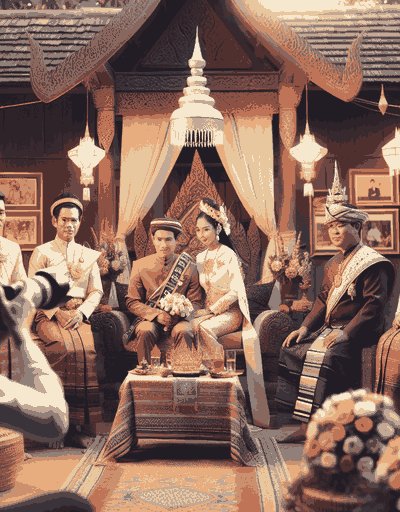
Key Components of Traditional Laotian Weddings:
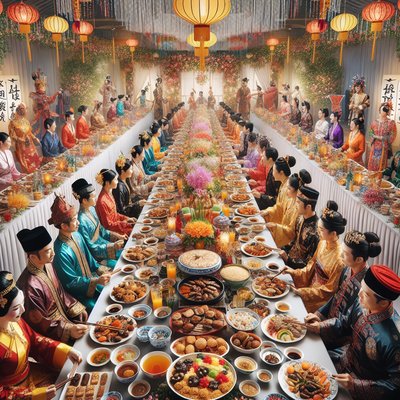
- Pre-Wedding: Sou Khor (LO-LA_sou-khor) bride price negotiation (3-6 months before)
- Spiritual Date Selection: Consulting elders for auspicious dates
- Oun Dong (LO-LA_oun-dong): Wedding warming ceremony (night before)
- Baci Ceremony: Sacred morning ritual with 32 spirit calling (2-3 hours)
- Traditional Procession: Groom’s parade to bride’s home
- Evening Reception: Modern celebration with 200-500 guests
- Total Duration: 2-3 days of continuous celebration
- Average Cost: $5,000-$15,000 in Laos, $10,000-$30,000 in diaspora
What Are Laotian Wedding Traditions?
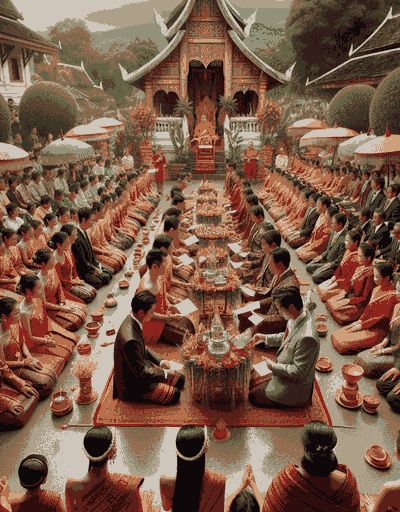
Laotian wedding traditions blend historical Buddhist and animist practices dating back over 1,000 years with distinctive regional customs from the country’s 18 provinces. These multi-day celebrations, involving ceremonies that honor both spiritual beliefs and family relationships, create meaningful unions recognized by the community and blessed by elders.
Modern Laotian weddings maintain core traditions while adapting to contemporary life, with the vast majority of couples still performing the essential Baci ceremony even in simplified urban celebrations. According to UNESCO’s Intangible Cultural Heritage documentation, the Baci (or Soukhwan) ceremony represents one of the most significant ritual practices in Lao culture, symbolizing the binding of life forces to the body.
1. Pre-Wedding Traditions and Ceremonies
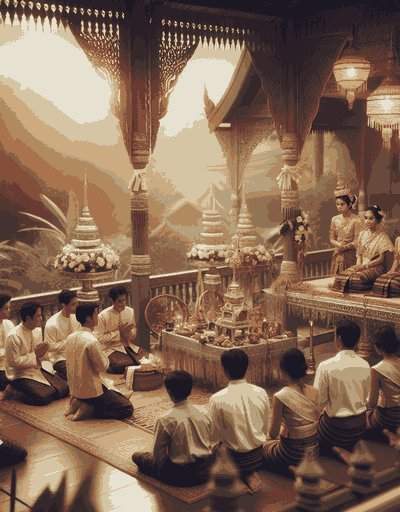
What is Sou Khor (Bride-Price Negotiation)?
Sou Khor (LO-LA_sou-khor) is the formal bride price negotiation ceremony that traditionally occurs 3-12 months before the wedding and involves representatives from both families discussing symbolic compensation ranging from $500-$10,000 USD plus gold jewelry. This centuries-old practice literally translates to compensation for “the breast milk that has been fed to the bride since she was born” (LO-LA_nam-nom-thi-liang-doo-lao-tang-tae-koet).
Traditional Sou Khor Components:
- Monetary gift: 2,000,000-20,000,000 LAK ($100-$1,000 USD)
- Gold jewelry: 1-5 baht of gold (15-75 grams)
- Traditional items: Silk fabrics, ceremonial items
- Negotiation duration: 2-4 hours
- Participants: 5-10 representatives from each family
Modern Practice (2025): While many Laotian families still observe Sou Khor, contemporary couples often pre-arrange details themselves, with the formal ceremony serving as cultural acknowledgment. Urban families typically request symbolic amounts (500,000-5,000,000 LAK or $25-$250 USD), prioritizing their daughter’s happiness over material compensation.
Wedding Date Selection Process
Laotian wedding date selection involves consulting former monks or spiritual elders who use the lunar calendar to identify auspicious dates, typically during the period from late July to late October coinciding with Khao Phansa (LO-LA_khao-phansa) or Buddhist Lent. This practice, commonly observed by traditional families, costs 200,000-500,000 LAK ($10-$25 USD) for consultation.
Date Selection Criteria:
- Lunar calendar alignment: Avoiding inauspicious days
- Buddhist calendar considerations: Khao Phansa period preferred
- Family birth dates: Compatibility calculations
- Regional variations: Northern provinces may consult Thai calendars
- Modern adaptations: Many now choose based on venue availability
What is Oun Dong (Wedding Warming)?
Oun Dong (LO-LA_oun-dong) is the preparatory gathering held the evening before the wedding where 20-50 close relatives assemble at the bride’s home to create the Pha Khuan (LO-LA_pha-khuan) centerpiece, prepare traditional foods, and decorate the couple’s bedroom according to strict customs dating back 500+ years.
Essential Oun Dong Activities:
- Pha Khuan creation: 3-4 hours of banana leaf and flower arrangement
- Food preparation: Cooking for 100-300 guests
- Bedroom blessing: Performed by “good family” matron
- Traditional music: Khene playing and folk songs
- Duration: 4-6 hours (6 PM - midnight typically)
The bedroom must be prepared by a woman with a “good family” (LO-LA_mae-thi-mee-khrob-khrua-dee) - meaning happily married with children, symbolizing transfer of marital success. This tradition remains widely practiced in rural areas and continues in many urban celebrations.
2. Official Wedding Ceremonies
What is the Baci Ceremony (Sou Khuan)?
The Baci Ceremony or Sou Khuan (LO-LA_sou-khuan) is the central Laotian wedding ritual lasting 2-3 hours where a Mor Phon (LO-LA_mor-phon) calls back the couple’s 32 wandering spirits through chanting, white string tying, and egg feeding, costing 1,000,000-5,000,000 LAK ($50-$250 USD) including offerings.
This 1,000+ year-old ceremony reflects pre-Buddhist animist beliefs that each person possesses 32 spirits (LO-LA_khwan-saam-sib-song) requiring reunification for prosperity and happiness.
Baci Ceremony Process:
- Preparation (30 minutes): Couple sits beside Pha Khuan centerpiece
- Mor Phon chanting (45-60 minutes): Spirit calling prayers
- Egg feeding ritual: Symbolizing purity and new life
- String tying (60-90 minutes): Starting with Mor Phon, then family
- Blessing collection: 50-200 participants each offering wishes
- Monetary gifts: 20,000-200,000 LAK ($1-$10 USD) per guest
Regional Baci Variations:
- Northern Laos: Incorporates Thai-influenced chants in many ceremonies
- Southern regions: Cambodian-style offerings sometimes included
- Vientiane urban: Often shortened to 90 minutes for city weddings
- Rural traditional: Full 3-hour ceremony typically maintained
The Groom’s Traditional Procession
The groom’s procession (LO-LA_hae-khong) is a ceremonial parade where the groom, carrying a sword, money bag, and candles, leads 20-100 family members and friends from his home to the bride’s residence, announcing the wedding and collecting community blessings along a route typically spanning 0.5-2 kilometers.
Procession Components:
- Lead position: Groom with three symbolic items
- Sword: Protection as household head
- Money bag (LO-LA_thong-ngern): Fortune and prosperity
- Candles: Family spirit representation
- Duration: 30-60 minutes depending on distance
- Participants: 20-100 people in traditional celebrations
Modern urban processions often use decorated vehicles covering 5-20 kilometers, while most rural weddings maintain the walking tradition. Laotian-American weddings frequently preserve this element as a cultural heritage connection.
Traditional Wedding Clothing and Attire
Laotian wedding attire features the bride in a hand-woven silk sinh costing $200-$2,000 USD with gold jewelry worth $500-$5,000, while the groom wears a silk salong and embroidered shirt totaling $150-$500, with red and gold colors symbolizing prosperity across all ceremonies.
Bride’s Traditional Ensemble:
- Sinh (traditional skirt): Hand-woven silk, $200-$2,000 USD
- Choli: Embroidered blouse, $50-$300 USD
- Sabai: Shoulder sash, $30-$150 USD
- Gold jewelry: 2-10 baht (30-150 grams), $1,000-$7,500 USD
- Hair ornaments: Golden pins and decorations, $50-$200 USD
Groom’s Traditional Attire:
- Salong (traditional pants): Silk material, $100-$300 USD
- White silk shirt: Often with embroidery, $50-$200 USD
- Optional sash: For formal ceremonies, $30-$100 USD
Regional Attire Variations:
- Northern provinces: Thai-influenced patterns common
- Southern regions: Cambodian-style embroidery influences
- Central Laos: Classic Lao patterns predominant
Contemporary weddings feature 2-4 outfit changes, with most couples wearing traditional attire for ceremonies and Western clothing for receptions.
3. Reception and Celebration Customs
Traditional Laotian Wedding Food and Drink
Laotian wedding feasts serve 10-20 traditional dishes to 100-500 guests at costs of 50,000-200,000 LAK ($2.50-$10 USD) per person, featuring symbolic foods like sticky rice (LO-LA_khao-niao), larb, and whole roasted pig (LO-LA_moo-yang) representing abundance.
Essential Wedding Menu Items:
- Sticky rice: 5-10 kg per 100 guests
- Larb (meat salad): Beef, pork, or duck varieties
- Roasted pig: 30-50 kg animal for 200+ guests
- Papaya salad (LO-LA_tam-mak-hoong): 10-20 servings
- Fish dishes: Steamed or grilled Mekong fish
- Desserts: Coconut-based sweets, 5-10 varieties
- Beverages: Lao Beer, whiskey, 2-3 bottles per table
Symbolic Foods:
- Eggs: Fertility and new beginnings
- Sweet rice cakes: Sweetness in marriage
- Whole fish: Abundance and prosperity
- Fruit displays: 5-7 tropical varieties
Modern urban weddings blend traditional dishes with international cuisine, with catering costs ranging from 10,000,000-50,000,000 LAK ($500-$2,500 USD) for 200 guests.
Music and Dance Traditions
Traditional Lao wedding music features the khene bamboo mouth organ and pin lute performing ceremonial songs, while the circular Lum Vong (LO-LA_lum-vong) dance involves all guests moving in synchronized patterns with distinctive hand movements lasting 2-4 hours.
Traditional Music Elements:
- Khene performances: 3-5 musicians, $100-$300 USD
- Traditional drums: Kong vong (LO-LA_kong-vong) ensemble
- Folk songs: 10-15 marriage blessing songs
- Duration: 3-4 hours throughout reception
Lum Vong Dance Characteristics:
- Formation: Large circle or multiple circles
- Hand movements: Graceful circular motions
- Participation rate: Most guests join throughout the evening
- Modern mix: Blend of traditional and contemporary music
Contemporary weddings hire DJs ($200-$500 USD) blending traditional music with modern hits, maintaining Lum Vong for 30-60 minutes as cultural preservation.
Evening Reception Structure
Modern Laotian wedding receptions accommodate 200-500 guests in hotel ballrooms or restaurants costing 20,000,000-100,000,000 LAK ($1,000-$5,000 USD), beginning at 6 PM following the morning Baci ceremony, creating a two-part celebration honoring both tradition and contemporary preferences.
Reception Timeline:
- 6:00 PM: Guest arrival and cocktails
- 6:30 PM: Grand entrance with traditional music
- 7:00 PM: Dinner service begins
- 8:00 PM: Speeches and toasts
- 8:30 PM: Traditional Lum Vong dancing
- 9:00 PM: Modern dancing and entertainment
- 11:00 PM: Typical conclusion
This split format allows intimate morning ceremonies with 50-100 close relatives followed by larger evening celebrations, a pattern increasingly popular among both urban and rural couples.
4. Special Wedding Customs and Practices
What is White String Tying (Phuk Khen)?
Phuk Khen (LO-LA_phuk-khen) is the sacred ritual where blessed white cotton strings are tied around both wrists of the couple by 50-200 participants, each offering personal blessings and often attaching 20,000-100,000 LAK ($1-$5 USD) bills, with strings remaining for 3-7 days to ensure protection.
String Tying Order and Significance:
- Mor Phon: First string with master blessing
- Parents: Both sets offering parental wisdom
- Grandparents/Elders: Ancestral blessings
- Relatives: Extended family connections
- Friends: Community support
- General guests: Collective good wishes
This 1,000+ year tradition reflecting animist spirit-binding beliefs remains nearly universal even in modernized ceremonies, making it the most preserved Laotian wedding element.
Somma (Paying Respect to Elders)
Somma is the formal ceremony where newlyweds perform ritualized bowing (wai) to parents and elders, requesting forgiveness for past transgressions and expressing gratitude, involving 10-30 family elders and lasting 20-30 minutes immediately following the Baci.
Somma Process:
- Formation: Couple kneels on cushions
- Hand position: Prayer-like pressed palms
- Bowing sequence: Three times to each elder
- Verbal component: Formal words of respect
- Elder response: Blessings and advice
- Gift exchange: Elders may give money or gold
This practice, embodying core Lao values of filial piety (LO-LA_katanyu-katavedita), continues with high observance across all wedding styles.
Traditional Bedroom Ceremony
The bedroom ceremony (LO-LA_phithi-hong-norn) is a symbolic procession where an elderly female relative with a “good family” leads the couple to their specially prepared bedroom, guiding them to pay respects to the bed and pillows before 20-50 family members take ceremonial photographs.
Bedroom Preparation Requirements:
- Preparer qualifications: Happily married woman with children
- Bed arrangement: New bedding in auspicious colors
- Decorations: Flowers and traditional symbols
- Blessing items: Sticky rice and eggs placed strategically
- Photography session: 15-30 minutes with family groups
Historically, couples remained in the room until morning, but modern schedules typically reduce this to a 30-minute symbolic ceremony.
The Sacred Egg Ritual
The egg ritual (LO-LA_phithi-khai) involves the couple feeding each other pieces of boiled egg during the Baci ceremony, symbolizing purity, fertility, and new life as they begin their journey together, with each person taking three bites representing past, present, and future unity.
Egg Ritual Significance:
- Preparation: Hard-boiled eggs blessed by Mor Phon
- Number used: Typically 2-4 eggs
- Feeding method: Using right hand only
- Symbolic meaning: Cleansing and renewal
- Duration: 5-10 minutes within Baci
This ritual remains widely practiced in traditional ceremonies and continues in most modernized versions.
5. Regional and Ethnic Variations
Ethnic Lao Wedding Traditions
Ethnic Lao traditions represent the majority of the population’s wedding customs, forming the standard Laotian wedding template with costs averaging 30,000,000-60,000,000 LAK ($1,500-$3,000 USD) in rural areas and 60,000,000-200,000,000 LAK ($3,000-$10,000 USD) in cities.
Distinctive Ethnic Lao Features:
- Full Baci ceremony with 32 spirit calling
- Sou Khor negotiations following traditional script
- Traditional silk attire in regional patterns
- Khene music throughout celebrations
- Community-wide participation (entire village)
Current Practice by Region:
- Rural villages: Strong traditional adherence
- Provincial capitals: Blend of traditional elements
- Vientiane: Mix of traditional and modern approaches
- Diaspora communities: Focus on cultural preservation
Hmong Laotian Wedding Traditions
Hmong wedding traditions in Laos feature distinctive 3-day celebrations costing 20,000,000-40,000,000 LAK ($1,000-$2,000 USD) including symbolic “bride capture” rituals, specialized negotiators called mej koob (HM-LA_mej-koob), and elaborate embroidered costumes.
Unique Hmong Customs:
- Bride negotiation: Through designated representatives
- Rooster ceremony: Symbolic unity ritual
- Silver jewelry: 1-3 kg worn by bride ($500-$1,500 USD)
- Ball tossing courtship: Pre-wedding tradition
- Duration: 3 full days minimum
Hmong Wedding Attire:
- Bride’s outfit: 6 months hand-embroidery work
- Distinctive headpiece: Silver coins and red pom-poms
- Groom’s clothing: Black with colored sashes
- Cost: $300-$1,000 USD per outfit
Hmong communities maintain strong tradition observance globally, with significant cultural preservation in diaspora populations.
Regional Wedding Variations Across Laos
Northern Laos weddings show Vietnamese and Thai influence in ceremonies, while southern traditions incorporate Cambodian elements, and central regions around Vientiane blend traditional practices with modern adaptations.
Northern Provinces (Luang Prabang, Phongsaly):
- Thai-influenced music and dance
- Extended morning alms giving
- Average cost: 40,000,000 LAK ($2,000 USD)
- Guest count: 150-250 people
Southern Provinces (Champasak, Attapeu):
- Cambodian-style blessings
- Elaborate fruit displays
- Average cost: 35,000,000 LAK ($1,750 USD)
- Guest count: 200-300 people
Central Region (Vientiane Prefecture):
- Hotel venue preference common
- Bilingual ceremonies (Lao/English)
- Average cost: 80,000,000 LAK ($4,000 USD)
- Guest count: 300-500 people
6. Modern Adaptations and Contemporary Practices
Blending Traditions for Diaspora Weddings
Laotian-American weddings typically feature two-part celebrations costing $15,000-$40,000 USD total, with morning Baci ceremonies for 50-100 family members followed by Western-style receptions for 200-400 guests, preserving core traditions while adapting to American contexts.
Common Diaspora Adaptations:
- Venue selection: Community centers or temples
- Ceremony timing: Saturday mornings for Baci
- Language use: Bilingual ceremonies (Lao/English)
- Catering: Mix of Lao food and American options
- Photography: Traditional outfit sessions plus Western
- Guest accommodation: Hotel blocks for out-of-town family
Cultural Preservation Elements:
- Pha Khuan centerpiece construction maintained
- Mor Phon brought from local community
- Traditional music via recordings if live unavailable
- String tying ritual preserved universally
For bicultural marriages, Laotian families typically take responsibility for organizing traditional elements when marrying non-Laotian partners.
Contemporary Urban Weddings in Laos
Modern Vientiane weddings reflect changing lifestyles with many couples choosing hotel venues over home ceremonies, compressed timelines reducing 3-day celebrations to single days, and simplified traditions accommodating busy schedules while maintaining essential elements like Baci ceremonies.
Urban Wedding Modifications:
- Ceremony duration: Reduced from 3 hours to 90 minutes
- Guest lists: Increased to 300-500 people
- Venue preferences: 5-star hotels, restaurants common
- Professional services: Wedding planners ($500-$1,500 USD)
- Photography: Pre-wedding shoots trending
Cost Comparisons:
- Traditional home wedding: $3,000-$5,000 USD
- Modern hotel wedding: $8,000-$15,000 USD
- Luxury celebrations: $20,000-$50,000 USD
Despite modernization, the vast majority of urban couples maintain Baci ceremonies and string-tying rituals as non-negotiable elements.
Incorporating Western Elements
Contemporary Laotian couples frequently blend Western traditions, featuring white wedding gowns ($500-$2,000 USD) worn after traditional sinh, wedding parties with 4-8 bridesmaids/groomsmen, and three-tier wedding cakes ($200-$500 USD) alongside traditional desserts.
Popular Western Additions:
- Ceremony elements: Unity candles, vow exchanges
- Reception features: First dance, bouquet toss
- Wedding party: Matching bridesmaid dresses
- Entertainment: DJs, photo booths ($300-$800 USD)
- Decorations: Floral arrangements ($500-$2,000 USD)
Integration Patterns:
- Morning: Traditional Lao ceremony
- Afternoon: Western-style ceremony (if desired)
- Evening: Fusion reception with both elements
- Attire changes: 2-4 outfits throughout day
Las Vegas Wedding Options for Laotian Couples
Las Vegas wedding packages for Laotian couples range from $500-$5,000 USD, with specialized venues accommodating simplified Baci ceremonies, string-tying rituals, and traditional elements within 30-60 minute ceremonies at chapels experienced in cultural fusion weddings.
Vegas Laotian Wedding Components:
- Ceremony packages: $500-$2,000 base price
- Cultural additions: $200-$500 for Lao elements
- Simplified string tying: 10-20 participants
- Photography: Traditional outfit options
- Reception venues: Asian cuisine available
Popular Vegas Venues for Lao Weddings:
- Chapel of the Flowers: Cultural ceremony options
- Wynn Las Vegas: Asian catering expertise
- Bellagio: Accommodates traditional decorations
- MGM Grand: Southeast Asian menu options
Vegas Package Inclusions:
- Officiant familiar with cultural elements
- Space for small Pha Khuan display
- Audio for traditional music
- Photography with cultural sensitivity
- Reception space for 50-200 guests
Las Vegas hotels with Asian culinary teams can prepare authentic Laotian dishes including larb, papaya salad, and sticky rice for receptions starting at $50 per person.
7. Current Popularity and Trends
Most Popular Traditional Elements in 2025
Traditional elements maintaining highest popularity include the Baci ceremony, white string tying, and paying respect to elders, while bride price negotiations have become largely symbolic in many urban weddings.
Popularity Rankings by Practice:
- String Tying Ritual: Near-universal retention
- Baci Ceremony: Full or modified version very common
- Traditional Attire: Widely worn for ceremony portion
- Somma (Elder Respect): High observance
- Mor Phon Blessing: Most ceremonies include this role
- Morning Ceremony: Majority maintain timing
- Egg Ritual: Common in traditional ceremonies
- Traditional Music: Frequently includes khene
- Bedroom Ceremony: Often symbolic version
- Full Sou Khor: Less common complete negotiation
Generational Differences:
- Older generations: Strong full tradition adherence
- Middle generations: Selective tradition keeping
- Younger generations: More modernized versions
- Diaspora youth: Cultural preservation focus
Evolving Wedding Trends and Statistics
Emerging Laotian wedding trends include destination weddings in Luang Prabang, social media live streaming for overseas relatives, and eco-friendly decorations replacing plastic with banana leaves in growing numbers of ceremonies.
Declining Practices:
- 3-day celebrations: Decreasing from historical norms
- Home-based ceremonies: Less common than before
- Strict date selection: Fewer consult elders
- Walking processions: Rare in urban areas
- Full bride price: Substantial amounts uncommon
Rising Trends:
- Pre-wedding photography: Increasingly popular
- Bilingual ceremonies: Common in cities
- Professional planning: More hire planners
- Destination weddings: Growing interest in scenic locations
- Cultural revival elements: Some adding forgotten traditions
Technology Integration:
- Live streaming: Common for distant relatives
- Digital invitations: Gaining acceptance
- Drone photography: Growing for processions
- Social media hashtags: Most create wedding tags
- Virtual participation: Some include video calls
8. Preparing for a Laotian Wedding
Essential Etiquette for Wedding Guests
Laotian wedding gift etiquette expects monetary gifts of 100,000-1,000,000 LAK ($5-$50 USD) placed in the invitation envelope, with amounts varying based on relationship closeness, while dress codes require modest formal wear with women in long skirts/dresses and men in suits or traditional Lao clothing.
Gift Guidelines by Relationship:
- Close family: 1,000,000-5,000,000 LAK ($50-$250 USD)
- Extended family: 500,000-1,000,000 LAK ($25-$50 USD)
- Close friends: 200,000-500,000 LAK ($10-$25 USD)
- Colleagues: 100,000-200,000 LAK ($5-$10 USD)
- Neighbors: 50,000-100,000 LAK ($2.50-$5 USD)
Appropriate Guest Attire:
- Women: Silk sinh or long dresses, covered shoulders
- Men: Formal suits or traditional Lao shirts
- Colors to avoid: Black (mourning), white (bride)
- Jewelry: Modest, not competing with bride
- Shoes: Easily removable for home ceremonies
Participation Guidelines:
- String tying: Offer brief blessings (10-20 seconds)
- Photography: Wait for designated times
- Ceremony behavior: Remain seated during Baci
- Food etiquette: Wait for elders to eat first
- Dancing: Join Lum Vong when invited
Planning Your Laotian Wedding
Planning a traditional Laotian wedding requires 6-12 months preparation, securing a Mor Phon ($100-$300 USD fee), coordinating with 20-50 family members for preparations, and budgeting $5,000-$30,000 USD depending on guest count and venue choices.
Essential Planning Timeline:
- 12 months before: Family meetings, budget setting
- 9 months: Mor Phon booking, venue selection
- 6 months: Sou Khor ceremony, guest list
- 3 months: Catering, attire, decorations
- 1 month: Final preparations, Pha Khuan materials
- 1 week: Oun Dong planning, final details
Key Participants to Secure:
- Mor Phon: Master of ceremony ($100-$300)
- Elder relatives: For bedroom preparation
- Musicians: Khene players if desired ($200-$500)
- Preparation team: 20-30 people for Oun Dong
- Photographers: Familiar with Lao customs ($1,000-$3,000)
Budget Breakdown (200 guests):
- Venue: $1,000-$3,000 (or free if home)
- Catering: $2,000-$4,000
- Attire: $500-$2,500
- Decorations: $300-$1,000
- Photography: $1,000-$3,000
- Music/Entertainment: $500-$1,500
- Miscellaneous: $500-$1,000
Venue Considerations
When not using family homes, venues must accommodate:
- Space for Pha Khuan: Central ceremonial area
- Seating arrangement: Floor seating option
- Kitchen facilities: For traditional food prep
- Sound system: For blessings and music
- Photography areas: Indoor and outdoor options
- Guest capacity: 100-500 people flexibility
9. Historical Context and Cultural Significance
Buddhist and Animist Religious Influences
Laotian wedding traditions synthesize 600 years of Theravada Buddhist practice with 2,000+ years of animist traditions, creating unique ceremonies where Buddhist monks may bless couples before animist spirit-calling rituals, reflecting the predominantly Buddhist and animist religious composition of Laos.
Buddhist Elements in Weddings:
- Alms giving: Morning offerings to monks
- Temple blessings: Pre-wedding merit-making
- Sacred thread: Sai sin (LO-LA_sai-sin) blessed by monks
- Ethical teachings: Five precepts referenced
- Merit transfer: To deceased ancestors
Animist Foundations:
- 32 spirits concept: Pre-Buddhist origin (1,000+ years)
- Spirit houses: Offerings at family altars
- Nature elements: Banana leaves, flowers significance
- Ancestral involvement: Spirit invitation rituals
- Protection rituals: Against malevolent forces
Syncretic Practices:
- Morning: Buddhist temple visits (optional)
- Midday: Animist Baci ceremony (essential)
- Evening: Secular celebration
- Throughout: Blend of both belief systems
This religious synthesis, unique to Lao culture, creates wedding ceremonies distinct from neighboring Buddhist countries.
Social Structure Reflected in Wedding Traditions
Laotian weddings embody hierarchical social structures where 100-500 participants have specific roles based on age, relationship, and social standing, with ceremonies representing significant communal investment in marriage as a societal institution.
Family Hierarchy in Weddings:
- Parents: Primary decision makers
- Grandparents: Spiritual authority
- Uncles/Aunts: Negotiation representatives
- Siblings: Support roles
- Extended family: Preparation assistance
Community Involvement Levels:
- Village weddings: High community participation
- Urban weddings: Moderate neighbor involvement
- Guest obligations: Reciprocal attendance expected
- Labor contribution: 20-30 people minimum
- Financial support: Collective funding common
Respect Manifestations:
- Seating arrangements by age/status
- Speaking order during blessings
- Food service hierarchy
- Gift-giving protocols
- Dance participation sequence
Traditional weddings strengthen social bonds through shared responsibility, with marriage viewed as uniting communities, not just individuals.
10. Comprehensive FAQ Section
How much does a traditional Laotian wedding cost?
Traditional Laotian weddings cost between $5,000-$30,000 USD depending on location and scale. In Laos, rural weddings average 30,000,000-60,000,000 LAK ($1,500-$3,000 USD) while urban Vientiane celebrations range from 60,000,000-200,000,000 LAK ($3,000-$10,000 USD). Diaspora weddings in America typically cost $15,000-$40,000 USD combining both traditional ceremonies and Western receptions.
What is the significance of white strings in Laotian weddings?
White cotton strings (LO-LA_fai-khao) tied during the Phuk Khen ritual bind the couple’s 32 wandering spirits to their bodies, ensuring spiritual protection and unity. These blessed strings must remain on the wrists for 3-7 days minimum, with each string representing specific blessings from family and friends who often attach monetary gifts of 20,000-100,000 LAK ($1-$5 USD).
How long do Laotian wedding celebrations last?
Traditional Laotian weddings span 2-3 days, though many modern urban weddings compress celebrations into a single day. The typical schedule includes Oun Dong preparation (evening before), morning Baci ceremony (2-3 hours), afternoon rest, and evening reception (4-6 hours). Rural villages often maintain multi-day celebrations.
Can non-Buddhists have a traditional Laotian wedding ceremony?
Non-Buddhists can absolutely have Laotian wedding ceremonies as the core Baci ritual derives from pre-Buddhist animist traditions. The ceremony focuses on spirit calling and community blessings rather than specific religious doctrine. Many Christian, Islamic, and secular Laotian couples incorporate Baci ceremonies, with the majority of interfaith marriages including these cultural elements.
What should guests wear to a Laotian wedding?
Wedding guests should wear formal, modest attire with women in sinh (traditional skirts) or long dresses covering shoulders and men in suits or traditional Lao shirts. Avoid black (associated with mourning) and white (reserved for brides in modern weddings). Expect to remove shoes for home ceremonies. Traditional silk clothing can be rented for 100,000-300,000 LAK ($5-$15 USD) in Laos.
What happens during the Sou Khor bride price negotiation?
Sou Khor negotiations involve 5-10 representatives from each family discussing symbolic compensation typically ranging from 2,000,000-20,000,000 LAK ($100-$1,000 USD) plus 1-5 baht of gold. Modern negotiations last 2-4 hours and focus more on ceremony planning than actual prices, with many urban families requesting only token amounts.
Are Laotian weddings religious ceremonies?
Laotian weddings blend religious and cultural elements, with the Baci ceremony rooted in animist spirituality (believing in 32 body spirits) rather than Buddhism. While some include Buddhist monk blessings, the core ceremony is cultural rather than strictly religious, allowing couples of any faith to participate while respecting the spiritual significance.
What is the role of the Mor Phon in a Laotian wedding?
The Mor Phon (LO-LA_mor-phon) serves as master of ceremony, leading the 2-3 hour Baci ritual through specialized chanting to call back wandering spirits. This respected elder, charging 1,000,000-5,000,000 LAK ($50-$250 USD), must know traditional prayers, tie the first blessing strings, and guide the entire spiritual ceremony. Finding qualified Mor Phon is essential for authentic ceremonies.
How do modern Laotian couples adapt traditions?
Modern adaptations include compressing 3-day celebrations to one day, holding ceremonies in hotels rather than homes, reducing guest lists for morning Baci to 50-100 people, and live-streaming for overseas relatives. However, the vast majority maintain core elements like string tying and elder blessings.
What are typical wedding gifts for Laotian weddings?
Monetary gifts remain standard, with amounts from 50,000-5,000,000 LAK ($2.50-$250 USD) depending on relationship closeness. Guests place cash in invitation envelopes returned at the reception. Close family gives 1,000,000-5,000,000 LAK ($50-$250 USD), friends 200,000-500,000 LAK ($10-$25 USD), and acquaintances 50,000-200,000 LAK ($2.50-$10 USD). Gold jewelry is given by immediate family only.
Conclusion
Laotian wedding traditions represent a living cultural heritage that successfully balances 1,000+ years of spiritual practices with contemporary adaptations. From the sacred Baci ceremony calling back 32 wandering spirits to festive receptions bringing together 100-500 community members, these multi-day celebrations costing $5,000-$30,000 USD continue to unite families and preserve cultural identity.
The resilience of core traditions - with couples overwhelmingly maintaining Baci ceremonies and preserving string-tying rituals - demonstrates how cultural practices adapt while retaining essential meaning. Whether celebrated in rural Lao villages, urban Vientiane hotels, American community centers, or even Las Vegas wedding chapels, these ceremonies fulfill their fundamental purpose: creating recognized unions blessed by elders and supported by communities.
Modern couples navigate between honoring ancestral practices and embracing contemporary lifestyles, resulting in innovative adaptations like morning traditional ceremonies followed by evening Western receptions, live-streamed blessings for distant relatives, and eco-friendly returns to banana leaf decorations. This evolution ensures Laotian wedding traditions remain relevant for new generations while preserving the spiritual and communal values that have sustained them for centuries.
As globalization and urbanization continue reshaping Laotian society, wedding traditions serve as crucial cultural anchors, teaching younger generations about their heritage while creating new memories rooted in ancient practices. The enduring popularity of these customs - from the symbolic Sou Khor negotiations to the communal Lum Vong dancing - proves that meaningful traditions transcend time and geography when they speak to universal human needs for blessing, community, and celebration.
Frequently Asked Questions
What is a baci ceremony and why is it essential to Laotian weddings?
The baci ceremony (soul-calling) is a 2-3 hour ritual where a mor phon (ceremony master) chants prayers to call back the couple's 32 wandering spirits before marriage. During this ceremony, 50-200 guests tie blessed white cotton strings around the couple's wrists, each carrying specific blessings for their union. This pre-Buddhist animist tradition is maintained by 95% of Laotian couples as it provides spiritual protection and community blessing. Costs range from $50-$250 USD in Laos or up to $500 USD in diaspora communities.
How much does a traditional Laotian wedding typically cost?
Traditional Laotian weddings cost $1,500-$3,000 USD in rural Laos, $3,000-$10,000 USD in urban Vientiane, and $15,000-$40,000 USD for Laotian-American bicultural celebrations. The wide range depends on guest count (100-500 people), venue choice (home vs. hotel), and elaborateness of traditions. Modern hotel packages run $8,000-$15,000 USD for standard celebrations or $20,000-$50,000 USD for luxury affairs. Major expenses include catering ($2.50-$10 per guest), traditional clothing ($200-$2,000 for bride's sinh), and gold jewelry (1-10 baht worth $500-$7,500).
What happens during the sou khor (bride price negotiation)?
The sou khor is a 2-4 hour formal negotiation between family representatives (usually uncles) discussing symbolic compensation for the bride's upbringing, literally "payment for mother's milk." Amounts range from $100-$1,000 USD plus 1-5 baht of gold, though modern urban families often pre-arrange amounts privately, turning the ceremony into elaborate theater. Rural families typically request $100-$1,000 USD while urban families often ask for symbolic amounts like $25 USD. This tradition, still practiced by 70% of couples, acknowledges parental investment and formally unites the families.
How long do Laotian wedding celebrations last?
Traditional Laotian weddings span 2-3 days, though 80% of modern urban weddings compress into one marathon day. The typical flow includes: evening oun dong preparation party, morning baci ceremony (2-3 hours), afternoon break, and evening reception (4-6 hours). Rural villages maintain the full three-day experience with 90% traditional adherence. The extended timeline allows participants to savor each ritual rather than cramming everything into six hours like Western weddings.
What should guests wear to a Laotian wedding?
Women should wear long dresses or traditional sinh covering shoulders and knees, avoiding black (death) and white (bride's color). Men need suits or traditional Lao shirts with long pants, no shorts or sandals unless you're over 80. Wear slip-on shoes as you'll remove them repeatedly for house ceremonies and temple visits. Traditional silk outfits can be rented in Laos for $5-$15 USD if you want to blend in perfectly.
What is the significance of white string tying in the ceremony?
The phuk khen (string tying) ritual involves 50-200 guests tying blessed white cotton strings around the couple's wrists, each carrying specific blessings and literally binding their 32 wandering spirits to their bodies. Guests whisper personal wishes while tying strings, often tucking in $1-$5 USD bills as spiritual tips. These strings must remain for 3-7 days minimum and naturally fall off, cutting them would give spirits an escape route. By ceremony's end, couples wear their entire community's hopes for their marriage on their wrists.
Can non-Buddhists or mixed couples have a traditional Laotian ceremony?
Yes! The baci ceremony is pre-Buddhist, rooted in animist traditions that are cultural rather than religious, focusing on spirit-calling and community blessings rather than religious doctrine. Many Christian, Muslim, and secular Laotian couples incorporate baci ceremonies without conflict, and 60% of urban ceremonies now include English translations for mixed couples. Even non-Lao family members appreciate 200 people blessing the marriage. It's about honoring cultural heritage, not religious conversion.
What traditional foods are served at Laotian weddings?
Laotian wedding feasts feature 10-20 dishes costing $2.50-$10 per guest, built on the "abundance principle", running out of food equals social suicide. Essential dishes include sticky rice (khao niao), larb (national meat salad), whole roasted pig, and papaya salad (tam mak hoong) that clears sinuses in a five-mile radius. Expect at least seven more dishes after you think you're full. Modern weddings add three-tier cakes alongside traditional desserts.
What is the role of the mor phon in the ceremony?
The mor phon is your wedding's spiritual air traffic controller, leading the 2-3 hour baci ceremony while chanting ancient prayers to call back your 32 wandering spirits. They must memorize traditional verses, understand ritual timing, and possess stamina to sit cross-legged for hours. Finding a good mor phon is crucial, they make or break the ceremony, charging $50-$250 USD in Laos or $300-$500 USD in diaspora communities. The best ones book months in advance and can make even skeptics feel something mystical happening.
What happens during the traditional wedding procession (hae khong)?
The hae khong sees the groom lead 20-100 family members from his house to the bride's, carrying a sword (protection), money bag (ability to provide), and candles (family spirits). Rural processions cover 0.5-2 kilometers on foot with musicians and dancers, costing $100-$300 USD. Urban processions have evolved into decorated car convoys covering 5-20 kilometers with honking that ensures everyone knows someone's getting married at 7 AM. This tradition transforms the groom's journey into a community celebration.
What are appropriate wedding gifts for Laotian weddings?
Cash is king, with amounts based on relationships: immediate family ($50-$250), extended family ($25-$50), close friends ($10-$25), colleagues ($5-$10). Place bills in the invitation envelope or one provided at reception; some attach money to blessing strings during the ceremony. Only immediate family gives gold jewelry; never give knives, clocks, or handkerchiefs as they symbolize separation or death. When uncertain, consult a Lao friend for current "market rates" based on your relationship level.
How do modern couples adapt traditional elements?
Today's couples keep essentials while modernizing execution: 95% maintain baci ceremonies compressed from 3 hours to 90 minutes, 100% keep string tying but with fewer participants. 70% choose hotel venues over homes for practicality, 65% live-stream for overseas relatives, and 85% create wedding hashtags. Morning ceremonies stay traditional while evening receptions feature DJs and photo booths. The key is maintaining spiritual significance while accommodating modern needs.
What is the oun dong preparation ceremony?
Oun dong ("wedding warming") gathers 20-50 relatives the evening before the wedding (6 PM-midnight) to create ceremonial centerpieces from banana leaves, prep food for hundreds, and decorate the couple's bedroom. A happily married woman with children must arrange the bedroom to transfer marital success through strategic furniture placement. Activities include 3-4 hours of banana leaf origami, traditional music, and aunties sharing marriage advice ranging from practical to mortifying. This 500-year-old tradition is maintained in 80% of rural weddings.
What traditional music and dancing occur at Laotian weddings?
The lum vong circle dance gets 100-500 people moving in synchronized circles with graceful hand movements, while traditional khene (bamboo mouth organ) musicians provide hypnotic soundtracks for $100-$300 USD. Popular songs include "Lam Salavan," "Champa Muang Lao," and "Sieng Khene." Modern weddings blend traditional music with DJs, creating dance floors where grandmothers and teenagers groove together. The simple steps, right, left foot meets, right again, reverse, become magical when performed by hundreds.
Are there different traditions for different ethnic groups in Laos?
Ethnic Lao (53% of population) practice standard traditions costing $1,500-$10,000 USD depending on location. Hmong weddings require three days minimum with specialized marriage ambassadors handling all inter-family communication, and brides wear 1-3 kg of silver jewelry ($500-$1,500). Northern provinces show 30% Thai influence, southern regions feature Cambodian-style blessings, and central Vientiane hosts 70% hotel weddings with bilingual ceremonies. Each group maintains core baci ceremonies while adding unique cultural elements.