Romanian Wedding Traditions Complete Guide for Modern Couples
Complete Romanian Wedding Timeline & Process
Romanian weddings follow this traditional sequence:
- 6-12 months before: Select godparents (nași), book venues
- 3-6 months before: Send invitations, plan pre-wedding celebrations
- 1 week before: Civil ceremony at town hall (cununia civilăkoo-NOO-nee-ah chee-VEE-lah)
- Wedding day: Religious ceremony, reception lasting 8-12 hours
- Day after: Post-wedding brunch, family visits
- Total duration: 2-3 days of celebrations
- Average guest count: 150-300 people
Pre-Wedding Traditions and Ceremonies
What Are Romanian Engagement Customs?
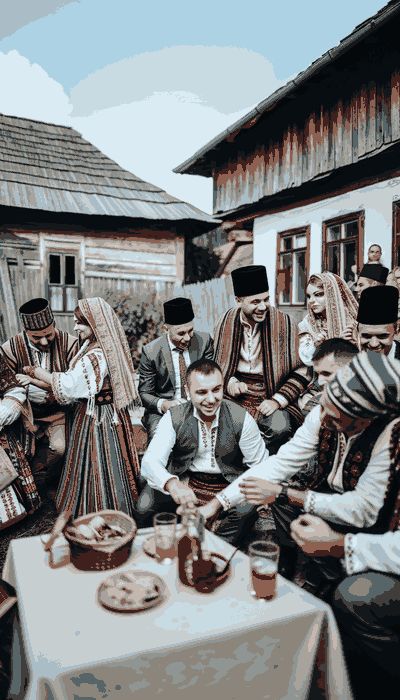
Romanian engagement customs are formal traditions where the groom requests permission from the bride’s family, typically occurring 6-18 months before the wedding and involving gift exchanges. This centuries-old practice traditionally required the groom to visit the bride’s home with his parents, bringing symbolic gifts like wine, flowers, and jewelry.
Modern Romanian couples blend traditional and contemporary approaches:
- Formal family meeting: Most couples still seek parental blessing
- Ring exchange: Engagement rings vary widely in style and cost
- Announcement gatherings: Family dinners for 20-50 close relatives
- Regional variations: Rural areas maintain more formal protocols
- Timeline: Typically 12-18 months engagement period
Selection of Godparents (Nași) - Most Important Pre-Wedding Decision
Nași (pronounced nah-shee) are married couples who serve as spiritual mentors and wedding sponsors. This Orthodox Christian tradition dating back over 1,000 years creates lifelong bonds between the two couples.
Godparent responsibilities include:
- Financial contribution: Cover ceremony costs, crowns, candles
- Ceremonial duties: Hold crowns during the Orthodox service
- Lifetime commitment: Provide marital guidance and support
- Selection criteria: Must be married, Orthodox, respected in community
- Modern practice: The vast majority of Romanian weddings still include godparents
Similar to best man/maid of honor roles in Western weddings, but with significantly more responsibility and cultural importance. This tradition shares similarities with Greek wedding traditions, where koumbaro/koumbara serve a comparable spiritual role.
Pre-Wedding Celebrations: Inmormantarea Burlaciei
Inmormantarea burlaciei (literally “burial of singlehood”) represents Romanian bachelor/bachelorette parties typically held 1-2 weeks before the wedding.
Traditional vs modern celebrations:
- Traditional format: Gender-separated dinners with folk music
- Modern urban style: Club nights, spa days, weekend trips
- Duration: 4-8 hours traditional, 1-3 days modern
- Regional differences: Rural areas favor traditional gatherings
- Symbolic elements: Mock “funeral” for single life
Official Wedding Ceremonies
Civil Ceremony (Cununia Civila) - Legal Requirement
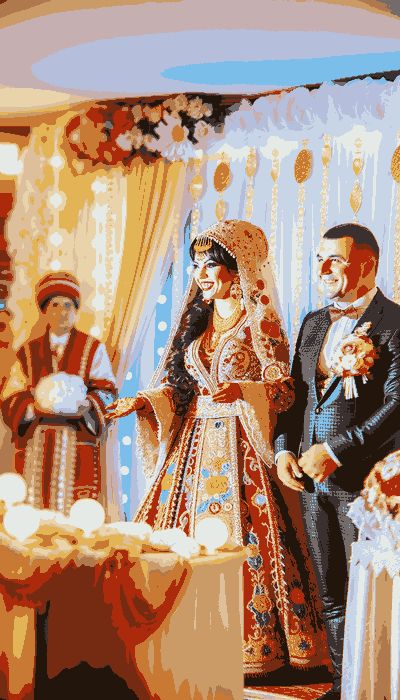
Cununia civila (pronounced coo-noo-nee-ah chee-vee-lah) is the mandatory civil ceremony at town hall that must occur before any religious ceremony. This 15-30 minute legal procedure established during the communist era (1947-1989) remains required for all Romanian marriages.
Civil ceremony details:
- Timeline: Usually 1-7 days before religious ceremony
- Participants: 10-20 close family members and witnesses
- Documentation required: Birth certificates, ID cards, medical certificates
- Dress code: Semi-formal (couples save wedding attire for church)
- Duration: 15-30 minutes
Religious Ceremony (Cununia Religioasa) - The Main Event
Cununia religioasa (pronounced coo-noo-nee-ah reh-lee-jee-oh-ah-sah) is the Orthodox Christian wedding ceremony lasting 45-90 minutes where the majority of Romanian couples exchange vows. This elaborate service includes crowning, common cup sharing, and the Dance of Isaiah (dansul lui IsaiaDAHN-sool looy ee-SAH-yah).
Key ceremony elements:
- Ceremonial crowns: Symbolic metallic or floral crowns
- Wedding candles: Decorated ceremonial candles
- Church service: Traditional Orthodox liturgy
- Guest capacity: 50-300 people standing
- Photography restrictions: Often limited during service
Regional religious variations:
- Orthodox ceremonies: Majority of weddings (Romanian Orthodox)
- Catholic ceremonies: Common in Transylvania
- Protestant ceremonies: Found in Saxon communities
Traditional Processionals and Ceremonial Elements
Wedding Processional (Alaiul de Nunta)
Alaiul de nunta (pronounced ah-lah-yool deh noon-tah) is the festive wedding procession from homes to church involving 50-200 participants, decorated vehicles, and live music. This community celebration traditionally began at the groom’s house before collecting the bride.
Modern processional elements:
- Vehicle decoration: Ribbons, flowers, and balloons
- Musicians: Traditional folk band or recorded music
- Route: Through the community to church
- Duration: 30-90 minutes
- Horn honking: Announces wedding to neighborhood
Furatul Miresei - The Bride Kidnapping Tradition
Furatul miresei (pronounced foo-rah-tool mee-reh-say) is the playful tradition where wedding guests “kidnap” the bride around midnight, requiring the groom to pay ransom (typically drinks or entertainment) for her return. This custom occurs at many Romanian weddings and lasts 30-90 minutes.
Kidnapping tradition details:
- Timing: Usually between 11 PM - 1 AM
- Kidnappers: 5-10 male friends or cousins
- Locations: Nearby bar, landmark, or hotel
- Ransom options: Drinks, songs, embarrassing tasks
- Modern adaptations: Some couples pre-plan for safety
Connected to ancient marriage customs symbolizing the bride’s transition between families, this tradition adds spontaneous entertainment to receptions. Similar playful “stealing” customs exist in Hungarian wedding traditions and other Central European cultures.
Breaking of Ceremonial Bread (Ruperea Turtei)
Ruperea turtei (pronounced roo-peh-reh-ah toor-tay) involves breaking decorated bread over the bride’s head for fertility and prosperity. The ceremonial bread involves the godmother and bride’s mother.
Bread ceremony symbolism:
- Bread preparation: 2-3 days before wedding
- Decoration: Traditional motifs, wheat stalks
- Participants: Godmother, bride’s mother
- Timing: During reception’s early hours
- Modern practice: Sometimes replaced with sweet bread
Wedding Attire and Symbolic Objects
Traditional vs Modern Wedding Attire
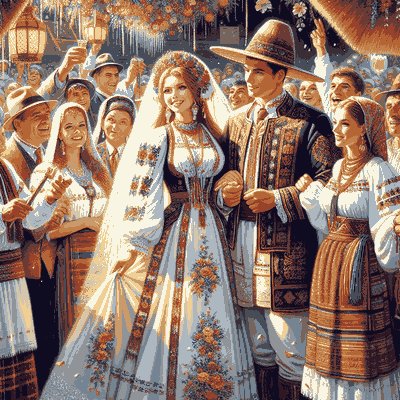
Romanian wedding attire combines Western-style white gowns with traditional elements like the embroidered blouse called ie (pronounced ee-eh). Grooms typically wear suits, sometimes incorporating traditional vests.
Regional costume elements:
- Transylvania: White embroidered blouses, floral crowns
- Maramures: Elaborate headdresses, embroidered vests
- Moldavia: Red and black embroidery patterns
- Modern trend: Many couples include costume changes
- Traditional ie blouse: Hand-embroidered heirloom pieces
Ceremonial Crowns (Cununiile) and Wedding Candles
Cununiile (pronounced coo-noo-nee-leh) are Orthodox wedding crowns held by godparents symbolizing the couple as rulers of their new household. These metal or floral crowns remain connected by ribbon throughout the ceremony.
Lumanarile de cununie (wedding candles) are decorated ceremonial candles representing spiritual illumination. Godparents purchase and hold these throughout the ceremony, with couples preserving them as lifelong mementos.
Reception Traditions
Hora Dance - Essential Circle Dance
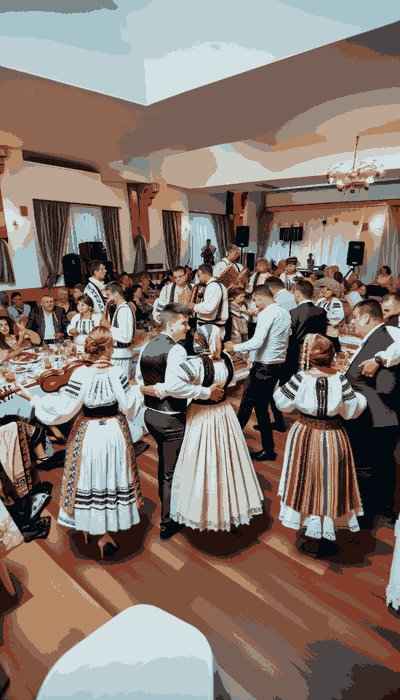
Hora miresei (pronounced hoh-rah mee-reh-say) is the traditional circle dance performed at nearly all Romanian weddings, beginning with newlyweds in the center and expanding to include all guests. This ancient Balkan dance features regional variations with different steps and music.
Hora dance details:
- Duration: 10-30 minutes per hora session
- Music: Live band playing traditional folk music
- Variations: 5-10 different hora types per reception
- Participation: Most guests join the circle
- Timing: Multiple times throughout reception
The hora shares roots with similar circle dances found throughout the Balkans, including Bulgarian wedding traditions and Serbian wedding traditions.
Money Dance (Dansul Miresei) - Community Support Tradition
Dansul miresei (pronounced dahn-sool mee-reh-say) is the money dance where guests pay to dance with the bride and groom, collectively contributing funds for the couple. This tradition occurs at many Romanian weddings during the reception’s middle hours.
Money dance protocol:
- Duration: 30-60 minutes
- Collection method: Pin to dress or special apron
- Modern variation: Both bride and groom participate
- Purpose: Offset wedding costs, honeymoon funds
Multiple Feast Courses Throughout the Night
Romanian wedding feasts feature 4-6 courses served over 8-12 hours. Traditional menus emphasize regional specialties with dancing breaks between courses.
Typical feast progression:
- 7 PM: Cold appetizers (meats, cheeses, salads)
- 8 PM: Soup course (ciorba de burta popular)
- 10 PM: Main course featuring sarmale (cabbage rolls)
- 12 AM: Midnight snack (often more soup)
- 2 AM: Wedding cake and desserts
- 4 AM: Breakfast for remaining guests
Regional menu variations:
- Transylvania: Pork dishes, goulash influence
- Moldavia: Stuffed cabbage rolls, traditional pies
- Coastal regions: Fresh fish, seafood options
- Wine regions: Local wine pairings
Post-Wedding Customs
First Home Visit (Prima Vizita)
Prima vizita (pronounced pree-mah vee-zee-tah) involves newlyweds visiting both sets of parents within 1-7 days after the wedding, bringing gifts. This tradition reinforces family bonds despite the couple’s new independent household.
Visit protocol includes:
- Order: Bride’s parents first, then groom’s
- Gifts: Wine, flowers, sweets
- Duration: 2-4 hours per visit
- Meal: Parents prepare special dinner
- Modern practice: Many couples maintain this tradition
Extended Celebrations in Rural Areas
Post-wedding celebrations vary by region:
- Rural communities: 2-3 day celebrations for 50-100 close family
- Urban areas: Next-day brunch for 30-50 guests
- Transylvania: Special family dinner tradition
- Maramures: Extended multi-day celebrations historically
Superstitions and Symbolic Practices
Weather Beliefs and Timing
Romanian wedding superstitions influence many couples’ planning decisions, particularly regarding weather and Orthodox calendar timing. Rain on the wedding day signals prosperity while avoiding Lent remains common practice.
Common beliefs and practices:
- Rain: Considered good fortune
- Full moon: Fertility and abundance
- Avoided periods: Lent, Advent (40 days each)
- Lucky days: Certain saints’ feast days
- Unlucky: Tuesdays and Fridays traditionally
Protection Against Evil Eye (Deochi)
Deochi (pronounced deh-oh-kee) protection involves multiple traditions practiced at many weddings to ward off envy and negative energy.
Protective measures include:
- Blue elements: Incorporated in attire or decor
- Salt in shoes: Ancient protection method
- Red ribbons: Tied to wedding car mirrors
- Avoiding other brides: Day-of superstition
- Regional herbs: Basil in Moldavia, garlic in Transylvania
Modern Adaptations and 2025 Trends
Current Romanian Wedding Trends
Romanian weddings in 2025 blend tradition with modern preferences:
- Selective traditions: Couples choose 5-10 customs from many options
- Guest count adjustments: Many opt for smaller celebrations
- Destination weddings: Romanian castles and vineyards are popular choices
- Sustainability: Growing interest in eco-friendly elements
- Duration: Urban weddings often end earlier than traditional dawn celebrations
International Influences and Fusion Celebrations
Modern adaptations include:
- Photo booths and themed decor: Modern entertainment additions
- Digital integration: QR code menus, livestreaming for diaspora
- Costume revival: Many incorporate traditional ieYEH blouses
- Menu fusion: International options alongside sarmale
- Venue diversity: From medieval castles to modern hotels
- Personalized rituals: Custom-designed crowns and candles
Comparison Tables
Traditional vs Modern Romanian Weddings
| Element | Traditional | Modern 2025 |
|---|---|---|
| Duration | 2-3 days | 8-12 hours |
| Guest Count | 250-400 | 150-200 |
| Attire | Folk costumes | White dress + traditional accents |
| Music | Only live folk bands | DJ + live music mix |
| Venue | Village hall | Diverse (castles to hotels) |
| Food Service | Continuous feast | Timed courses |
Regional Wedding Variations
| Region | Distinctive Features | Guest Count |
|---|---|---|
| Transylvania | Horse carriages, goulash influence | 150-250 |
| Moldavia | Red-black embroidery, specific wines | 200-300 |
| Maramures | Wooden churches, 3-day celebrations | 250-400 |
| Bucharest | Modern venues, international cuisine | 100-200 |
Frequently Asked Questions
How much does a typical Romanian wedding cost?
Romanian wedding costs vary significantly based on location, guest count, and venue choice. Rural weddings tend toward lower costs while Bucharest or castle venues reach higher price points. The godparents traditionally contribute a portion of the costs. For current pricing, consulting local wedding planners is recommended.
What is the bride kidnapping tradition and is it still practiced?
Furatul miresei (bride kidnapping) occurs at many Romanian weddings where friends “steal” the bride around midnight, taking her to a nearby location. The groom must negotiate her return, usually by buying drinks or performing entertaining tasks. This playful tradition lasts 30-90 minutes and remains popular even in modern celebrations.
Are religious ceremonies required for Romanian weddings?
No, only the civil ceremony (cununia civila) at town hall is legally required. However, the majority of Romanian couples choose Orthodox religious ceremonies following the civil procedure. The religious ceremony is not legally binding but holds deep cultural significance, lasting 45-90 minutes with elaborate rituals like crowning and the Dance of Isaiah.
What are godparents (nasi) and what do they do?
Nasi are married couples serving as spiritual mentors and wedding sponsors, chosen 6-12 months before the wedding. They hold ceremonial crowns during the Orthodox service and provide lifetime guidance to the couple. Unlike Western wedding parties, godparents have permanent spiritual responsibilities.
How long do Romanian wedding receptions last?
Traditional Romanian receptions last 8-12 hours, typically from 6 PM to 4-6 AM, featuring 4-6 meal courses with dancing between each. Urban modern weddings often end earlier, while rural celebrations may continue for 2-3 days. The extended duration allows for all traditional customs including midnight bride kidnapping and early morning breakfast.
What should guests expect to give at a Romanian wedding?
Wedding guests typically give monetary gifts based on their relationship to the couple and personal circumstances. Close family members traditionally give more generously. During the money dance, guests pay additional amounts to dance with the bride and groom. Gifts should reflect both the guest’s means and the couple’s hospitality.
Can you have a Romanian wedding without being Orthodox?
Yes, while the majority of Romanians are Orthodox, weddings can accommodate other faiths or be purely civil. Catholic ceremonies are common in Transylvania, and Protestant ceremonies are found in Saxon communities. The mandatory civil ceremony is secular. Many traditions like the hora dance and feasting are cultural rather than religious.
What are the most important Romanian wedding traditions to include?
Essential traditions most couples preserve include: selecting godparents (nasi), the hora circle dance, ceremonial crowning during Orthodox service, elaborate multi-course feast, and money dance. Modern couples often add bride kidnapping for entertainment. These elements appear at the majority of Romanian weddings regardless of other modernizations.
When is wedding season in Romania?
Romanian wedding season runs May through September, with August being most popular. Orthodox fasting periods are typically avoided: Lent (February-April) and Advent (November-December). June and September are increasingly popular for weather and venue availability. Winter weddings are less common except for New Year’s Eve celebrations.
What’s unique about Romanian weddings compared to other European weddings?
Romanian weddings uniquely feature: mandatory dual ceremonies (civil plus religious), godparents instead of best man/maid of honor, 8-12 hour receptions with continuous feasting, playful bride kidnapping tradition, money dancing raising funds for couples, and strong Orthodox ceremonial elements. The community-centered celebration style and duration distinguish them from Western European weddings.
For comparison, Moldovan wedding traditions share many similarities due to cultural and linguistic ties, while Ukrainian wedding traditions offer another perspective on Eastern European Orthodox wedding customs.
For more information on Romanian wedding customs and cultural heritage, visit the Romanian Ministry of Culture official portal.
Frequently Asked Questions
How much does a typical Romanian wedding cost?
The answer might surprise you, or terrify you, depending on your bank balance. Romanian weddings in 2025 typically run between 20,000-50,000 RON ($4,270-$10,700 USD), though this varies wildly based on whether you're planning a village celebration or a Bucharest extravaganza.
Rural weddings with 250+ guests might cost 15,000-30,000 RON ($3,200-$6,400 USD), while urban affairs can easily hit 50,000 RON ($10,700 USD) if you're eyeing that Instagram-worthy castle venue. The breakdown usually looks like: venue and catering eating up 40-50% of budget, music and entertainment another 20%, and various traditions (ceremonial items, processions, multiple photographers to capture the chaos) filling the rest.
Here's the silver lining: Romanian weddings often break even! Your nași(godparents) traditionally contribute 5,000-15,000 RON ($1,070-$3,200 USD), and the famous money dance can raise another 5,000-20,000 RON ($1,070-$4,270 USD). Between these traditions and guest gifts averaging 300-800 RON ($64-$170 USD) per person, many couples actually profit. Though planning your wedding as an investment strategy might raise some eyebrows at confession.
How much does a traditional Romanian wedding cost?
A traditional Romanian wedding typically costs between 15,000-50,000 RON ($3,200-$10,700 USD), including venue, catering, attire, and ceremonial expenses.
What is the bride kidnapping tradition and is it still practiced?
Ah, furatul miresei(bride kidnapping); Romania's answer to "how do we keep 200 guests entertained at 1 AM?" Yes, it's still very much alive, happening at about 70% of modern weddings, though thankfully more "Ocean's Eleven" than actual felony these days.
Here's how the heist unfolds: Around midnight, when normal weddings might be cutting cake, a group of the groom's friends execute their master plan. They whisk the bride away to a predetermined location (usually the nearest bar, though I've seen McDonald's, hotel lobbies, and once memorably, a 24-hour pharmacy). The "kidnappers" then call the groom with their demands.
Modern ransoms typically involve the groom buying rounds for everyone at the establishment, expect to shell out 500-2,000 RON ($105-$425 USD) in drinks. Creative kidnappers might demand public serenades, embarrassing childhood stories, or watching the groom perform the entire hora in his socks. The adventure lasts 30-90 minutes and generates stories that improve with each retelling. Smart couples now pre-plan safe locations and trusted "criminals" because nothing ruins a wedding like actual police involvement.
What is the role of nași (godparents) in Romanian weddings?
Nași are married couples who serve as spiritual mentors and contribute 10-30% of wedding costs. They hold crowns during the ceremony and play crucial roles in wedding traditions.
Are religious ceremonies required for Romanian weddings?
The short answer? Legally no, culturally YES (in all caps, with bells).
Romanian law only mandates the cununia civilă(civil ceremony), that thrilling 15-30 minute administrative procedure at city hall that costs 100-500 RON ($20-$105 USD) and has all the romance of renewing your driver's license. This makes you legally married in the eyes of the state, which cares more about your paperwork than your soul.
But here's the thing: 85% of Romanian couples follow this with a cununia religioasă(religious ceremony) because skipping it would cause family earthquakes. The Orthodox ceremony runs 45-90 minutes and features the full theatrical experience, cununiile(ceremonial crowns), endless incense, the dansul lui Isaia(Dance of Isaiah) where you circle the altar three times, and enough standing to qualify as a workout.
While not legally binding, the religious ceremony carries the actual cultural weight. Skip it, and prepare for a lifetime of explanations at family gatherings. Your grandmother won't care that you're legally married; she'll want to know when you're getting "properly" married before God and the 200 relatives she's already invited.
What is the 'furatul miresei' tradition?
Furatul miresei (bride kidnapping) is a playful custom where guests 'kidnap' the bride during the reception, and the groom must pay a ransom or complete challenges to get her back.
What are godparents (nași) and what do they do?
Think of nași(godparents) as venture capitalists for your marriage, they invest money upfront and expect returns in the form of a stable, drama-free union. But unlike VCs, they can't exit after five years when things get complicated.
These must be married couples (no commitment-phobic singles need apply) who serve triple duty as your wedding sponsors, spiritual guides, and perpetual marriage counselors. During the ceremony, they literally hold cununiile(golden crowns) over your heads for the entire Orthodox service, a 45-90 minute arm workout that proves their dedication.
Financially, they're on the hook for 5,000-15,000 RON ($1,070-$3,200 USD), covering ceremonial items like the crowns, lumânările de cununie(wedding candles), and often contributing to reception costs. But their real job starts after the wedding: mediating your fights, remembering your anniversary when you forget, and somehow maintaining Switzerland-level neutrality during family disputes.
Unlike Western wedding parties who might ghost you after the bachelor party, Romanian godparents sign up for life. They'll be godparents to your kids, fixtures at every major celebration, and the people you call at 2 AM when you're considering divorce over the proper way to make sarmale(cabbage rolls). Choose wisely, this relationship outlasts most Hollywood marriages.
How long do Romanian wedding celebrations last?
Romanian weddings typically span 2-3 days, including pre-wedding events, the main ceremony and reception (8-12 hours), and post-wedding celebrations.
How long do Romanian wedding receptions last?
Romanian wedding receptions don't have end times, they have survival rates. Traditional celebrations run 8-12 hours minimum, starting around 6 PM and ending when either the sun comes up or the last guest admits defeat (whichever comes first).
Here's the typical timeline of endurance: You'll start with appetizers at 7 PM (enough food to constitute dinner anywhere else), move to soup at 8 PM (yes, ciorbă de burtă, because tripe soup is apparently festive), hit the main course around 10 PM featuring mountains of sarmale(cabbage rolls), pause for furatul miresei(bride kidnapping) at midnight, consume more soup at 2 AM (because why not?), cut cake at 3 AM when everyone's too full to taste it, and wrap up with breakfast at 5 AM for the survivors.
Urban modern weddings might "only" last until 2 AM, practically a rushed affair by traditional standards. Rural celebrations often stretch across 2-3 days, with the alaiul de nuntă(wedding procession) on day one, main reception on day two, and recovery disguised as continued celebration on day three.
The extended format isn't just tradition; it's necessity. With 4-6 meal courses, multiple hora miresei(circle dances), the money dance, kidnapping adventures, and enough toasts to honor every ancestor back to Decebalus, you need those 12 hours. Pack comfortable shoes and maybe some antacids.
What happens during the Orthodox wedding ceremony?
The Orthodox ceremony lasts 45-90 minutes and includes the crowning ritual, drinking from a common cup, and the Dance of Isaiah, symbolizing unity and eternal commitment.
What should guests expect to pay at a Romanian wedding?
Romanian wedding economics operate on unwritten but universally understood principles that would make Wall Street jealous. The baseline gift runs 300-800 RON ($64-$170 USD) per person, or 500-1,500 RON ($105-$320 USD) per couple, with close family members contributing substantially more.
The calculation isn't random, it follows this formula: estimate your meal cost (about 150-300 RON or $32-$64 USD per person), add a contribution toward the couple's future, factor in your relationship closeness, and round up because Romanian hospitality demands reciprocity. Godparents are in a different league entirely, contributing 5,000-15,000 RON ($1,070-$3,200 USD) on top of their ceremonial duties.
But wait, the financial festivities continue! During the dansul miresei(money dance), male guests pay additional "dance fees" of 50-500 RON ($10-$105 USD) to waltz with the bride. It's essentially GoFundMe with better music. The collected funds, often reaching 5,000-20,000 RON ($1,070-$4,270 USD), help offset wedding costs or fund the honeymoon.
Modern couples sometimes include QR codes for international guests who didn't bring enough cash (yes, Romanian weddings have entered the fintech era). But whether you're pinning bills to the bride's dress or Venmo-ing the groom, the expectation remains: contribute generously, dance enthusiastically, and never admit you're tired before 4 AM.
What is the significance of the hora dance?
The hora is an essential circle dance that symbolizes community unity and celebration. It often opens the wedding reception and includes various regional variations.
Can you have a Romanian wedding without being Orthodox?
Absolutely! Romania might be 85% Orthodox, but your wedding can be 100% you, whether that means Catholic, Protestant, Buddhist, or purely secular.
Catholic ceremonies thrive in Transylvania (about 8% of weddings), complete with Hungarian influences and slightly shorter services that your Orthodox relatives will suspiciously appreciate. Protestant weddings (5%) happen mainly in Saxon communities, offering a reformed take on tradition. Jewish and Muslim ceremonies are perfectly legal and respected, especially in diverse cities like Bucharest.
The beautiful part? Most beloved Romanian traditions transcend religion entirely. The hora miresei(circle dance) predates Christianity, the endless feasting honors Dacian hospitality, and furatul miresei(bride kidnapping) has exactly zero religious significance, it's just fun. You can have a completely secular celebration featuring all the cultural elements: selecting nași(godparents) for their life wisdom rather than religious standing, dancing until dawn, and serving enough sarmale(cabbage rolls) to feed Decebalus's army.
Fair warning: Great-aunt Florica might clutch her pearls and mutter about "proper" weddings, but she'll still show up, eat three plates of food, and dominate the dance floor until 3 AM. In Romania, family celebrations trump religious differences, especially when there's an open bar.
What is the money dance tradition?
The money dance (dansul miresei) allows guests to dance with the bride by paying a small amount, which traditionally helps the couple start their new life together.
What are the most important Romanian wedding traditions to include?
If you want your wedding to feel authentically Romanian (and avoid family mutiny), here are the non-negotiables:
1. Nași(Godparents): Skip this and you might as well elope to Vegas. These married mentors aren't just tradition, they're practical (contributing 5,000-15,000 RON or $1,070-$3,200 USD) and cultural validators. Without godparents, Romanians won't consider you "properly" married.
2. Hora miresei(The Circle Dance): This ancient dance appears at 98% of weddings because it's the magical moment when your club-kid cousin and traditional bunica join hands in perfect harmony. Multiple horas throughout the night are mandatory, resistance is futile.
3. The Epic Feast: Not just dinner; a gastronomic marathon featuring minimum 4-6 courses over 8+ hours. Essential menu items: sarmale(cabbage rolls), ciorbă de burtă(tripe soup), and enough meat to concern vegetarians within a 5-kilometer radius.
4. Dansul miresei(Money Dance): Practical meets festive as guests pay 50-500 RON ($10-$105 USD) to dance with the bride, collectively raising 5,000-20,000 RON ($1,070-$4,270 USD). It's crowdfunding before Silicon Valley made it cool.
5. Some Form of Blessing: Whether full Orthodox cununia religioasă(religious ceremony) with crowns and incense, or simple ceremonial moment, Romanians expect spiritual acknowledgment. Even atheists usually compromise with symbolic gestures.
Optional but beloved: furatul miresei(bride kidnapping) for entertainment, alaiul de nuntă(wedding procession) for community involvement, and prima vizită(first visits) to parents post-wedding. Mix and match based on your tolerance for chaos and tradition.