Thai Wedding Traditions
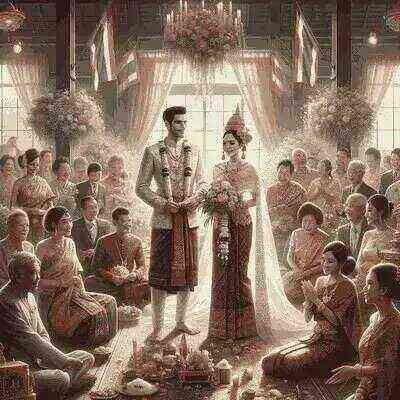
What Are Thai Wedding Traditions?
Thai wedding traditions are multi-day Buddhist ceremonies combining religious rituals, family negotiations, and community celebrations that typically last 1-3 days and involve 100-300 guests from both families. These celebrations encompass the Khan Maakmahk procession, Sin Sod dowry negotiations, Rod Nam Sangsahng water blessing, and Buddhist merit-making ceremonies, with costs ranging from 100,000-500,000 THB ($2,900-$14,500 USD).
Overview of Thai Wedding Process
- 12 months before: Initial family meetings and astrologer consultations
- 6 months before: Thong Mun gold engagement ceremony
- 3 months before: Sin Sod dowry negotiations begin
- 1 month before: Finalize Buddhist ceremony arrangements with monks
- 1 week before: Prepare Khan Maak procession elements
- Wedding day morning: Buddhist merit-making ceremony with 9 monks
- Wedding day afternoon: Khan Maak procession and door games
- Wedding day evening: Rod Nam Sang water blessing and reception
Pre-Wedding Traditions and Ceremonies
Choosing an Auspicious Date: The Foundation of Thai Marriage Planning
Choosing an auspicious date is a Buddhist astrology tradition that determines the optimal wedding timing, typically occurring 6-12 months before the ceremony and involving consultations with monks, astrologers, and both families.
Cost and Duration
- Traditional cost: 5,000-20,000 THB ($145-$580 USD) for consultations
- Duration: 2-4 consultation sessions over 1-2 months
- Participants: Both families, Buddhist monks, and professional astrologers
The Auspicious Date Selection Process
- Initial consultation: Families gather birthdates and astrological charts (duang chata)
- Monk consultation: Buddhist monks analyze spiritual compatibility and karma
- Astrologer review: Professional astrologers identify 3-5 potential dates
- Family agreement: Both families select final date considering practical factors
Regional Variations
Northern Thai date selection incorporates Lanna calendar systems and may include consultations with village elders possessing traditional knowledge. The process typically involves examining lunar phases specific to Northern traditions.
Southern Thai approach often blends Buddhist astrology with Chinese zodiac considerations, particularly in areas with significant Thai-Chinese populations. Muslim families in southern provinces follow Islamic calendar calculations instead.
Modern Adaptations
Contemporary couples balance traditional date selection with practical considerations:
- Online astrology consultations reducing costs to 2,000-5,000 THB
- Weekend preferences accommodating work schedules
- Venue availability influencing final date selection
- Some couples choosing meaningful personal dates while maintaining ceremonial consultations
Pro Tip: Core belief in auspicious timing remains strong, with most Thai couples still consulting spiritual advisors before setting their wedding date.
Thong Mun: The Gold Engagement Ceremony
Thong Mun is a formal engagement tradition that involves presenting gold jewelry to the bride, typically occurring 3-6 months before the wedding and involving immediate family members in a ceremony costing 50,000-200,000 THB ($1,450-$5,800 USD).
Cost and Duration
- Gold jewelry cost: 50,000-200,000 THB ($1,450-$5,800 USD)
- Ceremony duration: 2-3 hours
- Participants: 20-50 immediate family members
- Venue: Usually bride’s family home
The Thong Mun Process
- Gold selection: Groom purchases traditional Thai gold jewelry (thong kam)
- Family gathering: Both families meet at bride’s home for formal presentation
- Blessing ceremony: Elders offer blessings while gold is presented on khan tong
- Celebration meal: Families share traditional sweets and formal dinner
Regional Variations
Central Thai Thong Mun follows royal court traditions with elaborate gold sets including necklaces, bracelets, and rings totaling 3-5 baht weight of gold (approximately 45-75 grams).
Isan traditions may include additional gifts of livestock or land rights alongside gold, reflecting the region’s agricultural heritage. Gold amounts tend to be more modest at 1-2 baht weight.
Modern Adaptations
Contemporary Thong Mun ceremonies blend tradition with modern preferences:
- Designer gold jewelry replacing traditional styles
- Photography sessions documenting the ceremony
- Combined engagement parties following Western influences
- Digital gold certificates for overseas couples
Sin Sod: Dowry Negotiation and Presentation
Sin Sod is a dowry tradition that demonstrates the groom’s financial capability and honors the bride’s family, typically negotiated 2-3 months before the wedding and ranging from 100,000-1,000,000 THB ($2,900-$29,000 USD) depending on family status and education.
Cost and Duration
- Average dowry amount: 200,000-500,000 THB ($5,800-$14,500 USD)
- Negotiation period: 2-4 weeks
- Display duration: Throughout wedding day ceremonies
- Return rate: Many families return the dowry as a wedding gift to the couple
The Sin Sod Negotiation Process
- Initial proposal: Groom’s representative (thao gaetao gae) approaches bride’s family
- Family consultation: Bride’s parents consider education, age, and social status
- Formal negotiation: Multiple meetings determine final amount and display format
- Agreement ceremony: Both families formally agree on Sin Sod terms
Determining Factors
| Factor | Impact on Sin Sod |
|---|---|
| Bride’s education | Bachelor’s: +100,000 THB, Master’s: +200,000 THB |
| Previous marriage | Reduces by 50-70% |
| Family social status | High status: 500,000-1,000,000 THB |
| Regional customs | Urban: Higher amounts, Rural: May include land/gold |
Regional Variations
Bangkok Sin Sod typically involves cash displays of 300,000-1,000,000 THB, emphasizing metropolitan financial standards and often returned entirely to the couple.
Northern Thai customs may include traditional items like silver bars, ancient coins, or land deeds alongside cash, honoring Lanna heritage where wealth included various assets.
Southern provinces with Muslim populations follow mahrmah-har Islamic dowry customs instead, typically involving gold and property rather than cash displays.
Modern Adaptations
Contemporary Sin Sod practices show significant evolution:
- Symbolic displays with actual amount privately transferred
- Parents immediately gifting dowry back during reception
- Educational achievements reducing traditional amount expectations
- Some progressive families eliminating practice entirely
Pro Tip: In many urban Thai families, the dowry is returned to the couple as a wedding gift, making it more of a ceremonial display than a financial transfer.
Tham Boon: Buddhist Merit-Making Ceremony
Tham Boon is a Buddhist religious tradition that creates positive karma for the couple’s marriage, typically performed on the wedding morning with 9 monks and costing 20,000-50,000 THB ($580-$1,450 USD) for offerings and donations.
Cost and Duration
- Monk offerings: 20,000-50,000 THB ($580-$1,450 USD)
- Ceremony duration: 2-3 hours (5:00 AM - 8:00 AM)
- Participants: 9 monks, couple, and 50-100 close family members
- Venue: Family home or temple
The Merit-Making Process
- Pre-dawn preparation: Family prepares offering trays (sangkatansang-kah-tahn)
- Monk arrival: 9 monks arrive before 6:00 AM for auspicious timing
- Chanting ceremony: Monks perform blessing chants (suat monsoo-aht mohn)
- Alms offering: Couple presents food and necessities to monks
- Water blessing: Monks consecrate holy water (nam monnahm mohn) for later ceremonies
Regional Variations
Northern Buddhist ceremonies incorporate unique Lanna chanting styles and may include offerings specific to regional monasteries, with ceremonies sometimes conducted in Northern Thai dialect.
Northeastern Tham Boon often includes bai sribye see cone offerings influenced by Lao Buddhist traditions, with extended family participation exceeding 100 attendees.
Modern Adaptations
Contemporary merit-making maintains religious significance with practical adjustments:
- Reduced monk numbers (5-7) for smaller venues
- Evening ceremonies for convenience
- Temple ceremonies replacing home visits
- Live-streaming for overseas relatives
Wedding Day Ceremonies
Khan Maak: The Groom’s Festive Procession
Khan Maak is a celebratory procession tradition that demonstrates the groom’s commitment through a musical parade to the bride’s home, typically involving 50-200 participants and costing 30,000-100,000 THB ($870-$2,900 USD) for musicians, costumes, and ceremonial items.
Cost and Duration
- Traditional cost: 30,000-100,000 THB ($870-$2,900 USD)
- Duration: 1-2 hours
- Participants: 50-200 people including musicians and dancers
- Distance: Traditionally 1-3 kilometers
The Khan Maak Process
- Assembly point: Groom’s party gathers with ceremonial trays (khan maakmahk)
- Procession formation: Musicians lead, followed by gift bearers and dancers
- Musical journey: Traditional long drums (klong yaoklong yao) and dancers perform
- Symbolic obstacles: Encountering gold and silver gates (pratoo ngern pratoo tongprah-too ngern prah-too tong)
- Arrival ceremony: Final approach to bride’s home with increased celebration
Ceremonial Elements
| Item Carried | Symbolism | Typical Quantity |
|---|---|---|
| Betel nuts (maak) | Tradition and respect | 9 trays |
| Gold leaf cones | Prosperity | 5-9 pieces |
| Banana plants | Fertility | 2 young plants |
| Sugarcane stalks | Sweet marriage | 2-4 stalks |
Regional Variations
Central Thai Khan Maak follows elaborate royal court protocols with matching costumes, professional dancers, and strict processional order reflecting Bangkok’s formal traditions.
Northern processions feature distinctive Lanna drums and may includfon dabfohn dahb dancers (fon dab) unique to the region, with participants wearing traditional Northern Thai costumes.
Isan Khan Maakmor lammaw lahmorporates mor lam folk music and may extend for several kilometers between villages, emphasizing community participation over formal structure. Contemporary Khan Maak processions balance tradition with urban practicality: Pro Tip: Many Bangkok weddings include modified Khan Maak processions, often adapting the traditional route to fit hotel or venue settings. Pratoo Ngern Pratoo Tong is a playful tradition that requires the groom to pass through symbolic gates by answering questions and paying token fees, typically lasting 30-45 minutes and involving creative challenges set by the bride’s friends. Bangkok gate games often incorporate modern elements like social media challenges, English language tests, or professional knowledge questions reflecting urban lifestyles. Southern Thai traditions may include pantomime performances or local dialect challenges, with games emphasizing humor and entertainment for gathered crowds. Contemporary gate ceremonies embrace creative innovations: Sai Monkhon is a Buddhist binding ritual that spiritually connects the couple using blessed white thread, typically performed by 9 senior relatives and lasting 30 minutes during the main ceremony. Mongkol headpieces represent celestial blessings and are connected by continuous thread symbolizing udok rakdohk rahk unity. Traditional designs use jasmine and dok rak flowers. Thread pathway creates figure-eight pattern around couple, representing infinity and eternal connection blessed by community elders. Lanna Sai Monkhon uses distinctive Northern-style mongkol with silver decorations and may include thread blessed at specific temples considered especially auspbai sribye see Northeastern variations incorporate bai sri cones at connection points and may use naturally dyed threads representing different blessings. Contemporary ceremonies maintain spiritual significance with aesthetic updates: Rod Nam Sang is a water blessing tradition that purifies and blesses the couple’s union, performed by all wedding guests using consecrated water in conch shells and lasting 45-60 minutes as the ceremony’s emotional centerpiece. Royal tradition Rod Nam Sang uses specific conch shell angles and formal blessing phrases, with guests organized by seniority and social status. Southern coastal traditions may use special seashells from local beaches and incorporate water from seven sources representing abundance. Isan ceremonies often extend longer as each guest offers elaborate personal blessings, emphasizing community bonds and shared history. Contemporary Rod Nam Sang maintains tradition while improving guest experience: Pro Tip: Rod Nam Sang is the most photographed moment at Thai weddings and creates the most cherished memories for couples and guests alike. Traditional Thai wedding attire is formal ceremonial dress that varies by region and includes silk garments with gold embroidery, typically costing 30,000-150,000 THB ($870-$4,350 USD) for complete bride and groom outfits. Thai Sabai is a traditional wrapped garment consisting of silk shoulder cloth draped over fitted blouse (sua pat), typically featuring gold thread patterns and costing 30,000-80,000 THB for custom designs. Thai Chakri is a formal dress style incorporating Western Victorian influences with Thai silk, worn by brides for evening receptions and costing 40,000-100,000 THB. Grooms wear raj pattern suits - formal white jackets with standing collars paired with wrapped pants (jong kraben) or formal trousers, costing 20,000-40,000 THB. Lanna Sabai features distinctive horizontal striped patterns (pha sin) with elaborate shoulder decorations (sangwan), typically in jewel tones costing 25,000-60,000 THB. Traditional accessories include silver belts (sai dang) and ornate hairpieces reflecting Lanna cultural heritage, adding 10,000-20,000 THB to overall cost. The UNESCO Intangible Cultural Heritage programme recognizes many traditional Thai textile and craft practices that influence wedding attire. Contemporary Thai wedding attire blends traditional elements with modern design: Traditional Thai wedding reception is an evening celebration following religious ceremonies that includes formal dinner, entertainment, and gift-giving for 200-500 guests, typically costing 200,000-1,000,000 THB ($5,800-$29,000 USD). Khan maak display showcases ceremonial gifts and dowry throughout reception, requiring special presentation area costing 10,000-30,000 THB for proper arrangement. Guest seating follows hierarchical arrangement with parents’ colleagues, extended family, and friends organized by relationship and seniority, requiring careful planning. Central Thai menu features royal cuisine including tom yum soup, green curry, pad thai, and mango sticky rice, averaging 600-1,200 THB per guest. Northern reception fare emphasizes khao soi, sai oua sausages, and naam prik dishes, typically costing 500-800 THB per guest with family-style service. Southern Thai menus include rich coconut curries, fresh seafood, and roti desserts, ranging 700-1,500 THB per guest due to seafood costs. Contemporary receptions blend Thai traditions with international elements: Pro Tip: Bangkok hotels typically charge 500,000-800,000 THB for wedding receptions hosting 300 guests, so compare packages carefully. Lanna wedding traditions are Northern Thai ceremonies incorporating Burmese and Vietnamese influences from the historic Lanna Kingdom, featuring distinctive costumes, rituals, and celebrations lasting 2-3 days. Distinctive ceremonies include the phuk mue ritual where elders tie blessed strings on couple’s wrists, and the lin nok dance performed by unmarried women for relationship luck. Costs typically run 20-30% lower than Bangkok weddings, with complete traditional ceremonies ranging 150,000-400,000 THB including distinctive elements like khantoke dinner receptions. Isan wedding traditions are Northeastern Thai ceremonies sharing similarities with Lao and Cambodian customs, emphasizing community participation and featuring mor lam music performances throughout multi-day celebrations. Bai sri ceremonies involve elaborate cone-shaped arrangements (bai sri) made from banana leaves and flowers, used for blessing rituals costing 5,000-15,000 THB for professional arrangements. Community involvement remains strongest in Isan, with entire villages participating in preparations and celebrations, often contributing labor and food rather than monetary gifts. Southern Thai wedding traditions blend Thai Buddhist customs with Malaysian and Indonesian influences, creating unique ceremonies particularly in provinces like Phuket, Krabi, and Songkhla. Baba-Nyonya influences in Phuket create distinctive wedding styles combining Chinese tea ceremonies with Thai water blessings, with celebrations often extending to 2-3 days. Coastal ceremonies may incorporate beach venues and seafood-focused receptions, with costs ranging 300,000-1,500,000 THB due to tourist area pricing and elaborate setups. Central Thai wedding traditions represent the most formal ceremonial style influenced by royal court protocols, serving as the standard template for formal Thai weddings nationwide. Royal protocols emphasize precise ceremonial order, formal language usage, and specific costume requirements, with wedding planners specializing in royal-style ceremonies charging premium rates of 500,000-2,000,000 THB. Modern influence sees Central Thai traditions adopted nationwide as couples seek to elevate their ceremony’s formality and prestige, regardless of regional background. Contemporary Thai wedding trends reflect globalization and changing social dynamics while maintaining core Buddhist traditions, with couples spending an average of 300,000-800,000 THB ($8,700-$23,200 USD) on celebrations. Modern couples increasingly opt for single-day celebrations combining all traditional elements: Thai-Western fusion ceremonies are increasingly popular in Bangkok, incorporating ring exchanges, wedding vows, and first dances alongside water blessings and monk ceremonies. Asian fusion styles blend Thai traditions with Chinese tea ceremonies, Japanese sake rituals, or South Korean paebaek ceremonies, particularly common among international couples. Thailand hosts thousands of destination weddings annually with couples choosing: A typical Thai wedding costs between 200,000-500,000 THB ($5,800-$14,500 USD) for middle-class families in Bangkok. This includes monk ceremonies (20,000-50,000 THB), Sin Sod dowry display (200,000-500,000 THB - often returned), traditional attire (50,000-100,000 THB), and a reception for 200-300 guests (200,000-400,000 THB). Rural weddings typically cost 100,000-300,000 THB, while luxury Bangkok society weddings can exceed 5,000,000 THB. Costs vary significantly based on family expectations, with many parents contributing to expenses. The most expensive elements are usually the reception venue and catering, followed by photography and dowry displays. Traditional Thai weddings historically lasted 3-7 days but modern celebrations typically condense into one full day. The schedule starts before dawn (5:00 AM) with monk ceremonies lasting 2-3 hours, followed by Khan Maak procession (9:00-11:00 AM), gate games and Sai Monkhon thread ceremony (11:00 AM-1:00 PM), Rod Nam Sang water blessing (2:00-4:00 PM), and evening reception (6:00 PM-midnight). Some families maintain 2-day formats with engagement ceremonies on day one and wedding ceremonies on day two. Rural areas, particularly in Isan, may still observe 3-day celebrations including pre-wedding merit-making, main ceremonies, and post-wedding blessings. Thai wedding expenses traditionally follow a complex system where both families contribute. The groom’s family typically covers Sin Sod dowry (often returned), engagement gold (50,000-200,000 THB), and monk ceremony expenses. The bride’s family usually pays for the reception, venue, and catering as hosts. Modern practices see couples contributing 30-50% themselves, especially in urban areas. Many families now pool resources equally regardless of tradition. The displayed dowry (200,000-1,000,000 THB) serves ceremonial purposes with most families returning it as a wedding gift. Government employees and military families may receive additional support from workplace funds or associations. Rod Nam Sang is the emotional centerpiece where all guests pour sacred water over the couple’s joined hands while offering blessings. The couple sits on a decorated platform with hands positioned over a ceremonial bowl (khan nam) decorated with flowers. Parents begin, pouring water from traditional conch shells (sang) while speaking blessings for happiness, prosperity, and children. Each guest follows in order of seniority, taking 20-30 seconds to pour water and whisper personal wishes. The ceremony uses holy water (nam mon) blessed by monks during the morning ceremony. Professional photographers capture each blessing, making this one of the most photographed rituals. The entire process lasts 45-60 minutes for 100-150 guests. Non-Buddhists can have Thai weddings, with many international couples incorporating selected traditions. Buddhist ceremonies remain exclusive to Buddhist couples, but cultural elements like Khan Maak processions, gate games, and Rod Nam Sang water blessings welcome all faiths. Muslim couples in southern Thailand follow Islamic nikah ceremonies instead. Christian couples often blend Thai cultural elements with church ceremonies. Interfaith couples typically select non-religious traditions, focusing on family unity ceremonies. Hotels and wedding planners offer “Thai-style” packages adapting traditions for non-Buddhist couples. Key inclusive elements include traditional costumes, processions, water blessings, and Thai reception customs without requiring Buddhist vows or monk blessings. Sin Sod is a dowry tradition demonstrating the groom’s financial capability while honoring the bride’s family for raising her. Appropriate amounts depend on education (Bachelor’s degree: 200,000-300,000 THB, Master’s: 300,000-500,000 THB), age (decreases after 30), previous marriage (reduces by 50-70%), and family status. Bangkok middle-class families expect 200,000-500,000 THB while rural families may accept 50,000-200,000 THB. High-society weddings display 1,000,000-10,000,000 THB. The dowry is publicly displayed during ceremonies but most families return it privately. Some progressive families eliminate the practice or use symbolic amounts. Negotiations consider the groom’s career, family background, and bride’s professional status. Thai wedding guests should wear formal, modest attire avoiding black (mourning) and white (reserved for bride). Women wear cocktail dresses, Thai silk outfits, or formal suits covering shoulders and knees. Appropriate colors include pink, blue, gold, and pastels. Men wear suits or dress shirts with formal trousers - ties optional in hot weather. Traditional Thai formal wear (chut thai) is always appropriate and can be rented for 1,000-3,000 THB. Avoid revealing clothing, short skirts, or casual wear. Morning Buddhist ceremonies require especially modest dress. Evening receptions allow slightly more glamorous attire. Shoes should be removable for temple ceremonies. Many weddings specify dress codes on invitations. Modern Thai weddings condense multi-day celebrations into single days while maintaining core rituals. Key differences include: Sin Sod often returned immediately rather than kept; Khan Maak processions shortened from kilometers to symbolic hotel distances; monk numbers reduced from 9 to 5-7; evening ceremonies added for working guests; Western elements like ring exchanges and first dances incorporated; professional wedding planners managing logistics; social media documentation throughout; destination venues replacing home ceremonies. However, Rod Nam Sang water blessings, Buddhist merit-making, and family negotiations remain largely unchanged. Urban couples spend more on production values but less time on extended rituals, prioritizing photogenic moments while respecting essential traditions. Foreigners can absolutely have traditional Thai wedding ceremonies, with thousands of international couples choosing Thai celebrations annually. Buddhist religious ceremonies require at least one Buddhist partner, but cultural traditions welcome all nationalities. Popular elements for foreign couples include: Khan Maak processions (universally enjoyed for festive atmosphere), Rod Nam Sang water blessings (inclusive and meaningful), traditional Thai costumes (available for rent/purchase), simplified gate games (adapted for cultural understanding). Many resorts offer packages specifically for international couples. Key adaptations include English-speaking ceremony masters, simplified rituals, and cultural explanations for foreign guests. Costs range from 100,000-500,000 THB depending on elaborateness. The essential Thai wedding traditions that couples rarely omit include: Rod Nam Sang water blessing ceremony as the emotional centerpiece; Buddhist monk ceremony for merit-making (most Buddhist couples include this); Sin Sod dowry display honoring families; Khan Maak procession creating festive atmosphere; traditional Thai wedding attire for photos. Modern couples often skip extended multi-day formats, elaborate gate games, and some regional specifics. The water blessing remains virtually universal as it includes all guests, creates beautiful photos, and represents community support regardless of religious beliefs. A traditional Thai wedding typically costs between 300,000-800,000 THB ($10,000-$26,000), including ceremonies, attire, and reception. Costs vary based on location and scale of celebrations. The Khan Maak is a ceremonial parade where the groom and his family march to the bride's home, carrying gifts and dowry. It symbolizes the groom's journey and typically involves 50-200 participants. While not legally required, Sin Sod remains culturally important. The amount ranges from 100,000-1,000,000 THB, based on the bride's education, family status, and social position. Rod Nam Sang is a water blessing where guests pour sacred water over the couple's joined hands while offering wishes for their marriage. It's considered the emotional centerpiece of Thai weddings. Traditional Thai weddings typically span 1-3 days, including pre-wedding ceremonies, main wedding day rituals, and reception celebrations. Guests should wear formal, modest attire. Traditional Thai dress is welcome, but modern formal wear is acceptable. Avoid black and white, as these are associated with funerals. Yes, typically 9 monks participate in the morning merit-making ceremony (Tham Boon), offering blessings and performing religious rituals. The Sai Monkhon involves senior relatives blessing the couple by wrapping sacred white thread around their heads, symbolizing their union and connection. Planning typically begins 6-12 months ahead, starting with consulting monks for an auspicious date and arranging the engagement ceremony. Yes, foreigners can have traditional Thai weddings. Many couples choose to blend Thai customs with Western elements for a unique celebration.Modern Adaptations
Pratoo Ngern Pratoo Tong: The Gold and Silver Gate Games
Cost and Duration
The Gate Challenge Process
Common Gate Challenges
Gate Number Typical Challenge Fee Range (THB) Gate 1-2 Basic questions about bride 100-500 Gate 3-4 Love declarations/singing 500-1,000 Gate 5-6 Promises about married life 1,000-2,000 Final Gate Prove worthy of bride 2,000-5,000 Regional Variations
Modern Adaptations
Sai Monkhon: The Sacred Thread Ceremony
Duration and Participants
The Sai Monkhon Process
Symbolic Elements
Regional Variations
Modern Adaptations
Rod Nam Sang: The Sacred Water Blessing Ceremony
Cost and Duration
The Rod Nam Sang Process
Ceremonial Setup
Element Description Cost (THB) Water altar Decorated platform with flowers 5,000-10,000 Conch shells 2-4 vessels for pouring 3,000-5,000 Holy water Monk-blessed nam mon Included in morning ceremony Flower petals Jasmine and rose for decoration 2,000-5,000 Regional Variations
Modern Adaptations
Wedding Attire and Costs
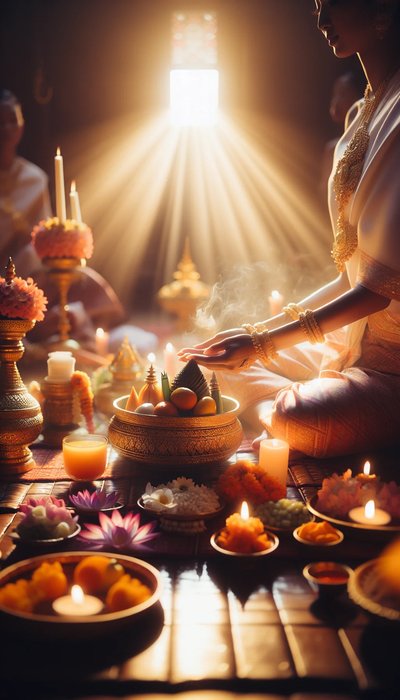
Traditional Thai Wedding Attire
Attire Costs by Region
Region Bride’s Outfit Groom’s Outfit Total Cost (THB) Central Thai 30,000-80,000 20,000-40,000 50,000-120,000 Northern Lanna 25,000-60,000 15,000-35,000 40,000-95,000 Northeastern 20,000-50,000 15,000-30,000 35,000-80,000 Southern 35,000-100,000 25,000-50,000 60,000-150,000 Central Thai Wedding Attire
Northern (Lanna) Wedding Attire
Modern Adaptations
Wedding Reception and Costs
Traditional Thai Wedding Reception
Reception Cost Breakdown
Element Cost Range (THB) Per Person Venue 50,000-300,000 250-600 Catering 100,000-500,000 500-1,000 Entertainment 20,000-100,000 100-200 Decorations 30,000-150,000 150-300 Traditional Reception Elements
Regional Menu Variations
Modern Reception Trends
Regional Variations
Northern (Lanna) Wedding Traditions
Northeastern (Isan) Wedding Traditions
Southern Thai Wedding Traditions
Central Thai (Royal) Wedding Traditions
Modern Adaptations
Contemporary Thai Wedding Trends
Budget Distribution Trends
Expense Category Traditional (%) Modern (%) Religious ceremonies 40 20 Reception/party 35 50 Photography/video 10 20 Attire/beauty 15 10 Simplified Ceremonies
International Fusion Weddings
Destination Weddings
How much does a typical Thai wedding cost?
How long does a traditional Thai wedding last?
Who pays for a Thai wedding?
What happens during the Rod Nam Sang ceremony?
Do you have to be Buddhist to have a Thai wedding?
What is Sin Sod and how much is appropriate?
What should guests wear to a Thai wedding?
How are modern Thai weddings different from traditional ones?
Can foreigners have a traditional Thai wedding ceremony?
What are the most important Thai wedding traditions to include?
Frequently Asked Questions
How much does a traditional Thai wedding cost?
What is the Khan Maak procession?
Is a dowry (Sin Sod) mandatory in Thai weddings?
What happens during the Rod Nam Sang ceremony?
How long do Thai wedding celebrations last?
What should guests wear to a Thai wedding?
Are Buddhist monks present at Thai weddings?
What is the Sai Monkhon ceremony?
How far in advance should a Thai wedding be planned?
Can foreigners have a traditional Thai wedding?